What Does Tapa Mean in Spanish: How Context Unlocks Real Fluency
Sharing small portions is key, with lots of local variations across Spain and Latin America
Posted by
 Stewart Kaplan
Related reading
What Does Adonde Mean in Spanish? How Movement 'Clicks' for Learners
You have to know when prepositions combine with donde to show direction or position
What Does Ahi Mean in Spanish? Cognitive Mastery That Sticks
Learners mix up ahí, hay, and ay because they sound the same but mean totally different things.
What Does Aki Mean in Spanish: Unpacking Real Usage for Learners
Regional differences exist, but nearly everyone in Spanish-speaking communities gets what "aki" means in a text
TL;DR
- "Tapa" in Spanish means "lid" or "cover" as a noun; it's from the verb "tapar" (to cover)
- Tapas (plural) are small plates or snacks in Spanish cuisine, often combined into a meal
- The food tradition likely started by placing small plates over drinks to keep out dust and bugs
- Tapas can be hot or cold, from simple olives to fried squid or spicy potatoes
- Sharing small portions is key, with lots of local variations across Spain and Latin America
Primary Definitions: Lid, Cover, and Top
Tapa usually means lid, cover, or top in Spanish. You’ll see it for jar lids, manhole covers, book covers - anything that closes or protects something.
Everyday Objects: From Jars to Manhole Covers
Container Uses:
- la tapa de la caja – box lid
- la tapa de la olla – pot lid
- la tapa del frasco – jar top
- la tapa del depósito de gasolina – gas tank cap
Specialized Covers:
| Spanish Term | English Translation | Context |
|---|---|---|
| tapa de registro | manhole cover | Street/infrastructure |
| tapa de inspección | inspection cover | Industrial equipment |
| tapa de alcantarilla | sewer cover | Public works |
Article Use:
| Form | Example |
|---|---|
| Singular | la tapa (the lid) |
| Plural | las tapas (the lids) |
| Indefinite | una tapa (a lid) |
| Indefinite plural | unas tapas (some lids) |
Physical Objects:
- Piano lids (tapa del piano)
- Storage containers
- Bottles and jars
- Fuel tanks
Usage in Books: Hardback and Paperback Covers
| Format | Spanish | Example Usage |
|---|---|---|
| Hardback | libro de tapas duras | Prefiero los libros de tapas duras |
| Paperback | libro de tapa blanda | Este ISBN viene en tapa blanda |
| Front cover | tapa delantera | La tapa delantera tiene el título |
| Back cover | contratapa | El ISBN está en la contratapa |
Publishing Context:
- la tapa del libro – book cover
- tapas duras – hard covers
- tapa blanda – soft cover
| Rule | Example |
|---|---|
| ISBN location | contratapa or inside front cover |
| Binding description | tapa used in catalogs/product listings |
Practical Examples in Spanish Context
Kitchen and Home:
- Pon la tapa en la olla – Put the lid on the pot
- Cierra el frasco con la tapa – Close the jar with the top
- La tapa no encaja – The lid doesn't fit
Automotive:
- Abre la tapa del tanque – Open the gas tank cap
- La tapa está suelta – The cap is loose
Reading Materials:
- La tapa del libro está dañada – The book cover is damaged
- ¿Tiene tapa dura o blanda? – Is it hardback or paperback?
Infrastructure:
- Levanta la tapa de registro – Lift the manhole cover
- Cuidado con la tapa rota – Careful with the broken cover
Culinary Significance: Tapas in Spanish Cuisine
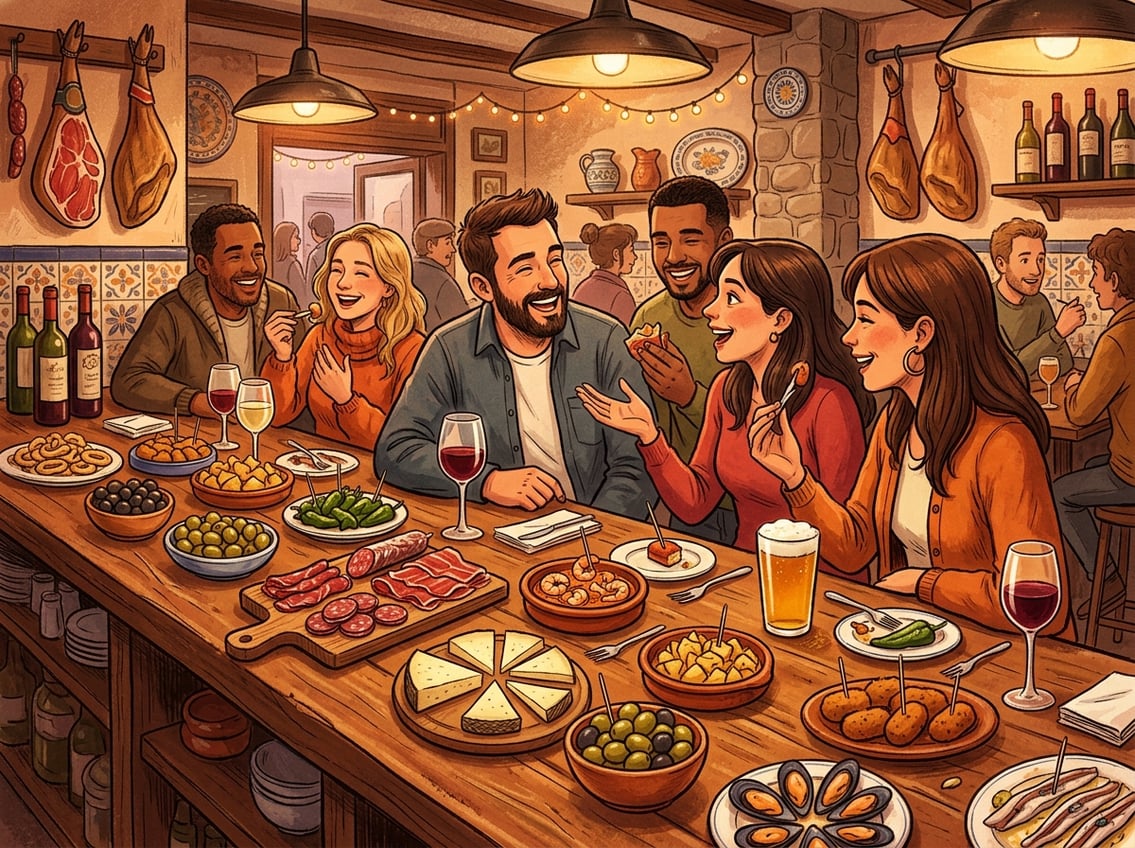
Tapas started as bread slices over drinks and became a national dining tradition. The act of tapear - hopping from bar to bar for snacks - is a big part of Spanish social life.
Origin and Historical Evolution of Tapas
Etymology
- From Spanish verb tapar (to cover)
- La tapa = "the cover" or "the lid"
- Originally: slices placed on drinks
Historical Theories
| Theory | Time Period | Description |
|---|---|---|
| King Alfonso X | 1221–1284 | Ordered taverns to serve snacks with wine for health reasons |
| Sherry Protection | Pre-19th c. | Meat or bread covered glasses to block sand/flies in Andalusia |
| Traveler Samples | Pre-1800s | Innkeepers showed food on pot covers for guests who couldn't read |
Development Timeline
- Romans brought olives/irrigation (218 BC)
- New World foods: tomatoes, peppers, corn, potatoes
- Local variations grew across Spain
- Valladolid tapas competitions started in 2005
- International culinary schools joined in 2009
Tapas Tradition and Social Dining Culture
Core Characteristics:
- Served hot or cold as appetizers/snacks
- Can be combined for a meal
- Eaten standing at bars with drinks
| Type | Examples |
|---|---|
| Cold tapas | Olives, cheese, cured ham |
| Hot tapas | Patatas bravas, chopitos (fried squid) |
Social Function:
- Tapear = eat tapas while bar-hopping
- Sharing and chatting are central
- Hospitality and community focus
- Drinks: wine, sangria, beer
Popular Tapas Dishes and Ingredients
Spanish tapas stretch from olives and cheese to cooked plates with potatoes, seafood, or cured meats. Dishes are categorized by size and prep style.
Signature Tapas: Patatas Bravas, Chorizo, and More
| Dish | Main Ingredients | Preparation |
|---|---|---|
| Patatas Bravas | Potatoes, spicy tomato sauce, aioli | Fried cubes with sauce |
| Chorizo al Vino | Chorizo sausage, red wine | Simmered in wine |
| Tortilla Española | Eggs, potatoes, onions, oil | Thick pan-fried omelet |
| Gambas al Ajillo | Shrimp, garlic, oil, chili | Sautéed in clay dish |
Common Cold Tapas:
- Jamón ibérico (cured ham)
- Manchego cheese
- Marinated olives
- Pan con tomate (bread with tomato)
Patatas bravas: fried potatoes with spicy sauce and aioli.
Chorizo: served cold, or cooked in wine/cider.
Spanish omelet: eggs, potatoes, onions, olive oil - served in wedges.
Small Plates: Ración, Pincho, and Chopitos
| Term | Size | Typical Use |
|---|---|---|
| Tapa | Single appetizer portion | Snack with a drink |
| Pincho | Bite on bread/skewer | One or two bites |
| Ración | Larger shared portion | Meal-sized for sharing |
Regional Variations:
- Spain: tapas, pinchos, raciones
- Central America: bocas
- Mexico: botanas
Chopitos: fried baby squid, hot seafood tapa.
Pincho: food on bread or a toothpick; “pincho” means “spike.”
Ración: bigger plate for sharing, often making up a whole meal if you order a few.
Tapas Bars, Restaurants, and Modern Dining Trends
Tapas bars are social spots with small plates, while modern tapas restaurants have taken the idea upscale with shared plates and creative twists.
Traditional Tapas Bars and Tapas Menu Structure
Traditional Tapas Bar:
- Counter service, food behind glass
- Stand-up eating or small tables
- Lively, chatty vibe with drinks
- Food available all day with wine, beer, or sherry
| Category | Common Dishes | Serving Style |
|---|---|---|
| Cold tapas | Olives, cheese, cured ham | Ready to serve |
| Hot tapas | Patatas bravas, fried squid, shrimp | Made to order |
| Bread-based | Pan con tomate, montaditos | Quick prep |
| Seafood | Anchovies, octopus, clams | Varies by region |
| Rule | Example |
|---|---|
| Single order = tapa | One tapa per person |
| Shared plate = ración | Ración for the table |
| Bar hopping is standard | Try different bars in one night |
The Rise of Modern Tapas Restaurants
Modern tapas restaurants have taken small plates to the next level - think fancy plating and global flavors.
Modern Adaptations:
- Reservations and table service
- Fusion dishes (Spanish + local ingredients)
- Chef-driven menus, higher prices
- Wine pairings for each course
| Rule | Example |
|---|---|
| Shared plate = "tapas" | Appetizers labeled as tapas |
| Multiple small dishes | Variety in one meal |
| Global adoption | Tapas-style dining in New York, Tokyo |
Tapas Customs, Etiquette, and Social Experience
Core Social Practice: Tapear
Tapear means hopping from bar to bar with friends or family, sharing small plates. This is at the heart of Spanish social life.
Common Tapas Behaviors
- Stand at the bar - it's cheaper and more social than sitting
- Order drinks first, then choose tapas
- Share dishes with the group
- Use the small plates and toothpicks provided
- Toss napkins and toothpicks on the floor (normal in some regions)
- Pay at the end, not after each round
The Tapas Tradition Structure
| Aspect | Practice |
|---|---|
| Timing | Evenings, usually 7–10 PM |
| Duration | 1–3 hours, several venues |
| Ordering | 1–2 small plates per person per stop |
| Drinking | Beer, wine, or vermouth with food |
| Payment | Split evenly or one person pays per round |
What La Tapa Means Socially
- Sharing small plates creates conversation and connection.
- The focus is more on the social side than the food itself.
Basic Etiquette Rules
- Try whatever others order
- Don't eat too much at one bar
- Keep conversation going
- Get the server's attention with eye contact
- Don't rush through the bars
Variants and Synonyms Across Spanish-Speaking Regions
The word tapa has different meanings and uses depending on the country. In Mexico, "botanas" is common. "Tapa" also means "cover" or "lid" everywhere Spanish is spoken.
Botanas, Coverings, and Other Regional Uses
Regional Food Terms
| Region | Term | Meaning |
|---|---|---|
| Mexico | Botanas | Small snacks or appetizers |
| Spain | Tapas | Small plates with drinks |
| All | Tapa | Lid, cover, or cap |
Common Uses of "Tapa"
Cover/lid: Una tapa de botella (bottle cap)
Book cover: La tapa del libro (book cover)
Food (Spain): Tapas de jamón (ham plates)
"Botanas" is used for snacks in Mexico and Central America.
Physical Objects That Use "Tapa"
- Jar lids
- Container covers
- Shoe heels (tapa del tacón)
- Manhole covers (tapa de alcantarilla)
Rule → Example:
Rule: The meaning of "tapa" depends on context.
Example: "tapa de botella" (bottle cap) vs. "tapas de jamón" (ham plates)
Frequently Asked Questions
Is "tapa" singular while "tapas" is plural, and when is each form used?
| Spanish | English | Usage |
|---|---|---|
| una tapa | one tapa | Single appetizer or lid |
| dos tapas | two tapas | Multiple appetizers/lids |
| la tapa | the lid/cover | One specific cover or top |
| las tapas | the lids/covers | Multiple covers or plates |
Phrase Examples:
- "Quiero una tapa" (I want one tapa)
- "Vamos a comer tapas" (Let's eat tapas)
- "La tapa de la olla" (The lid of the pot)
- "Las tapas del bar" (The bar's tapas)
Rule → Example:
Rule: Use "tapa" for one, "tapas" for more than one.
Example: "dos tapas" (two tapas)
How is "tapa" pronounced in Spanish, and what is the correct stress?
| Syllable | Sound | IPA |
|---|---|---|
| ta | TAH | /ˈta/ |
| pa | pah | /pa/ |
| Full | TAH-pah | /ˈta.pa/ |
- Stress is on the first syllable.
- "T" like "top," "a" like "ah" in "father."
Common mispronunciations:
| Incorrect | Correct |
|---|---|
| ta-PAH | TAH-pah |
| TAY-pah | TAH-pah |
In Spanish cuisine, what does a "tapa" refer to when ordering food?
- A tapa is a small Spanish appetizer served in bars.
- Eaten as a snack or between meals.
Common Tapas:
| Spanish | English |
|---|---|
| aceitunas | olives |
| cubos de queso | cheese cubes |
| jamón | ham slices |
| tortilla española | potato omelet |
| pan con tomate | bread with tomato |
| calamares fritos | fried calamari |
Ordering Phrases:
| Spanish | English |
|---|---|
| "Una tapa de jamón, por favor" | One serving of ham, please |
| "¿Qué tapas tienen?" | What tapas do you have? |
| "Ponme una tapa" | Give me a tapa |
- Tapas come on small plates.
- Sometimes free with drinks, sometimes not.
How does the meaning of "tapas" in English differ from its use in Spain?
| Context | In Spain | In English-speaking countries |
|---|---|---|
| Portion size | Small, shareable | Often bigger, sometimes a meal |
| Pricing | Sometimes free with drinks | Almost always charged separately |
| Dining style | Standing, casual | Seated, more formal |
| Menu variety | Traditional, regional | Fusion or adapted dishes |
Usage Examples:
- Spain: "Vamos de tapas" (Let's go for tapas/bar hopping)
- English: "Let's order tapas" (Let's get small plates)
Does "tapa" have a slang meaning in Spanish, and how is it used in conversation?
| Expression | Literal meaning | Slang meaning | Region |
|---|---|---|---|
| "tapa" (verb) | he/she covers | to hide/block | General |
| "¡Tapa eso!" | Cover that! | Hide that!/Put away | Informal |
| "Me tapa" | It covers me | It blocks my view | Colloquial |
Conversational Examples:
- "Tápate la boca" (Cover your mouth)
- "Él tapa sus errores" (He covers up his mistakes)
Rule → Example:
Rule: "Tapa" as a noun means cover; as a verb, it means to cover or hide.
Example: "tapa la olla" (put the lid on the pot)