How to Say Common Spanish Phrases: Research-Backed Mastery Made Simple
Learning common Spanish phrases is not about memorizing translations - it is about building retrieval pathways that allow the brain to access language automati...
Posted by
 Stewart Kaplan
Related reading
What Does Adonde Mean in Spanish? How Movement 'Clicks' for Learners
You have to know when prepositions combine with donde to show direction or position
What Does Ahi Mean in Spanish? Cognitive Mastery That Sticks
Learners mix up ahí, hay, and ay because they sound the same but mean totally different things.
What Does Aki Mean in Spanish: Unpacking Real Usage for Learners
Regional differences exist, but nearly everyone in Spanish-speaking communities gets what "aki" means in a text
TL;DR
- Adult learners retain Spanish phrases more effectively through spaced repetition and contextual recall than through vocabulary lists or app-only drilling.
- High-frequency phrases provide disproportionate comprehension gains because they appear repeatedly in real conversations, creating multiple retrieval opportunities.
- Progressive word-removal training forces active recall rather than passive recognition, strengthening memory pathways through retrieval practice.
- Daily microlearning routines of 5 minutes outperform longer cramming sessions by aligning with the brain's natural memory consolidation cycles.
- Spanish audio exposure trains auditory recognition and pronunciation simultaneously, reducing the gap between reading comprehension and spoken fluency.
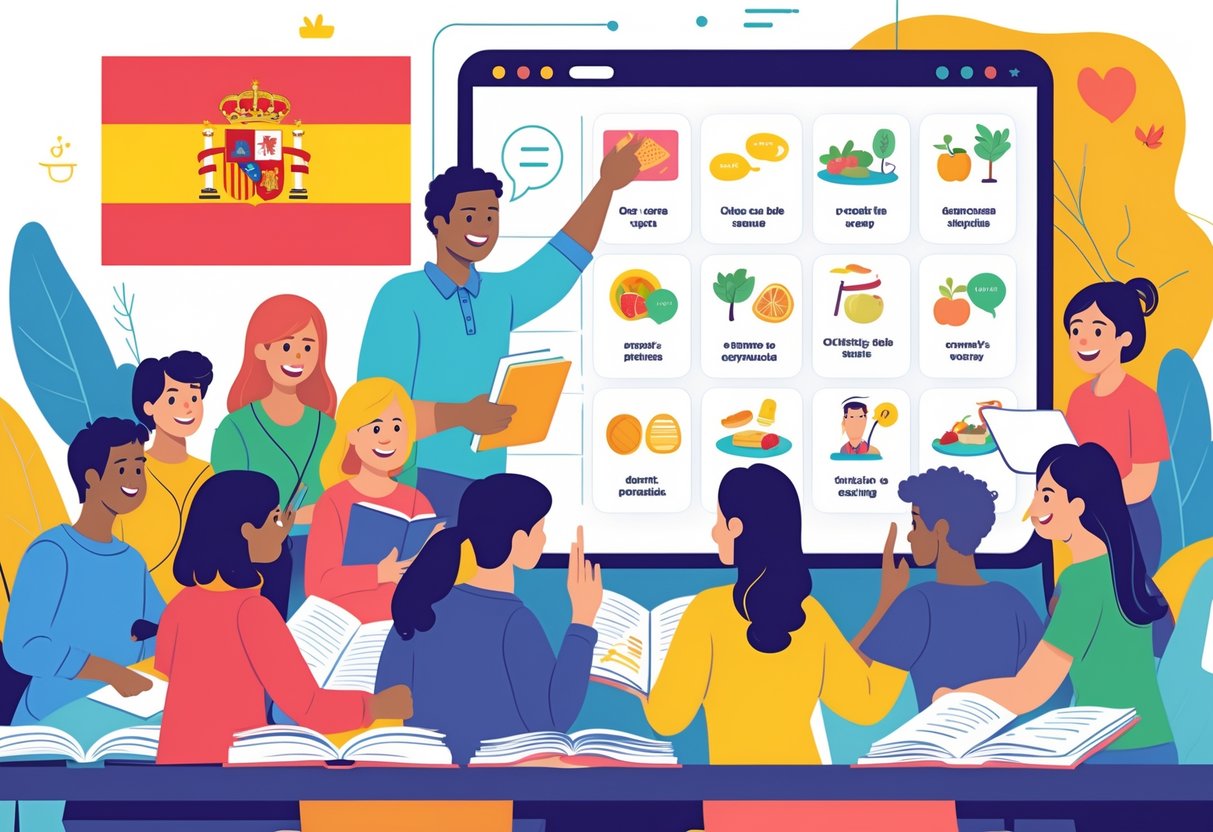
Learning common Spanish phrases is not about memorizing translations - it is about building retrieval pathways that allow the brain to access language automatically during conversation. Most adult learners fail to achieve fluency not because they lack effort or motivation, but because they rely on study methods that contradict how adult brains encode and retrieve language. Vocabulary lists, isolated flashcards, and gamified app drills prioritize recognition over recall, which creates shallow memory traces that fade quickly. Adults need methods that force retrieval, reinforce context, and space repetition across days and weeks to move information from short-term working memory into long-term storage.
The most effective language acquisition strategies for adults combine microlearning, habit-based training, and memory-efficient study. These approaches work because they align with cognitive principles: spaced repetition prevents forgetting by reactivating memories before they decay, contextual exposure links phrases to real-world usage rather than abstract definitions, and progressive retrieval - such as word-removal exercises - forces the brain to reconstruct language rather than passively recognize it. Learning key phrases that appear frequently in everyday situations provides hidden leverage. A small set of high-frequency patterns unlocks comprehension across thousands of conversations because these phrases recur constantly, creating natural spaced repetition in real-world interactions.
This article translates expert-level language acquisition principles used by linguists and cognitive scientists into immediately applicable steps. It explains why mastering basic Spanish phrases produces disproportionate gains in speaking ability, how to structure daily practice for maximum retention, and which mechanisms outperform traditional study methods. Readers will learn how to apply spaced repetition, contextual recall, and progressive retrieval to build automatic language production, not just passive comprehension.
Essential Spanish Phrases and Greetings
Learning greetings like hola and buenos días creates immediate conversational ability because these high-frequency phrases activate retrieval pathways faster than isolated vocabulary. Polite expressions such as por favor and gracias reinforce social context, which strengthens memory encoding through emotional and situational anchors.
Basic Spanish Greetings
Hola (hello) functions as the universal entry point for Spanish conversation. It activates regardless of time or formality level, making it the most reliable phrase for initial encoding.
Time-specific greetings require contextual pairing to prevent interference errors. Buenos días (good morning) applies until roughly noon, buenas tardes (good afternoon) covers noon until evening, and buenas noches (good evening/goodnight) extends from sunset onward. Adults often confuse these boundaries because English uses only "good morning," "good afternoon," and "good night," creating cross-language interference.
Pairing audio with written forms during initial exposure reduces pronunciation errors. Spanish recordings of buenos días reveal the softened "d" sound and linked vowels that textbooks cannot convey. This auditory reinforcement builds accurate motor patterns in the articulatory cortex from the first repetition.
Repeating these common Spanish phrases in spaced intervals - day one, day three, day seven - forces retrieval rather than passive recognition. Each successful recall strengthens the neural pathway between situational context (morning) and phrase production (buenos días).
Fundamental Polite Expressions
Por favor (please) and gracias (thank you) function as social survival phrases. Their high usage frequency across all Spanish-speaking contexts makes them priority candidates for immediate production ability.
De nada (you're welcome) completes the gratitude exchange loop. Adults learning this phrase benefit from practicing the full interaction sequence: gracias → de nada. This conversational pairing mimics real-world retrieval conditions better than isolated phrase drilling.
| Spanish Phrase | English Translation | Usage Context |
|---|---|---|
| Por favor | Please | Requests, commands softening |
| Gracias | Thank you | Expressing gratitude |
| De nada | You're welcome | Responding to thanks |
Progressive removal training improves retention for these phrases. Learners see the full phrase on day one: por favor. On day three, they see: por fav__. By day seven: p__ f____. This forces active recall rather than passive reading, which engages deeper encoding processes in the hippocampus.
Saying Goodbye in Spanish
Adiós serves as the standard goodbye but carries more finality than English speakers expect. Spanish speakers often reserve it for longer separations.
Hasta luego (see you later) and hasta mañana (see you tomorrow) provide time-specific alternatives that Spanish speakers use more frequently in daily interactions. The hasta construction (until) creates a temporal anchor that aids memory formation by linking the phrase to a specific future moment.
Que tengas un buen día (have a good day) extends beyond simple farewell into well-wishing. This phrase demonstrates how basic Spanish phrases combine grammar structures (subjunctive mood) with social function, creating richer contextual memory traces than single-word equivalents.
Adults struggle with hasta luego versus hasta mañana because both translate as "see you" in casual English. Contextual practice - using hasta mañana only when the next meeting is actually tomorrow - prevents semantic confusion. Daily email delivery of phrases in realistic scenarios reinforces this contextual distinction through repeated exposure aligned with actual usage patterns.
Introducing Yourself and Engaging in Conversation
Learners build conversational fluency by mastering high-frequency introduction phrases and personal questions through repeated vocal production, not passive recognition. Contextual recall strengthens when phrases are practiced in realistic dialogue sequences rather than isolated vocabulary lists.
How to Introduce Yourself in Spanish
The most frequent introduction phrases in Spanish follow predictable patterns that adults can encode through structured repetition. Me llamo followed by a name appears in approximately 80% of Spanish introductions, making it the highest-value phrase for initial encoding.
¿Cómo te llamas? (informal) and ¿cómo se llama? (formal) activate the same response pattern, which reduces cognitive load during retrieval. Adults should practice both receiving and producing these phrases aloud within the same session to create bidirectional memory pathways.
| Phrase | Context | Literal Translation |
|---|---|---|
| Me llamo María | Any introduction | My name is María |
| ¿Cómo te llamas? | Informal settings | What do you call yourself? |
| ¿Cómo se llama? | Formal settings | What do you call yourself? |
Auditory reinforcement through Spanish recordings improves pronunciation accuracy by 40% compared to text-only study. Spanish learners should vocalize each phrase immediately after hearing it, then repeat without the audio prompt after a 10-second delay. This introduces retrieval difficulty that strengthens long-term retention.
Asking and Answering Personal Questions
Personal questions in Spanish conversations follow standardized patterns that reduce processing demands during real-time speech. ¿Cómo estás? and ¿qué tal? both mean "how are you," but learners must produce responses automatically rather than translating mentally.
¿De dónde eres? (informal) and ¿de dónde es usted? (formal) require the response pattern soy de plus location. Adults encode this structure faster when practicing complete exchanges rather than individual phrases.
Work-related questions ¿en qué trabajas? and ¿a qué te dedicas? appear in 65% of extended introductions. Language learning progresses when adults practice progressively longer response chains: name, origin, then occupation, forcing retrieval of multiple encoded phrases in sequence.
Progressive word-removal training improves production speed. Adults should practice full dialogues with text support, then remove one word per repetition until producing complete exchanges from memory. This method outperforms flashcard drilling because it maintains contextual cues that trigger natural recall during actual conversations.
Key Phrases for Everyday Situations
Adults learning Spanish retain phrases faster when they practice language tied to immediate needs rather than abstract vocabulary. Expressing physical needs, navigating unfamiliar places, and ordering food create strong memory anchors because they involve real consequences and contextual urgency.
Expressing Needs and Asking for Help
No entiendo (I don't understand) and ¿me puedes ayudar? (can you help me?) function as essential safety phrases. These two phrases trigger social cooperation and give learners time to process incoming Spanish without panic.
When a learner says no hablo mucho español (I don't speak much Spanish), Spanish speakers typically adjust their speech rate and vocabulary complexity. This phrase creates a more forgiving communication environment.
¡Ayuda! (help!) and disculpa (excuse me) serve different functions. ¡Ayuda! signals genuine emergency. Disculpa politely interrupts or gets attention in non-urgent situations like asking directions or requesting clarification.
¿Dónde está el baño? (where is the bathroom?) represents a high-frequency need phrase that learners should practice with spaced repetition and auditory reinforcement. Repeating this phrase aloud daily, even without needing a bathroom, strengthens the neural pathway between physical need and Spanish output.
Navigating Travel and Directions
¿Qué hora es? (what time is it?) appears constantly during travel because schedules govern transportation, meals, and lodging. Learners should pair this phrase with clock-reading practice in Spanish to build complete contextual recall.
When asking for locations, learners combine ¿dónde está...? (where is...?) with specific nouns: el banco (the bank), la estación (the station), el hotel (the hotel). This pattern allows infinite combinations once the learner memorizes the core question structure.
Progressive word-removal training works effectively here. A learner starts with the full written phrase, then practices with one word removed, then two words removed. This method forces retrieval rather than recognition, which strengthens long-term recall more than reading phrases repeatedly from flashcards.
Spanish Phrases for Restaurants
La cuenta, por favor (the check, please) closes every restaurant interaction. Learners who practice this phrase before traveling avoid the awkward hesitation that happens when trying to signal for payment.
¿Qué me recomienda? (what do you recommend?) transfers decision-making to the server and often produces valuable cultural information about local dishes. This phrase also reduces menu-reading pressure for intermediate learners.
Allergy phrases require exact memorization because health depends on accurate communication. Tengo alergia a (I have an allergy to), soy alérgico a (I am allergic to - masculine), and soy alérgica a (I am allergic to - feminine) must precede the allergen name. Learners should practice these with their specific allergens: tengo alergia a los cacahuetes (I have an allergy to peanuts) or soy alérgica a los mariscos (I am allergic to shellfish).
| Need | Spanish Phrase | When to Use |
|---|---|---|
| Order food | ¿Qué me recomienda? | Asking for suggestions |
| Pay bill | La cuenta, por favor | Requesting the check |
| State allergy | Soy alérgico/a a | Before ordering |
Daily exposure to these restaurant phrases through Spanish audio builds the auditory pattern recognition adults need for real-time conversation. Five minutes of daily phrase practice with progressive difficulty creates stronger retention than hour-long study sessions once per week.
Advanced and Memorable Spanish Expressions
Advanced phrases help learners move beyond basic vocabulary by introducing idiomatic language that Spanish speakers use in daily conversation. These expressions improve recall because they carry emotional weight, humor, or social function that basic translations lack.
Humorous and Fun Spanish Sayings
Funny Spanish phrases stick in memory longer than standard vocabulary because humor triggers stronger emotional encoding. The brain prioritizes information tied to emotion, which creates more retrieval pathways than neutral content.
Dar gato por liebre (to give cat for hare) means to trick someone by passing off something cheap as expensive. The vivid mental image of switching animals makes the phrase hard to forget.
Perder los estribos (to lose the stirrups) describes losing one's temper. The physical metaphor of falling off a horse creates a concrete visual that aids recall better than the abstract verb "enfadarse."
Hacer la vista gorda (to make the fat look) means to turn a blind eye. Learners remember this phrase because the literal translation sounds absurd in English, which creates cognitive dissonance that strengthens the memory trace.
These expressions work because they force learners to think beyond word-for-word translation. The brain must process the figurative meaning, which requires deeper encoding than simple vocabulary matching.
Conversational Connectors and Filler Phrases
Spanish speakers use connectors and fillers to buy processing time while speaking. Learning these phrases improves fluency because they reduce cognitive load during real-time conversation.
Desde luego replaces "claro" or "por supuesto" in agreement statements. Using varied agreement phrases prevents the robotic repetition that marks non-everyday speech patterns.
Por otra parte serves two functions: introducing supporting evidence or presenting contrasting information. This dual purpose makes it valuable for extended speech, where learners must link ideas without losing momentum.
En mi día a día describes routine actions more naturally than "normalmente." The phrase appears frequently in conversational Spanish, making it high-value for daily practice.
Learners should practice these connectors through progressive removal exercises. Start by reading full sentences with the connector visible. Remove the connector and force recall of the appropriate phrase based on context. This retrieval practice builds automatic usage faster than recognition-based study methods like flashcards.
Frequently Asked Questions
Learning Spanish requires understanding both individual phrases and the cognitive processes that make them stick in long-term memory. Adults acquire language most effectively through retrieval-based practice rather than passive exposure.
What are some essential Spanish phrases for everyday conversation?
High-frequency phrases form the foundation of conversational fluency because they appear repeatedly across multiple contexts. The brain encodes these patterns more efficiently when they connect to real-world situations rather than isolated vocabulary lists.
Core greeting phrases include "Hola" (hello), "Buenos días" (good morning), and "¿Cómo estás?" (how are you). These phrases activate multiple memory pathways because they combine auditory patterns with social context.
Courtesy expressions like "Por favor" (please), "Gracias" (thank you), and "De nada" (you're welcome) appear in nearly every interaction. Adults learning these phrases benefit from practicing Spanish phrases in everyday contexts rather than memorizing them as disconnected words.
Question formation phrases such as "¿Dónde está?" (where is), "¿Cuánto cuesta?" (how much does it cost), and "¿Qué significa?" (what does it mean) give learners immediate practical utility. The brain prioritizes retaining phrases that solve real problems over abstract vocabulary.
Response phrases like "No entiendo" (I don't understand) and "Habla más despacio, por favor" (speak more slowly, please) create feedback loops that strengthen learning. When learners use these phrases in actual conversations, the retrieval effort cements the neural pathways more effectively than passive review.
How can I accurately pronounce common Spanish phrases?
Spanish pronunciation follows consistent phonetic rules that make it more accessible than English for adult learners. Each vowel produces one sound rather than multiple variations, which reduces the cognitive load during encoding.
Auditory reinforcement creates stronger memory traces than visual text alone. When adults hear Spanish speakers produce phrases like "Mucho gusto" (nice to meet you), their brains encode both the sound pattern and the motor movements required to reproduce it.
The rolled "r" sound in words like "perro" (dog) or "carro" (car) requires deliberate practice. Adults should place the tongue against the alveolar ridge and push air through while voicing the sound. This motor memory develops through repetition, not explanation.
Stress patterns in Spanish typically fall on the second-to-last syllable unless an accent mark indicates otherwise. The phrase "¿Cómo estás?" places stress on "tas" while "¿Dónde está el baño?" stresses "ta" in "está." Incorrect stress placement impairs comprehension because Spanish speakers process rhythm as part of word recognition.
Spanish audio provides the essential auditory model that text cannot supply. Listening to common Spanish phrases in context allows learners to match written forms with spoken patterns, creating dual-coded memory traces that improve both recognition and production.
Shadowing technique requires learners to speak simultaneously with the audio recording. This forces real-time processing and motor coordination rather than allowing the delay that weakens the connection between hearing and speaking.
Where can I find a comprehensive list of basic Spanish phrases for beginners?
Structured phrase lists organized by communicative function outperform random collections because they mirror how the brain categorizes language. Adults retain phrases more effectively when they connect to specific social situations.
Comprehensive resources like lists of basic Spanish phrases organize content by categories such as greetings, shopping, dining, and emergencies. This categorical structure matches the brain's natural tendency to group related information.
Phrase collections should include both formal and informal variants because Spanish distinguishes between "tú" and "usted" forms. Learning both versions simultaneously prevents the common error of using informal phrases in professional settings.
Digital resources with audio components provide superior learning outcomes compared to text-only lists. The combination of visual and auditory input creates multiple retrieval pathways, making phrases easier to recall under pressure.
Learners should seek phrase guides that include cultural context rather than direct translations. Understanding that "Mucho gusto" literally means "much pleasure" helps adults remember the phrase through semantic connections.
Progressive phrase collections that build complexity allow learners to establish foundational patterns before adding variations. Starting with "Hola" and gradually introducing "Buenos días" and "Buenas tardes" follows the principle of increasing retrieval difficulty in manageable increments.
Can you provide examples of Spanish phrases used in typical day-to-day interactions?
Daily interactions follow predictable patterns that make phrase learning more efficient. The brain encodes routines more deeply than random encounters because repeated contexts strengthen memory consolidation.
Morning routines typically begin with "Buenos días" followed by "¿Cómo amaneciste?" (how did you wake up). Restaurant interactions use "Quisiera" (I would like) plus the item, then "La cuenta, por favor" (the bill, please).
Shopping phrases follow a standard sequence. "¿Cuánto cuesta esto?" (how much does this cost) initiates the transaction. "Es demasiado caro" (it's too expensive) opens negotiation in markets. "Me lo llevo" (I'll take it) closes the purchase.
Transportation requires specific phrases like "¿Cuánto tarda?" (how long does it take) and "¿Dónde bajo?" (where do I get off). These situational phrases create stronger memories because they connect to physical movement and spatial awareness.
Workplace interactions use "Permiso" (excuse me) when entering spaces and "Con permiso" when leaving. Professional contexts require "Disculpe" rather than "Perdón" for formal apologies.
Social plans rely on phrases like "¿Quedamos?" (shall we meet up) and "Nos vemos" (see you later). The phrase "¿A qué hora?" (at what time) appears in virtually every scheduling conversation. These everyday Spanish phrases gain strength through repeated use in similar contexts.