What Does Imperfect Mean in Spanish: The Science of Lasting Recall
Imperfect sets the scene or background; preterite jumps in with completed actions.
Posted by
 Stewart Kaplan
Related reading
What Does Adonde Mean in Spanish? How Movement 'Clicks' for Learners
You have to know when prepositions combine with donde to show direction or position
What Does Ahi Mean in Spanish? Cognitive Mastery That Sticks
Learners mix up ahí, hay, and ay because they sound the same but mean totally different things.
What Does Aki Mean in Spanish: Unpacking Real Usage for Learners
Regional differences exist, but nearly everyone in Spanish-speaking communities gets what "aki" means in a text
TL;DR
- The imperfect tense in Spanish (imperfecto) covers ongoing actions, repeated habits, and background conditions in the past, with no set end.
- Regular verbs: -ar verbs get -aba endings; -er/-ir verbs use -ía endings.
- Only three verbs are irregular: ser (era), ir (iba), ver (veía).
- Signal words like siempre, todos los días, and a menudo tip you off to use the imperfect for habitual actions.
- Imperfect sets the scene or background; preterite jumps in with completed actions.
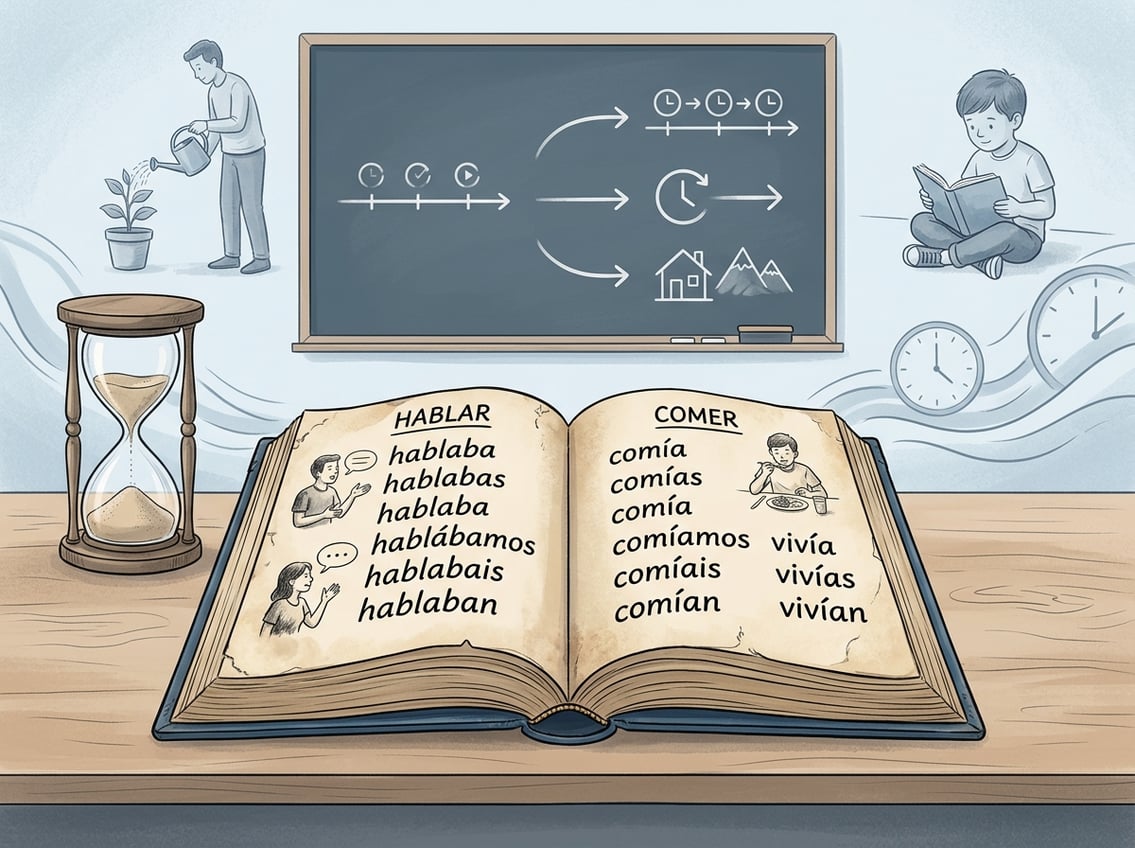
Core Definition and Function in Spanish Grammar
The imperfect tense describes ongoing past actions, repeated habits, and background conditions. It doesn’t mark when things started or ended. Spanish grammar treats the imperfect tense differently from the preterite, which is for finished actions.
When to Use the Imperfect Tense
The pretérito imperfecto has four main jobs:
- Regular, repeated actions with no clear end
- Often seen with: siempre (always), todos los días (every day), a menudo (often)
- Example: Jugaba fútbol cada sábado (I used to play soccer every Saturday)
Ongoing Past Actions
- Things happening at an unspecified time
- Background activities that frame other events
- Example: Llovía cuando salimos (It was raining when we left)
Physical and Mental Descriptions
- Age, looks, emotions, and states of being
- Weather and setting details
- Example: Tenía diez años (I was ten years old)
- Example: Estaba cansada (She was tired)
Time and Date References
- Telling the time in the past
- Days or dates in stories
- Example: Eran las tres de la tarde (It was three in the afternoon)
| Use Case | Signal Words | Example |
|---|---|---|
| Habits | siempre, cada día, generalmente | Comía pan cada mañana |
| Ongoing | mientras, cuando | Estudiaba cuando llamaste |
| Description | era, estaba, había | La casa era grande |
| Time | eran las, era el | Eran las ocho |
Comparing Imperfect and Preterite Forms
Imperfect and preterite tenses do different things in Spanish stories:
Imperfect (El Imperfecto)
- No clear start or end
- Background info
- "Was doing" or "used to do"
- Sets the scene
Preterite (El Pretérito)
- Completed actions
- Main story events
- "Did" or "happened"
- Moves the story forward
| Tense | Function | Example Phrase |
|---|---|---|
| Imperfect | Scene setting | Hacía calor (It was hot) |
| Preterite | Interrupt action | cuando llegó (when he arrived) |
| Combined | Full sentence | Hacía calor cuando llegó |
Rule → Example
Rule: If the action doesn’t have a definite start and finish, use imperfect.
Example: Leía libros de niño ("I used to read books as a child")
Recognizing Imperfect in Spoken and Written Spanish
Imperfect verbs have endings that stand out:
| Subject | -ar verbs | -er/-ir verbs |
|---|---|---|
| yo | -aba | -ía |
| tú | -abas | -ías |
| él/ella/usted | -aba | -ía |
| nosotros | -ábamos | -íamos |
| ellos/ellas/ustedes | -aban | -ían |
The three irregulars:
- ir: iba, ibas, iba, íbamos, iban
- ser: era, eras, era, éramos, eran
- ver: veía, veías, veía, veíamos, veían
Signal Words You’ll Hear:
- Cuando era niño... (When I was a child...)
- Antes... (Before...)
- En aquella época... (Back then...)
- De pequeño... (As a kid...)
| Recognition Pattern | Example Phrase |
|---|---|
| Childhood stories | Cuando era niño... |
| Past routines | Siempre comía temprano |
| Scene setting | Había una vez... |
Conjugation Patterns and Common Irregularities
Imperfect verbs fall into two main groups (-aba, -ía), with just three irregulars. Most verbs are regular, so once you know the endings, you’re set.
Regular Verb Endings and Structures
-AR Verbs
| Subject | Ending | Example (hablar) |
|---|---|---|
| yo | -aba | hablaba |
| tú | -abas | hablabas |
| él/ella/usted | -aba | hablaba |
| nosotros | -ábamos | hablábamos |
| vosotros | -abais | hablabais |
| ellos/ellas/ustedes | -aban | hablaban |
-ER and -IR Verbs
| Subject | Ending | Example (comer) | Example (vivir) |
|---|---|---|---|
| yo | -ía | comía | vivía |
| tú | -ías | comías | vivías |
| él/ella/usted | -ía | comía | vivía |
| nosotros | -íamos | comíamos | vivíamos |
| vosotros | -íais | comíais | vivíais |
| ellos/ellas/ustedes | -ían | comían | vivían |
| Rule | Example |
|---|---|
| Remove infinitive ending, add suffix | hablar → hablaba, comer → comía |
| Accent on -ía and -ábamos forms | vivíamos, comíamos, hablábamos |
Three Key Irregular Verbs: ir, ser, ver
| Verb | yo | tú | él/ella/usted | nosotros | vosotros | ellos/ellas/ustedes |
|---|---|---|---|---|---|---|
| ir | iba | ibas | iba | íbamos | ibais | iban |
| ser | era | eras | era | éramos | erais | eran |
| ver | veía | veías | veía | veíamos | veíais | veían |
Conjugation Examples With Regular and Irregular Verbs
Regular Verbs
- Yo estudiaba matemáticas cada noche. (I studied math every night.)
- Tú comías tacos los viernes. (You ate tacos on Fridays.)
- Nosotros vivíamos en Madrid. (We lived in Madrid.)
- Ellos hablaban español en casa. (They spoke Spanish at home.)
Irregular Verbs
- Yo iba a la escuela en autobús. (I went to school by bus.)
- Mi hermana era muy alta. (My sister was very tall.)
- Nosotros veíamos películas los domingos. (We watched movies on Sundays.)
- Había mucha gente en el parque. (There were many people in the park.)
| Rule | Example |
|---|---|
| Regular: stem + ending | estudiar → estudiaba |
| Irregular: memorize forms | ser → era, ir → iba, ver → veía |
Typical Use Cases: Narration and Description
The imperfect tense fills in background info, shows ongoing actions, and describes repeated behaviors in the past.
Describing Ongoing or Interrupted Past Actions
Pattern: Ongoing (Imperfect) + Interrupting (Preterite)
| Ongoing Action (Imperfect) | Interrupting Event (Preterite) |
|---|---|
| Hablaba por teléfono | cuando llegó mi hermana |
| Estudiaba en mi cuarto | cuando sonó la alarma |
| Comías el desayuno | cuando recibiste la noticia |
Multiple Ongoing Actions (All Imperfect):
- Mientras mi padre cocinaba, mi madre leía y yo jugaba.
- Los niños corrían, los perros ladraban y las aves cantaban.
- Vivíamos en Madrid mientras mis padres trabajaban allí.
Setting Scenes: Weather, Age, and Time
| Category | Example |
|---|---|
| Weather | Llovía mucho / Hacía frío |
| Time | Eran las tres / Era medianoche |
| Age | Tenía veinte años / Había muchos estudiantes |
| Physical state | Estaba cansado / Parecía feliz |
| Emotions | Quería salir / Sentía miedo |
Rule → Example
Rule: Use imperfect for background details, not main events.
Example: Hacía frío y todos estaban cansados. (It was cold and everyone was tired.)
Habits and Routines: Signal Words and Phrases
Repeated or habitual past actions require the Spanish imperfect tense. Certain time expressions point to these recurring behaviors.
High-Frequency Signal Words:
- Todos los días – every day
- Siempre – always
- A menudo – often
- De vez en cuando – from time to time
- Generalmente – generally
- Cada semana – each week
- Normalmente – normally
Pattern Examples:
- Todos los días hablaba con mi abuela.
- Siempre estudiaba en la biblioteca.
- A menudo comías en ese restaurante.
- De vez en cuando vivíamos con nuestros tíos.
Trigger Phrases Table
| Signal Word/Phrase | Meaning | Typical Use |
|---|---|---|
| todos los días | every day | Habitual action |
| siempre | always | Repeated action |
| a menudo | often | Frequent habit |
Authentic Examples for Rapid Internalization
Real sentences make it clear how the imperfect tense works in daily Spanish and when it flips to preterite for finished actions.
Sample Sentences Across Contexts
| Context | Spanish | English | Key Marker |
|---|---|---|---|
| Habitual action | Hablaba con mi abuela todos los días. | I used to talk with my grandmother every day. | todos los días |
| Ongoing action | Estudiaba cuando llamaste. | I was studying when you called. | cuando |
| Repeated past | Iba al parque a menudo. | I would go to the park often. | a menudo |
| Description | Había mucha gente en la fiesta. | There were many people at the party. | - |
| Past habit | Comías helado siempre después de cenar. | You used to eat ice cream always after dinner. | siempre |
| Background state | Vivíamos cerca de la playa en 2020. | We lived near the beach in 2020. | - |
| Group habit | Hablaban inglés en casa de niños. | They used to speak English at home as children. | de niños |
Time Marker → Tense Rule
- If the sentence has siempre, todos los días, or a menudo, use the imperfect.
- Descriptions or background states (like había, vivíamos) default to imperfect.
Transitioning Between Imperfect and Preterite
| Sentence | Imperfect Use | Preterite Use |
|---|---|---|
| Estudiaba cuando sonó el teléfono. | Background action in progress | Interrupting completed action |
| Hacía calor cuando llegamos. | Weather description | Specific arrival moment |
| Hablaban en la sala y entré. | Ongoing conversation | Single entrance action |
- Imperfect + preterite: ongoing situation interrupted by a specific event
- Use iba (was going) for journeys, preterite for arrival
- Hablaba sets the background; preterite marks the endpoint
Key Signal Words and Cognitive Triggers
Certain words in Spanish almost always mean you need the imperfect tense because they show habit, repetition, or ongoing action.
Frequency Words in Everyday Spanish
| Spanish Word | English | Tense Triggered |
|---|---|---|
| siempre | always | Imperfect |
| a menudo | often | Imperfect |
| todos los días | every day | Imperfect |
| de vez en cuando | from time to time | Imperfect |
| cada semana | every week | Imperfect |
| frecuentemente | frequently | Imperfect |
| generalmente | generally | Imperfect |
| nunca | never (habitual) | Imperfect |
Pattern → Example
- Frequency word + imperfect verb: Siempre jugaba al fútbol (I always played soccer)
- Todos los días comía a las dos (Every day I ate at two)
- A menudo visitábamos a los abuelos (We often visited our grandparents)
Choosing Imperfect Automatically in Conversation
Trigger → Response
- Mientras → use imperfect for ongoing action (Mientras estudiaba, escuchaba música)
- Siempre → use imperfect for repeated action (Siempre llegaba tarde)
- Todos los días → use imperfect for daily habits (Todos los días caminaba al trabajo)
Memory Steps:
- Spot frequency word.
- Use imperfect ending.
- Repeat in real contexts.
Common Mistakes and Mastery Shortcuts
It's easy to mix up imperfect and preterite. Adults can master the difference faster by practicing with high-frequency pairs and contrast drills.
Mixing Up Imperfect and Preterite: How to Avoid Errors
| Imperfect Tense | Preterite |
|---|---|
| Ongoing or habitual past actions | Completed actions with clear start/end |
| Background descriptions | Main events or single actions |
| "was doing" / "used to do" | "did" |
Error → Correction
- Preterite for repeated habit: Jugué fútbol cada día → Jugaba fútbol cada día
- Imperfect for one-time event: Iba al cine ayer → Fui al cine ayer
- Wrong tense in simultaneous actions: Llovió mientras caminé → Llovía mientras caminaba
Recognition Table
| Imperfect Indicators | Preterite Indicators |
|---|---|
| siempre, todos los días, cada semana, generalmente, mientras | ayer, anoche, una vez, de repente, el año pasado |
Practice Steps
- Read paired sentences out loud.
- Identify the time marker.
- Choose tense: ongoing/habitual → imperfect, finished action → preterite.
Memory Techniques and Microlearning for Adults
| Verb | Imperfect Form | Usage Example |
|---|---|---|
| ser | era/eras/era | Era tímido de niño |
| estar | estaba/estabas | Estaba cansado |
| tener | tenía/tenías | Tenía veinte años |
| ir | iba/ibas | Iba al trabajo |
| hacer | hacía/hacías | Hacía ejercicio |
Spaced Retrieval Routine
- Day 1: Learn conjugation + 3 examples
- Day 2: Recall and create a new sentence
- Day 4: Mix imperfect and preterite in a paragraph
- Day 7: Drill in conversation
Reduction Drill
- Read: Cuando era niño, jugaba en el parque
- Remove one word: Cuando era niño, _____ en el parque
- Speak from memory, fill in the blank
- Remove more words: Cuando _____ niño, _____ en _____
Audio-First Rule → ExampleRule: Listen to Spanish audio before reading conjugation tables for better retention. Example: Play a YouTube clip with -aba, -ía verbs before studying endings.
Frequently Asked Questions
What is the imperfect tense used for in Spanish grammar?
Primary Uses Table
| Use Case | Example |
|---|---|
| Habitual actions | Siempre leía por la noche |
| Ongoing past actions | Estudiaba cuando llamaste |
| Physical descriptions | La casa era grande |
| Age, date, time | Tenía diez años, Era lunes |
| Emotions, mental states | Estaba feliz |
| Scene-setting | Había mucha gente |
Time Markers Table
| Marker | Meaning |
|---|---|
| siempre | always |
| a menudo | often |
| todos los días | every day |
| de vez en cuando | once in a while |
| generalmente | generally |
| cada año | every year |
How do you conjugate regular verbs in the Spanish imperfect tense?
-ar Verbs (hablar = to speak)
| Subject | Ending | Example |
|---|---|---|
| yo | -aba | hablaba |
| tú | -abas | hablabas |
| él/ella/usted | -aba | hablaba |
| nosotros | -ábamos | hablábamos |
| vosotros | -abais | hablabais |
| ellos/ellas/ustedes | -aban | hablaban |
-er and -ir Verbs (comer = to eat, vivir = to live)
| Subject | Ending | Example (comer) | Example (vivir) |
|---|---|---|---|
| yo | -ía | comía | vivía |
| tú | -ías | comías | vivías |
| él/ella/usted | -ía | comía | vivía |
| nosotros | -íamos | comíamos | vivíamos |
| vosotros | -íais | comíais | vivíais |
| ellos/ellas/ustedes | -ían | comían | vivían |
How can you tell when a verb is in the imperfect tense in Spanish?
Recognition Patterns Table
| Clue | Imperfect Form Example |
|---|---|
| -ar verbs with "aba" | hablaba, caminábamos |
| -er/-ir verbs with "ía" | comía, vivíamos |
| Accent on nosotros for -ar | hablábamos |
| Accent on all -er/-ir forms | comía, comíamos |
Contrast Table
| Tense | -ar ending (yo) | -er/-ir ending (yo) |
|---|---|---|
| Imperfect | -aba | -ía |
| Preterite | -é | -í |
What are some common examples of sentences using the imperfect tense in Spanish?
Habitual actions:
- Yo caminaba cada día. (I used to walk every day.)
- Manuel iba a la piscina todos los jueves. (Manuel went to the pool every Thursday.)
- Comíamos juntos los domingos. (We used to eat together on Sundays.)
Physical descriptions:
- Esperanza era bajita y tenía pecas. (Esperanza was short and had freckles.)
- La casa tenía un jardín grande. (The house had a big garden.)
Ages and times:
- Jana tenía 16 años cuando se marchó. (Jana was 16 years old when she left.)
- Eran las cinco de la tarde. (It was five in the afternoon.)
Scene-setting with interruption:
- Nadábamos en el río cuando vimos un salmón. (We were swimming in the river when we saw a salmon.)
- Estudiabas cuando te llamé. (You were studying when I called you.)
Which verbs are irregular in the Spanish imperfect tense, and how are they formed?
| Irregular Verb | Conjugation Pattern | Example |
|---|---|---|
| ir (to go) | iba, ibas, iba, íbamos, ibais, iban | Yo iba al mercado. |
| ser (to be) | era, eras, era, éramos, erais, eran | Ella era amable. |
| ver (to see) | veía, veías, veía, veíamos, veíais, veían | Nosotros veíamos la televisión. |
Rule → Example pairs:
- Rule: Ver uses regular -er endings with "ve-" as the stem.
Example: Yo veía, tú veías
Reference: Spanish imperfect irregular verbs