What Does No Sabo Mean in Spanish: Microlearning Mastery Unlocked
Many "no sabo" kids wrestle with identity but are redefining what it means to be Latino beyond just language skills.
Posted by
 Stewart Kaplan
Related reading
What Does Adonde Mean in Spanish? How Movement 'Clicks' for Learners
You have to know when prepositions combine with donde to show direction or position
What Does Ahi Mean in Spanish? Cognitive Mastery That Sticks
Learners mix up ahí, hay, and ay because they sound the same but mean totally different things.
What Does Aki Mean in Spanish: Unpacking Real Usage for Learners
Regional differences exist, but nearly everyone in Spanish-speaking communities gets what "aki" means in a text
TL;DR
- "No sabo" is an incorrect way to say "I don't know" in Spanish (the right phrase is "no sé"). It's often used to poke fun at people who aren't fluent in Spanish.
- A "no sabo kid" is someone of Latino heritage raised in the U.S. who doesn't speak fluent Spanish, sometimes facing language shaming from their own community.
- The term started as an insult but is now being reclaimed by young Latinos who embrace their bilingual identity even if they aren't fluent.
- In many immigrant families: grandparents speak only the heritage language, parents are bilingual, and kids can understand but not speak fluently.
- Many "no sabo" kids wrestle with identity but are redefining what it means to be Latino beyond just language skills.
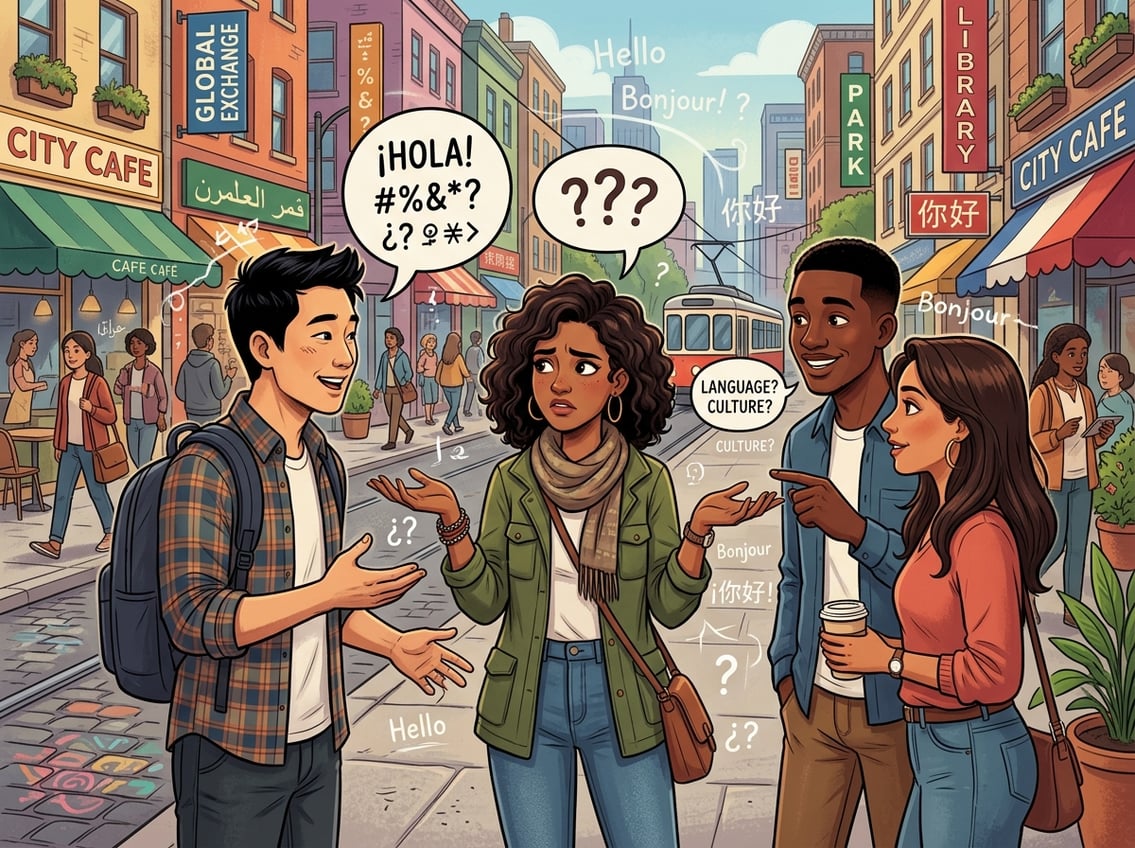
Literal Meaning and Correct Usage
"No sabo" tries to say "I don't know" in Spanish, but it's just not right - the correct phrase is "no sé." This mistake usually happens when someone applies regular verb patterns to an irregular verb.
Origin of the Phrase
Source of the Error
- New learners see regular -ar verb endings (hablo, canto, bailo)
- They try the same pattern with "saber" (to know), ending up with "sabo"
- They add "no" to say "I don't know"
- It's an incorrect first-person conjugation of "saber"
When It Emerged
- Became common in U.S. Latino communities where kids heard Spanish at home but didn't get formal Spanish instruction
- "No sabo" became a sign of incomplete Spanish, even though language rules are often arbitrary
Grammatical Differences: 'No Sabo' vs 'No Sé'
| Form | Conjugation Type | Translation | Usage |
|---|---|---|---|
| No sabo | Incorrect | - | Common learner error |
| No sé | Correct irregular | I don't know | Standard Spanish |
Verb Conjugation Comparison
- Regular -ar verbs:
- Hablar → yo hablo (I speak)
- Cantar → yo canto (I sing)
- Bailar → yo bailo (I dance)
- Irregular verb "saber":
- Saber → yo sé (I know)
- Not yo sabo ❌
Rule → Example:
- Rule: Use "yo sé" for "I know" because "saber" is irregular.
- Example: "No sé" (not "no sabo")
Why the Mistake Happens
Pattern Recognition Process
- Learners spot the -o ending for "yo" with regular verbs
- They lump "saber" in with those verbs
- Apply the pattern instead of memorizing the irregular
- End up saying "sabo" by mistake
Contributing Factors
- Not much formal instruction: Learning by ear, not by grammar book
- Irregular verbs are tricky: The stem changes from "sab-" to just "s-" in the "yo" form
- Rarely corrected: Family usually understands, so they let it slide
Rule → Example:
- Rule: Irregular verbs like "saber" don't follow the standard -o ending in the "yo" form.
- Example: "Yo sé" (correct), not "yo sabo" (incorrect)
Cultural Context and Internet Phenomenon
"No sabo" started as an insult but has grown into a cultural movement. Social media gave it new life, letting millions of Latinos share their stories about language and identity. Gen Z has even reclaimed the word, flipping it from shame to pride.
Rise of 'No Sabo' Memes and Jokes
Evolution of the Term:
- At first, used to tease Latinos who couldn't speak Spanish well
- Now it's a huge online trend
- TikTok is full of no sabo kids telling their stories
- Memes poke fun at struggling to reply in Spanish
Common Meme Formats:
- Family gatherings where everyone speaks fast Spanish
- Saying "sí" to everything, even if you don't get it
- Using Google Translate to message relatives
- Grandparents looking disappointed by your Spanish
"Yo Sabo Kid" rebellion:
- Young people unite under this label
- No sabo kids push back against shaming by making content that validates their experience
Spanglish as a Communication Bridge
How No Sabo Kids Use Spanglish:
- Blend English and Spanish in one sentence
- Switch to whichever language word comes to mind first
- Use Spanish nouns with English verbs
- Drop English phrases into Spanish chats
| Situation | Typical Response | Language Mix |
|---|---|---|
| With bilingual friends | Heavy code-switching | 50/50 English-Spanish |
| Talking to Spanish-only relatives | Simple Spanish + gestures | 70% Spanish, 30% English |
| Formal settings | Mostly English, some Spanish words | 90% English, 10% Spanish |
Rule → Example:
- Rule: Use Spanglish when comfort with both languages varies.
- Example: "Voy a the store ahorita."
Influence of Social Media Trends
Platform-Specific Trends:
- TikTok: Short videos about language struggles and culture
- Instagram: Memes about family and language expectations
- Twitter/X: Conversations about what it means to be Latino beyond just language
Key Messages:
- Bilingual doesn't always mean bicultural
- Latin America is home to many languages, not just Spanish
- You can keep your culture even if your Spanish isn't perfect
- Stop shaming people for language skills
Rule → Example:
- Rule: Social media is used to build community and challenge language shaming.
- Example: #NoSaboKid trending with stories and memes
Identity, Bilingualism, and Shaming
The "no sabo" label stirs up questions about language and cultural belonging - how heritage speakers see themselves and how others see them.
Cultural Identity and Belonging
Core Identity Conflicts
- Spanish fluency often seen as proof of being "really" Latino
- Heritage speakers feel stuck between two worlds
- Community members sometimes judge based on Spanish skills
- Identity gets tied to language, even though Latin America is multilingual
| Element | Language-Based View | Broader Cultural View |
|---|---|---|
| Main marker | Spanish fluency | Family, traditions, lived culture |
| Authenticity test | Grammar accuracy | Participation, cultural knowledge |
| Belonging criteria | Fluent speech | Mixed heritage, acceptance |
Rule → Example:
- Rule: Cultural identity isn't measured solely by language ability.
- Example: "I celebrate Día de los Muertos even if my Spanish isn't perfect."
Bilingualism Reality
- Heritage speakers know both cultures
- Language skills exist on a spectrum
- Spanish isn't the only language in Latin America - indigenous languages came first
Heritage Speaker Experiences
Common Patterns
- Passive understanding: Can follow Spanish, but can't always reply
- Code-switching: Mix Spanish and English naturally
- Little formal education: Learned Spanish at home, not in class
- Language fades with each generation: Further from immigrant roots, less Spanish
| Generation | Language Pattern |
|---|---|
| 1st | Mostly Spanish |
| 2nd | Bilingual, prefers English to reply |
| 3rd | Understands Spanish, speaks English |
| 4th | May not understand Spanish |
Emotional Impact
- Shame when visiting family abroad
- Guilt about losing the language
- Imposter syndrome - feeling "not Latino enough"
- Sense of failure, even when it's not their fault
Language Shaming in the Latino Community
| Shaming Type | Example | Where It Happens |
|---|---|---|
| Direct mockery | Laughing at mistakes | Family gatherings |
| Exclusion | Switching to Spanish to leave someone out | Social situations |
| Authenticity test | "You're not really Latino if..." | Community events |
| Public correction | Viral videos of mistakes | Social media |
Who Shames
- Extended family
- People in heritage countries
- Spanish-dominant speakers
- Social media users
- Other Latinos drawing boundaries
Historical Context
- Immigrants once pressured to speak only English
- Told to drop first languages
- Avoided Spanish in public
Pushback Movement
- Young Latinos use social media to fight back against shaming
- "No sabo" is now a badge of acceptance, not an insult
Shifting Perspectives
- Insult turned into a community label
- Building community through shared stories
- Celebrating culture beyond language
- Recognizing bilingual doesn't always mean bicultural
Generational Shifts and Reclaiming 'No Sabo'
Younger Latinos are flipping "no sabo" from a dig into a point of pride. Meanwhile, a lot of older folks still see Spanish fluency as a must-have for real Latino identity.
From Insult to Badge of Honor
Original meaning: Grammatically off Spanish for "I don't know" (the right way: "no sé")
Traditional use: Used to mock U.S.-raised Latinos who aren't fluent in Spanish
Modern transformation:
- Gen Z reclamation: Young Latinos proudly call themselves "no sabo kids"
- Social media presence: TikTok is full of "no sabo kid" jokes and stories
- Community building: Latinos are pushing back on language shaming by sharing their own experiences
Who calls themselves "no sabo kids":
- Second-gen Latinos who mostly grew up with English
- Heritage speakers who get Spanish but can’t always speak it smoothly
- Kids of immigrants juggling two languages
Rule → Example:
Rule: Rejecting Spanish-as-authenticity gatekeeping
Example: "Not speaking perfect Spanish doesn’t make me less Latino."
Role of Jacqueline Delgadillo and Other Voices
| Advocate | Background | Main Message |
|---|---|---|
| Jacqueline Delgadillo | Mexican-born, SoCal-raised writer | Embrace your language skills - no shame |
| Lucia Lainez | Bilingual speech-language pathologist, Nicaraguan roots | Bilingual isn’t always bicultural |
Key perspectives:
- Spanish isn’t the only language in Latin America
- Spanish came to the region through colonization, so it’s not even local
- School systems often push English and erase heritage languages
- Families made tough choices to survive, sometimes dropping Spanish
- Culture isn’t just about language - it’s food, music, values, and more
Community priorities:
- Support each other instead of blaming individuals for language loss
- Celebrate Latino culture in all its forms
Attitudes Across Generations
| Generation | View on Spanish | Key Opinions |
|---|---|---|
| Older | Essential | Losing Spanish = losing culture; may use "yo no sabo" as criticism |
| Younger | Flexible | See barriers to language retention; value culture in other ways; prefer self-acceptance |
Common friction points:
- Family gatherings with comments about Spanish skills
- Trips to heritage countries where locals question your roots
- Community events expecting Spanish fluency
| Demographic Trend | Statistic |
|---|---|
| U.S. Latinos using Spanish at home | ~70% |
| Heritage speakers with mixed fluency | Increasing |
| Acceptance of diverse Latino identities | Growing |
Learning Spanish: Challenges and Opportunities
Adults face real hurdles learning or keeping up Spanish, but newer tools and consistent practice can help.
Barriers to Spanish Fluency
| Obstacle Type | Example/Impact |
|---|---|
| Limited exposure | Not enough Spanish in daily life |
| Pronunciation issues | Rolled r’s, tough vowel combos |
| Verb complexity | Irregular tenses, confusing conjugations |
| Self-consciousness | Fear of mistakes in front of fluent speakers |
| Time constraints | Busy schedules, hard to attend classes |
Heritage speaker-specific barriers:
- Know household Spanish, but grammar is shaky
- Academic words are missing from their vocab
- Pressure from family to sound natural
- Embarrassment about mixing languages or making mistakes
| Environmental Factor | Effect on Learning |
|---|---|
| Living far from Spanish speakers | Fewer chances to practice |
| English-dominant work | English gets reinforced, Spanish fades |
| Little Spanish media | Less exposure to natural speech |
| Family language shift | Spanish stops being passed down |
Rule → Example:
Rule: Language loss often feels personal, not just practical
Example: "I feel disconnected from my roots when I can’t speak Spanish."
Microlearning and Modern Language Acquisition
Daily practice structure:
- Short, regular sessions work better than long, rare ones
| Stage | Description |
|---|---|
| Encoding | Hear the phrase with Spanish audio |
| Retrieval | Recall it without looking |
| Reinforcement | Review at spaced intervals |
High-frequency phrase focus:
- Start with greetings, questions, time, food, and common responses
Progressive word removal technique:
- Read full phrase with translation
- Practice with one word blanked out
- Try with more blanks
- Say the whole phrase from a prompt
| Learning Method | Session Length | Retention | Flexibility |
|---|---|---|---|
| Traditional class | 60-90 min | Moderate | Low |
| Flashcard apps | 15-30 min | High | High |
| Audio-only programs | 30-45 min | Medium | Medium |
| Daily phrase delivery | 5-10 min | Very High | Very High |
Rule → Example:
Rule: Listen to Spanish audio before speaking
Example: "Repeat after the Spanish speaker three times before trying it yourself."
Practical Strategies for Adult Learners
Daily integration tactics:
- Stick Spanish labels on stuff around the house
- Change your phone’s language to Spanish
- Play Spanish podcasts while driving or working out
- Drill one real-life conversation each week
- Join language exchange groups for casual practice
| Childhood Bilingualism | Adult Second-Language Learning |
|---|---|
| Learn grammar naturally | Study rules step by step |
| Can get accent-free | Accent usually sticks |
| Patterns picked up by ear | Need explicit practice |
| Code-switching is normal | Switching takes effort |
Accountability systems:
- Set a daily Spanish time
- Track streaks to stay motivated
- Share your progress with a buddy
- Use reminders so you don’t skip days
- Celebrate small wins (like your first full convo)
Heritage language reconnection:
- Focus on formal and academic Spanish
- Write in Spanish to nail down grammar
- Read books at your level
- Record yourself talking to spot mistakes
- Own your bilingual identity - drop the shame
Rule → Example:
Rule: Consistency beats intensity for busy adults
Example: "Five minutes every day is better than an hour once a week."
Frequently Asked Questions
The phrase "no sabo" brings up grammar, identity, and when to use it.
What is the slang meaning of "no sabo" in Spanish-speaking communities?
| Context | Meaning |
|---|---|
| Self-deprecating | Admitting your Spanish isn’t great |
| Between heritage speakers | Joking about bad grammar or mixing languages |
| Cultural commentary | Shows how language changes when cultures mix |
Where did the phrase "no sabo" come from, and how did it become popular?
| Origin | Details |
|---|---|
| Verb base | Comes from saber ("to know") |
| Error type | Used regular pattern (sabo) instead of irregular (sé) |
| Popularity path | Heritage speakers’ mistake spread on social media |
How it caught on:
- Mistake became a marker of mixed fluency
- Adopted online as a self-label
- Spread through TikTok, Instagram, YouTube
What does "no sabo kid" mean, and who is it typically used to describe?
| Definition | Typical Traits |
|---|---|
| U.S.-born Latinos with Latino parents who don’t speak Spanish fluently | Grew up hearing Spanish, speak mostly English, understand more than they speak, make grammar mistakes, often codeswitch |
Rule → Example:
Rule: "No sabo kid" started as an insult, but now it’s a reclaimed identity
Example: "Yeah, I’m a no sabo kid - and that’s fine."
Is "no sabo" considered offensive or derogatory in certain contexts?
| Usage Context | Perception |
|---|---|
| Heritage speakers reclaiming it | Acceptable, even proud |
| Fluent speakers mocking others | Offensive, gatekeeping |
| Friends joking together | Usually fine |
| Outsiders using it against Latinos | Dismissive, derogatory |
Rule → Example:
Rule: Offense depends on who says it and why
Example: "If my cousin calls me a no sabo kid, it’s funny. From a stranger? Not so much."
How is "no sabo" different from the correct Spanish phrase "no sé"?
| Feature | No sabo | No sé |
|---|---|---|
| Grammar | Incorrect | Correct |
| Conjugation | Regular (wrong) | Irregular (right) |
| Translation | Nonsense | "I don’t know" |
| Proper usage | Never | Always |
Correct conjugation of saber (to know):
- Yo sé (I know)
- Tú sabes (You know)
- Él/Ella sabe (He/She knows)