What Does Mofongo Mean in Spanish: Microlearning That Clicks
The dish blends African cooking, Taíno ingredients, and Spanish flavors - it's a true Puerto Rican cultural icon
Posted by
 Stewart Kaplan
Related reading
What Does Adonde Mean in Spanish? How Movement 'Clicks' for Learners
You have to know when prepositions combine with donde to show direction or position
What Does Ahi Mean in Spanish? Cognitive Mastery That Sticks
Learners mix up ahí, hay, and ay because they sound the same but mean totally different things.
What Does Aki Mean in Spanish: Unpacking Real Usage for Learners
Regional differences exist, but nearly everyone in Spanish-speaking communities gets what "aki" means in a text
TL;DR
- Mofongo is a Puerto Rican dish name in Spanish, not a translation - it means mashed fried green plantains mixed with garlic, pork, and oil
- The word comes from the Kikongo term "mfwenge-mfwenge" meaning "a great amount of anything," showing African roots in Puerto Rican Spanish
- Main prep: fry green plantains, mash with garlic, chicharrón, and fat in a wooden pilón (mortar and pestle) until it forms a dense ball
- Variations: mofongo relleno (stuffed), bifongo (two starches), trifongo (three starches), camarofongo (with shrimp)
- The dish blends African cooking, Taíno ingredients, and Spanish flavors - it's a true Puerto Rican cultural icon
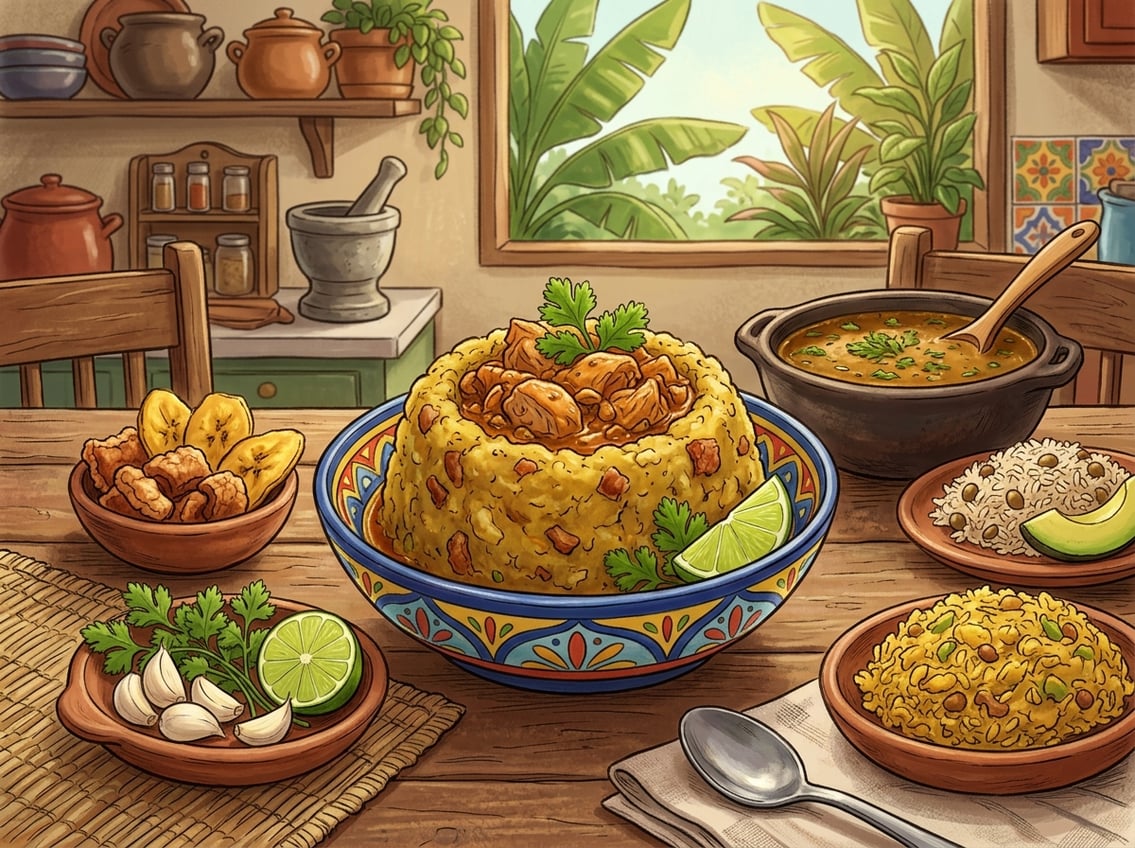
Defining Mofongo in Spanish
Mofongo means both a specific Puerto Rican dish and, more broadly, a way to describe mashed green plantains with garlic and pork in Spanish-speaking communities.
Literal and Linguistic Meaning
Word Origin
| Aspect | Detail |
|---|---|
| Source Language | Kikongo (Central African language) |
| Original Term | mfwenge-mfwenge |
| Literal Meaning | "a great amount of anything at all" |
| Spanish Adoption | Kept similar sound, became a food term |
What Mofongo Means in Spanish
- Used as a noun and a culinary descriptor
- No direct translation; refers to a specific dish and prep method
Core Definition Elements
- Mashed green plantains
- Garlic, salt, and fat mixed in
- Formed into a ball or mound
- Served with broth or meat
Pronunciation and Common Usages
Spanish Pronunciation
| Element | Phonetic Guide |
|---|---|
| IPA | [moˈfoŋɡo] |
| Syllable Breakdown | mo-FON-go |
| Stress | Second syllable (FON) |
| English Approx. | moh-FOHN-goh |
Common Spanish Phrases
- "Vamos a comer mofongo" - Let's eat mofongo
- "El mofongo es un plato puertorriqueño" - Mofongo is a Puerto Rican dish
- "Mofongo con camarones" - Mofongo with shrimp
- "Hacer mofongo" - To make mofongo
Regional Variations
| Region | Local Term / Note |
|---|---|
| Puerto Rico | Mofongo (standard) |
| Dominican Rep. | Mofongo Dominicano, mafongo |
| Other Dialects | Term stays the same, prep changes |
Cultural Significance in Puerto Rican Cuisine
Mofongo blends African, Spanish, and Taíno food traditions. It’s a dish born out of colonial hardship, now a symbol of cultural resilience.
Historical Roots and Cross-Cultural Influences
| Culture | Contribution to Mofongo |
|---|---|
| African | Fufu mashing, pilón (mortar and pestle) use |
| Taíno | Mashing roots, using local plantains |
| Spanish | Pork, garlic, olive oil, broth techniques |
Historical Development
- 1500s: Spanish bring pork and garlic to the Caribbean
- 1859: First mofongo recipe in El Cocinero Puerto-Riqueño o Formulario (uses plantains, veal, hen, garlic, oregano, lard)
Key Fact:
Rule → Mofongo’s name comes from Kikongo mfwenge-mfwenge (“a great amount of anything at all”).
Origins:
- Created with what enslaved Africans had: plantains, lard, pork scraps
- Combined African mashing with Caribbean ingredients
Mofongo as Culinary Heritage
- Most recognized Puerto Rican dish
- Symbolizes merging of three traditions and cultural adaptation
- Associated with family, history, and shared memory
Popular Pairings
| Dish | Description |
|---|---|
| Arroz con gandules | Rice with pigeon peas |
| Chicken broth soup | With sofrito |
| Cuchifrito | Fried meats |
| Chicharrón | Pork cracklings, inside or on top |
Key Note:
June is Puerto Rico’s gastronomy month (Law 116, 2018). Mofongo pops up in songs, TV, and festivals. The pilón links back to indigenous stone mortars.
Core Ingredients and Preparation
To make authentic mofongo, you need the right ingredients and some classic technique. The key is in the plantains and the way they’re mashed.
Selecting Plantains and Seasonings
Primary Ingredients
| Ingredient | Type | Purpose |
|---|---|---|
| Green plantains | Unripe, firm | Starchy base |
| Garlic | Fresh cloves | Main flavor |
| Chicharrón | Pork cracklings | Texture, savory depth |
| Olive oil | Regular or extra virgin | Binds, richness |
| Broth | Chicken or pork | Moistens, adds flavor |
| Salt | To taste | Boosts all flavors |
Plantain Selection
- Peel should be fully green, no yellow
- Fruit feels hard, not soft or ripe
- Skip any with black spots or mushy bits
Fat Options
- Olive oil (most used)
- Lard (old-school)
- Butter (sometimes used now)
Frying and Mashing Technique
Steps
- Peel green plantains, cut into 1–2 inch rounds
- Heat oil to 350°F in a deep pan
- Fry plantains 3–5 minutes per side till golden
- Drain on paper towels
- While hot, put fried plantains in pilón with garlic and chicharrón
- Add olive oil and broth as you mash
- Mash until it all sticks together
Texture Check
- Should hold shape when pressed
- Not smooth - keep it chunky
- Absorbs broth but doesn’t turn mushy
Rule → Mash plantains while hot for best binding.
Example: “Mash the fried plantains right after frying, not after they cool.”
The Role of the Pilón (Mortar and Pestle)
| Feature | Description |
|---|---|
| Material | Mahogany or guaiacum wood |
| Bowl depth | 6–8 inches |
| Pestle length | 10–12 inches |
| Function | Crushes and mixes ingredients |
Why Use Wood?
- Gives the right crushing action
- Absorbs and releases flavors over time
- Makes it easy to shape the mofongo ball
How to Mash
- Pound down to break up plantains
- Rotate pestle to mix in seasonings
- Keep mashing till it’s a dense, chunky mass
- Form into a ball with the bowl’s sides
Rule → Food processors make it too smooth.
Example: “Use a wooden pilón, not a food processor, for chunky texture.”
Popular Variations and Modern Adaptations
Puerto Rican cooks riff on the classic by swapping starches or stuffing the plantain ball. Trifongo uses three starches, and mofongo relleno turns the mash into a shell for seafood or meat.
Mofongo Relleno and Stuffed Creations
Mofongo relleno means the plantain ball is hollowed out and filled.
Popular Fillings
- Shrimp (camarofongo)
- Chicken in garlic sauce
- Octopus
- Beef stew
- Lobster
- Mixed seafood
| Variation | Description |
|---|---|
| Mofongo relleno | Stuffed with meat or seafood |
| Camarofongo | Stuffed with shrimp |
| Mofonguito | Small, appetizer-sized version |
Stuffed mofongo started at Tino’s Restaurant on Puerto Rico’s west coast, where cooks packed the plantain ball with local seafood and poured sauce over it.
Mofonguito is the bite-sized version, perfect as an appetizer.
Trifongo, Bifongo, and Yuca-Based Versions
You can swap or mix in other starches for green plantains in the classic recipe.
| Variation | Ingredients | Description |
|---|---|---|
| Bifongo | Two starches | Most often: green and ripe plantains together |
| Trifongo | Three starches | Usually cassava, green, and ripe plantains |
| Mofongo de yuca | Cassava | Cassava replaces plantains entirely |
| Mofongo de pana | Breadfruit | Uses breadfruit instead of plantains |
| Mofongo de amarillo | Ripe plantains | Sweeter, made with yellow plantains |
Rule → All starches get fried, then mashed with garlic, pork rinds, and fat. The method stays the same no matter which starch you use.
Regional Cousins and Global Context
Mofongo connects to a bunch of starchy dishes across the Caribbean and Latin America, each with its own local twist. The dish evolved from African cooking traditions and Caribbean staples like plantains and cassava.
Influences from Fufu, Mangú, and Cayeye
African Origins
- The word "mofongo" comes from the Kikongo word mfwenge-mfwenge, meaning "a great amount of anything at all"
- Fufu: West African sticky dough made from mashed starchy veggies, eaten by hand
- Mofongo: Dense, fried plantain ball with pork and garlic, often soaked in broth
Caribbean Adaptations by Country
| Country | Dish Name | Main Starch | Key Differences |
|---|---|---|---|
| Puerto Rico | Mofongo | Green plantains (fried) | Chicharrones, dense texture |
| Dominican Republic | Mangú | Green plantains (boiled) | Softer, no pork needed |
| Colombia | Cayeye | Plantains or yuca | Often mixed with cheese |
| Cuba | Fufu de plátano | Plantains | Softer, mashed consistency |
| Haiti | Tomtom | Plantains or breadfruit | Boiled, not fried |
- Influences: Spain, West Africa, and Taíno traditions
Mofongo in the Caribbean and Beyond
Regional Spread Timeline
- 1859: First written Puerto Rican recipe appears
- 1962: Dominicans fleeing Trujillo's dictatorship bring fried mofongo from Puerto Rico/New York back to the DR
- 1970s-now: Popular in every city with Puerto Rican or Dominican communities
- Puerto Rico (origin)
- Dominican Republic
- New York City
- Florida
- New Jersey
- Boston
Mofongo is also popular with Colombian and Cuban communities in U.S. cities with big Puerto Rican populations. It’s been on Food Network and you’ll find it on Latin menus in most major U.S. cities.
How Mofongo Reflects Puerto Rican Identity
Mofongo is a living symbol of Puerto Rican culture, showing up at everyday meals and big celebrations. It ties folks to African, Spanish, and Taíno roots.
Everyday Food and Festive Occasions
Daily Presence
- Home cooks make mofongo several times a week
- Street vendors sell it at lunch
- Restaurants claim it as a signature dish
- Families teach the recipe across generations
Celebratory Uses
| Occasion | Mofongo Variation |
|---|---|
| Thanksgiving | Pavochon (turkey stuffed with mofongo) |
| Christmas | Mofongo relleno with seafood |
| Family reunions | Traditional mofongo with chicken broth |
| Sunday dinners | Camarofongo (shrimp-stuffed) |
Rule → The pilón (wooden mortar and pestle) is a family heirloom for many. Mofongo is eaten by everyone, from workers on break to diners at upscale restaurants.
Community and Symbolism
Cultural Markers
- Symbolizes resistance and adaptation since colonial times
- Preserves African pounding and mashing methods
- Shows Spanish ingredient integration (garlic, pork, olive oil)
- Echoes Taíno tradition of mashing roots
Identity Expression
- Connects Puerto Ricans in the diaspora to their roots
- Puerto Rican food traditions grow stronger in Florida, New York, and New Jersey
- Referenced in songs like "Mofongo pelao" by Ismael Rivera
- Featured on TV set in Puerto Rican neighborhoods
- June is gastronomy month in Puerto Rico, celebrating dishes like mofongo
Frequently Asked Questions
"Mofongo" comes from Kikongo and names a Puerto Rican dish made from mashed plantains. Common questions cover pronunciation, cultural meaning, and where it’s used.
What is the literal meaning of the word "mofongo" in Spanish?
Linguistic Origin
| Aspect | Details |
|---|---|
| Source | Kikongo (Central African) |
| Original term | mfwenge-mfwenge |
| Literal meaning | "A great amount of anything at all" |
Rule → In Spanish, "mofongo" is a proper noun for the dish and doesn’t translate further.
- Entered Puerto Rican Spanish via African influence during colonial times
- Still linked to abundance and mashing starchy foods
How do you pronounce "mofongo" in Spanish?
Pronunciation Guide
| Element | Pronunciation |
|---|---|
| IPA | [moˈfoŋɡo] |
| Syllable breakdown | mo-FON-go |
| Stress | Second syllable (FON) |
Sound Components
- "mo" as in "more"
- "fon" rhymes with "bone" (but with "f")
- "go" as in English "go"
Rule → Spanish speakers pronounce every vowel clearly, and the "g" is always hard (never like "gel").
Is "mofongo" used as Spanish slang, and what does it imply?
Primary Usage
- "Mofongo" is used only as a food term. No slang or hidden meanings.
Cultural References
| Context | Usage |
|---|---|
| Food ordering | Refers to the dish itself |
| Identity | Symbol of Puerto Rican heritage |
| Music | Celebrates traditional cuisine |
- Appears in songs like "Mofongo pelao" by Ismael Rivera
- Used in lyrics to celebrate culture, not as slang
What is the origin of the word "mofongo," and where did it come from?
Historical Development
| Period | Cultural Influence | Contribution |
|---|---|---|
| Pre-1500s | Taíno (Indigenous) | Mashing root vegetables |
| 1500s-1800s | West African | Word mfwenge-mfwenge, pounding method |
| Colonial era | Spanish | Garlic, pork, olive oil, broth |
First Written Records
- First recipe: Puerto Rico’s El Cocinero Puerto-Riqueño o Formulario (1859), called mofongo criollo
- Central African groups brought the mashing technique and mallet to Puerto Rico
Is mofongo Puerto Rican or Dominican, and which culture is it most associated with?
Primary Cultural Association
- Mofongo is Puerto Rican, blending Taíno, African, and Spanish influences
Timeline of Adoption
| Period | Event |
|---|---|
| 1859 | First Puerto Rican cookbook with mofongo criollo |
| 1930s-1961 | Dominicans flee Trujillo regime to PR and New York |
| 1962 | First Dominican cookbook with "mafongo" recipe |
| Post-1961 | Dominicans bring fried mofongo back home |
Expert Statements
Rule → "Mofongo is a dish borrowed from Puerto Rico that has much success with Dominicans." (Ramona Hernández, Dominican Studies Institute, CUNY)
Rule → "Mofongo has a special place in Dominicans' hearts and stomachs but can be traced back to Puerto Rico." (Chef Clara Gonzalez)