What Does La Chona Mean in English Spanish: Contexts That Unlock Fluency Fast
Modern usage covers social media, viral challenges, and tons of cultural references, so the term’s still everywhere
Posted by
 Stewart Kaplan
Related reading
What Does Adonde Mean in Spanish? How Movement 'Clicks' for Learners
You have to know when prepositions combine with donde to show direction or position
What Does Ahi Mean in Spanish? Cognitive Mastery That Sticks
Learners mix up ahí, hay, and ay because they sound the same but mean totally different things.
What Does Aki Mean in Spanish: Unpacking Real Usage for Learners
Regional differences exist, but nearly everyone in Spanish-speaking communities gets what "aki" means in a text
TL;DR
- La Chona means a lively, energetic woman who loves to dance and party, especially in Mexican Spanish slang
- The term comes from a 1995 norteño song by Los Tucanes de Tijuana about a woman who dances constantly while her husband stays home
- "Chona" is a nickname from the Spanish name Soledad, but the song made it mean wild party energy
- The phrase is a compliment for someone who brings fun and dancing to any gathering
- Modern usage covers social media, viral challenges, and tons of cultural references, so the term’s still everywhere
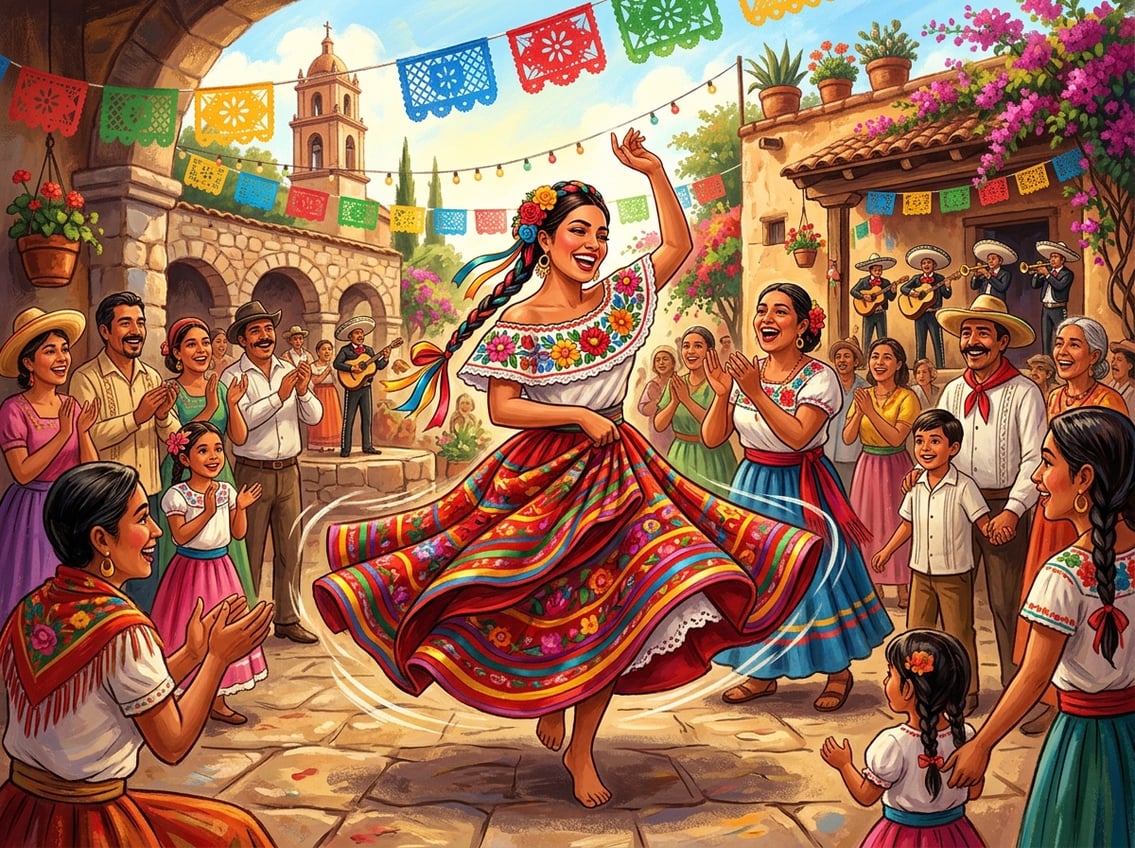
Core Meaning of 'La Chona' in Mexican Spanish
La Chona is a nickname from the Spanish name Soledad. It describes a lively woman with a lot of energy at parties and social events.
Core Characteristics
| Trait | Description |
|---|---|
| Energy Level | Always high, never still |
| Social Role | Center of attention at parties |
| Dancing | Loves to dance all night |
| Personality | Fun, outgoing, bold |
Important Distinctions
- Chona isn’t in the Spanish dictionary
- It’s cultural slang, not a formal word
- The meaning comes from Mexican usage
- The 1995 Los Tucanes de Tijuana song made it famous
Context of Use
- Used for someone who owns the dance floor
- Refers to the song’s main character
- Signals party energy and joy
- Tied to Mexican celebration culture
Modern Popularity
La Chona got a second wind in 2018 as a meme and viral dance challenge. The song’s impact spread beyond Mexico to Spanish-speaking communities everywhere.
What It Does Not Mean
- Not the same as other Spanish slang
- It’s about dance and party energy, not strength or status
Origins and Linguistic Background
"Chona" comes from Mexican Spanish and has a few meanings based on context, from a casual nickname to a slangy description of someone’s behavior. Regional Mexican music made the term popular through party anthems.
Phrase Etymology and Spanish Slang Roots
| Meaning | Context | Usage Level |
|---|---|---|
| Nickname for "Encarnación" | Shortened name | Informal |
| Older female relative | Grandma, aunt | Colloquial |
| Party-loving woman | Energetic dancer | Slang |
- "Chona" works as a diminutive or affectionate term in Mexican Spanish, originally from Encarnación.
- In slang, it means someone who brings energy to parties.
- The 1995 Los Tucanes de Tijuana song made "chona" a pop culture reference. Mario Quintero Lara wrote it about a friend’s wife who loved to dance.
Regional and Cultural Variations
| Region | Primary Usage | Associated Context |
|---|---|---|
| Northern Mexico | Party personality | Norteño music |
| Central Mexico | Family nickname | Family settings |
| U.S. Latino communities | Cultural reference | Mexican music celebrations |
- Stronger party slang in places where norteño and banda music are big, especially border states and Tijuana.
- In families, it can be a respectful term for older women.
- At parties, it’s playful and points to the famous song.
- Generational differences: older folks might think of it as a nickname, younger people know the song.
The 1995 Song: Story and Impact
Los Tucanes de Tijuana released "La Chona" on June 19, 1995, on their album Me Robaste el Corazón. The song became one of their biggest hits, hitting No. 28 on Billboard's Hot Latin Songs chart by 1997.
Lyrics and Key Lines
| Spanish line | English meaning | Function in song |
|---|---|---|
| Contaré la historia de una famosa persona | I'll tell the story of a famous person | Introduces character |
| Todos la conocen con el apodo de Chona | Everyone knows her by the nickname Chona | Establishes recognition |
| Todos los días está bailando y gastando en la chela | Every day she's dancing and spending on beer | Shows her behavior |
| Su esposo está llorando, no sé qué hacer | Her husband is crying, doesn't know what to do | Adds contrast |
| Bravo, bravo Chona nadie te puede igualar | Bravo Chona, nobody can match you | Chorus, celebrates her |
- "Chela" means beer in informal Mexican Spanish.
- "La quebradita" is a flashy, acrobatic partner dance from 1990s Mexico.
Role of Los Tucanes de Tijuana
- Los Tucanes de Tijuana formed in 1987 in Tijuana, Baja California, and play norteño music with accordion and polka rhythms.
- Lead singer Mario Quintero Lara wrote "La Chona" in about five minutes, inspired by a friend’s wife who loved to dance.
- Chart performance:
- No. 28 on Billboard Hot Latin Songs (1997)
- No. 17 on Regional Mexican Airplay (1997)
- 2x Platinum Latin certification (U.S.)
Why the Song Resonates
| Element | Effect |
|---|---|
| Upbeat accordion | Earworm melody |
| Short, catchy chorus | Easy to remember |
| Fast tempo | Matches quebradita dance |
| Call-and-response | Invites crowd participation |
- The song praises a woman who loves fun, ignoring her husband's complaints.
- The story never resolves - Chona keeps dancing, the husband keeps crying, and everyone cheers her on.
- Viral moments: The 2018 dance challenge and a 2023 spot in Blue Beetle brought the song to new audiences.
Dance Tradition and the 'Quebradita'
The quebradita style is all about fast footwork, trust, and wild moves - think spins, dips, and lots of energy.
Dance Steps and Rhythm
| Element | Description |
|---|---|
| Footwork | Quick steps matching the accordion beat |
| Hips | Side-to-side sway, polka rhythm |
| Partners | Man leads, woman follows |
| Tempo | Fast, 120-140 BPM |
- "Quebradita" means "little break," referring to knee bends and back arches.
- Moves include spins, dips, and lifts - lots of flair and core strength.
- The song’s lyrics say "no hay mejor que la Chona pa' la quebradita" (nobody dances quebradita like Chona), making her the standard for the dance.
Cultural Setting: Parties and Celebrations
Primary Venues
- Quinceañeras (15th birthday parties)
- Wedding receptions
- Family reunions
- Regional Mexican music festivals
- Community gatherings with live bands
The quebradita needs live banda or norteño music - accordion, brass, that whole sound. As soon as the beat hits, skilled dancers just know what to do and start looking for partners.
Social Function
- Audience shouts "bravo, bravo, Chona" for standout dancers - crowd participation, even from folks not dancing.
- Dance skill sets the hierarchy. The best dancer grabs everyone’s attention, no matter their age or status.
- “La Chona” keeps dancing at the party, while her husband stays home - her moves give her the spotlight.
Role of Dance Partnerships
Partner Requirements
| Aspect | Details |
|---|---|
| Trust level | High - drops and dips can hurt if you’re not in sync |
| Communication | Non-verbal - hand pressure, body shifts |
| Skill matching | Partners should have similar experience |
| Physical demands | Both need stamina for 3–4 minute songs |
Dance Roles
- Man leads - starts moves, supports during lifts.
- Woman matches footwork, controls her weight on dips.
Finding a Dance Partner
- Dancers scan the room when the song starts.
- Eye contact and a nod = “let’s dance.”
- People want experienced partners for tough moves.
Key Phrase:
"ya está lista la Chona, lista pa' buscar su pareja" - Chona’s ready, looking for a partner. She doesn’t wait around; she finds someone and keeps the dance going.
Viral Phenomena: Social Media and Challenges
La Chona blew up online in 2018 - thanks to TikTok dance challenges, especially the risky trend of dancing beside moving cars.
Rise of the La Chona Challenge
Challenge Timeline
| Year | Event |
|---|---|
| 1995 | Song released |
| 2018 | Viral challenge starts |
| 2026 | Still trending online |
- La Chona Challenge: People jumped out of moving cars to dance while the song played.
Challenge Format
Passenger seat to street
Car rolls slow
Dancer grooves beside car
Whole thing filmed
Dancer hops back in
Mirrors the earlier Kiki Challenge - both were risky, and police told people to stop.
#LaChonaChallenge racked up millions of views. Teens and young adults led the trend, despite safety warnings.
Dance Challenges and Viral Trends
Popular Dance Elements
Fast footwork
Arm moves on the beat
Spins
Body rolls and waves
Group routines
Dancers made tons of versions - solo or group.
Platforms:
- TikTok (main platform)
- Instagram Reels/Stories
- YouTube compilations
- Facebook family shares
The song’s tempo fits short videos - about 3 minutes.
Creators added their own flair. Regional twists popped up as more people joined in.
Global Spread Through Social Platforms
International Reach
| Region | Adaptation |
|---|---|
| United States | Mainstream popularity |
| Latin America | Cultural celebration |
| Europe | Language translations |
| Asia | K-pop covers and remixes |
- The challenge crossed language barriers thanks to visuals - no Spanish needed.
- TikTok users worldwide made versions in their own languages.
- The song introduced norteño music to people who’d never heard it before.
Viral Growth Factors
- Easy, repeatable moves
- Catchy hooks
- Authentic vibe
- Instantly shareable
- Celebrity shoutouts
Younger folks found the 1995 song through social media, not radio.
Symbolism, Identity, and Modern Usage
La Chona stands for both celebration and stereotype in Mexican culture - slang for party-loving women, but with shifting meaning.
Celebration and Social Inclusion
Primary Cultural Associations:
| Context | Meaning | Social Function |
|---|---|---|
| Mexican music events | Woman who dances freely | Sets festive mood |
| Banda gatherings | Life of the party | Boosts group energy |
| Regional celebrations | Brings joy | Shows social inclusion |
Positive Identity Markers:
- High energy at parties
- Confident dancing, self-expression
- Tied to northern Mexican roots
- Represents joy and letting loose
La Chona signals someone who’s all in for the celebration.
Stereotypes and Evolving Meanings
Traditional vs. Modern Interpretations:
| Aspect | Original Song (1995) | Current Slang Usage |
|---|---|---|
| Behavior | Dancing daily, drinks a lot | Any energetic partier |
| Gender | Female-specific | Sometimes gender-neutral |
| Judgment | Suggests neglecting duties | Often neutral or positive |
Stereotype Components:
- Drinks a lot
- Puts parties first
- Always looking to dance
- Husband’s disapproval (in lyrics)
Some see the term as affectionate, others as a dig at women’s independence.
Usage in Everyday Conversation
Common Conversational Contexts:
- Describing party behavior: "Ella se pone bien chona cuando toca la banda"
- Self-label: "Soy la chona del grupo"
- Teasing: "Ahí viene la chona"
- Event invite: "Sácate a la chona" (bring your party side)
| Spanish Expression | Literal Translation | Actual Meaning |
|---|---|---|
| "Eres bien chona" | You are very chona | You love to party |
| "Se puso chona" | She became chona | She got wild/energetic |
| "La chona del barrio" | The chona of the neighborhood | Local party queen |
Register and Appropriateness:
- Informal use only
- Common with friends/family
- Mexican Spanish
- Not for work or formal settings
You’ll hear it most around banda, beer, and regional parties.
Frequently Asked Questions
What is the meaning of "La Chona" in Spanish slang?
| Context | Meaning | Usage Type |
|---|---|---|
| Party settings | Most energetic dancer | Compliment |
| Family gatherings | Last one dancing | Affectionate |
| Social use | Brings party energy | Praise |
- "She's la Chona of the family" - most energetic at gatherings
- "Nobody can match la Chona" - unstoppable energy
- "You were total la Chona last night" - you partied hard
Is "Chona" commonly used as a nickname, and what does it imply?
Traditional nickname origin:
- Short for Soledad
- Used in Mexican families
- Like "Betty" for "Elizabeth"
Modern meaning:
- No longer tied to the name
- Means “unstoppable party person”
- Based on the song character
Being called "Chona" now means you’re energetic, love to dance, and lead the party - sometimes it’s just from the song, not the given name.
What does "La Chona" refer to in the context of the song?
- Woman who dances every day
- Skilled at la quebradita
- Spends on beer
- Ignores husband’s complaints
- Crowd loves her
Lyrics show her as unmatched on the dance floor - her husband’s sadness is played for laughs.
How do you pronounce "La Chona" correctly in Spanish?
| Word | Pronunciation | Sound-alike |
|---|---|---|
| La | lah | "la" in "lava" |
| Chona | CHOH-nah | "CHO" in "choke," "nah" like "nah" |
- Full phrase: lah CHOH-nah
Pronunciation rules:
- "ch" as in "church"
- Stress the first syllable: CHO-na
Common mistakes:
- Saying "shona" (wrong)
- Stressing the second syllable (should be first)
- Extra vowels - keep it short and clear
What do the "La Chona" lyrics mean in English translation?
| Spanish line | English meaning |
|---|---|
| Contaré la historia de una famosa persona | I'll tell the story of a famous woman |
| Todos la conocen con el apodo de Chona | Everyone knows her as Chona |
| Todos los días está bailando | Every day she’s dancing |
| Gastando en la chela | Spending on beer |
| Su esposo está llorando | Her husband is crying |
| Ya está lista la Chona | La Chona is ready |
| Lista pa' buscar su pareja | Looking for a dance partner |
| Bravo, bravo Chona nadie te puede igualar | Bravo, Chona - nobody can match you |
Key words:
- "chela" - slang for beer
- "quebradita" - acrobatic partner dance
- "apodo" - nickname
Song repeats lines to fit the dance. The husband’s sadness is just a funny contrast to Chona’s wild spirit.