What Does La Bamba Mean in Spanish: Research-Backed Language Insights
The name probably links to the Spanish verb "bambolear" (to sway or shake), which fits the dance's lively moves.
Posted by
 Stewart Kaplan
Related reading
What Does Adonde Mean in Spanish? How Movement 'Clicks' for Learners
You have to know when prepositions combine with donde to show direction or position
What Does Ahi Mean in Spanish? Cognitive Mastery That Sticks
Learners mix up ahí, hay, and ay because they sound the same but mean totally different things.
What Does Aki Mean in Spanish: Unpacking Real Usage for Learners
Regional differences exist, but nearly everyone in Spanish-speaking communities gets what "aki" means in a text
TL;DR
- "La Bamba" means "the bamba," a traditional dance from Veracruz, Mexico. The word "bamba" comes from African languages and means "wood", a nod to dancing on wooden floors.
- The song is part of the son jarocho style, mixing Spanish, indigenous, and Afro-Mexican influences unique to Veracruz.
- La Bamba lyrics change from one performance to another - improvisation is expected, but the melody stays the same.
- Ritchie Valens made the song famous worldwide in 1958 by turning the folk tune into a rock and roll hit.
- The name probably links to the Spanish verb "bambolear" (to sway or shake), which fits the dance's lively moves.
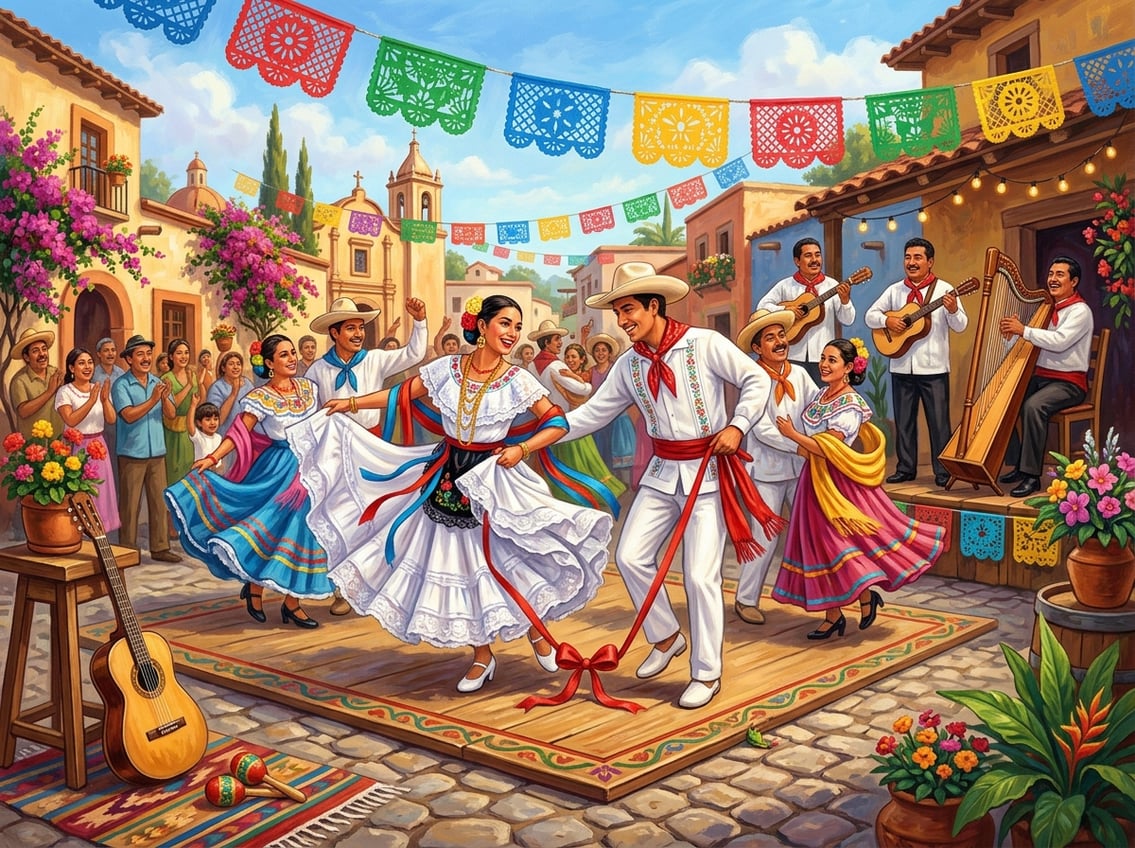
Exploring the Literal and Cultural Meaning of La Bamba
The phrase "La Bamba" doesn't have a straight English translation. It’s all about movement, rhythm, and celebration. The word draws from African and Spanish roots, describing a dance and the act of swaying.
Literal Translation of 'La Bamba'
Direct Translation
- No true English equivalent
- "Bamba" comes from African roots, meaning "wood"
- Refers to dancing on wooden floors or stages
Related Spanish Verb
| Spanish Term | English Meaning | Dance Connection |
|---|---|---|
| Bambolear | To sway, shake, wobble | Describes the dance's swaying motion |
The word "bamba" is African in origin, brought into Mexican Spanish through cultural blending. It’s about movement, not a thing.
Roots in the Spanish Language
Linguistic Origins
- African word arrived via slave trade to Veracruz
- Mixed with Spanish colonial words
- Blended with indigenous Mexican speech
Regional Context
- Born in Veracruz, Mexico
- Found in son jarocho tradition
- Played mostly in coastal areas
The Association with Dance and Celebration
Performance Settings
- Weddings
- Community festivals
- Ballet folklórico
Dance Details
- Couples do complex footwork
- At weddings, the couple ties a ribbon between their feet - symbolizing their bond
Musical Traits
- Fast, upbeat rhythm
- Call-and-response vocals
- Improvised lyrics
Dance Motions
- Pumping hand movements
- Some say it pokes fun at sailors bailing water, but now it’s just about joy
Historical Origins and Regional Roots
La Bamba came from coastal Mexico, mixing African, Spanish, and indigenous influences. The first known recordings are from the 1930s, rooted in Veracruz’s son jarocho tradition.
Early Beginnings in Veracruz
First Recording
- Álvaro Hernández Ortiz (El Jarocho) made the earliest known recording in 1938
- Released by Victor Records (1938 or 1939)
- Originated in Alvarado, Veracruz
| Location | Detail |
|---|---|
| Veracruz, Mexico | Port town, crossroads of cultures, major trade hub |
| Year | Event |
|---|---|
| 1945 | Performed at Ciro's nightclub in Mexico City |
| 1945 | Used in Miguel Alemán Valdés' presidential campaign |
| 1945 | Played at New York's Stork Club by Arthur Murray |
| 1947 | Featured in MGM film Fiesta |
Son Jarocho Tradition and Local Influence
Genre
- Son jarocho (sound of Veracruz)
Instruments
- Arpa jarocha (harp)
- Jarana jarocha (small guitar)
- Requinto jarocho (high-pitched guitar)
Performance Style
- Heavy on improvisation
- New verses created for each show, but melody stays the same
Cultural Role
- At weddings, couples dance with ribbons tied between their toes - shows unity
The Role of Afro-Mexican Heritage
African Roots
- "Bamba" means "wood" in African languages - refers to dancing on wooden platforms
| Element | Origin | Influence |
|---|---|---|
| Rhythm | West Africa | Syncopated beats |
| Word | Angola/Congo | Dance name, floor reference |
| Style | Afro-Caribbean | Call-and-response |
| Historical Link | Detail |
|---|---|
| 1683 Bambarria uprising | Possible link to the song’s name |
Fusion Process
- Son jarocho blends Spanish, indigenous, and Afro-Mexican music
- Afro-Mexicans brought percussion, movement, and the song’s quick pace
The Evolution of La Bamba in Modern Music
The folk song turned into a rock and roll hit with Ritchie Valens in 1958, then hit #1 again when Los Lobos covered it for the 1987 film.
Adaptation by Ritchie Valens
| Element | Traditional | Valens Version |
|---|---|---|
| Tempo | Moderate | Faster, more energetic |
| Instruments | Harp, jarana, requinto | Electric guitar, piano, bass, drums |
| Style | Folk | Rock and roll |
| Language | Regional Spanish | First Spanish rock hit in US |
- Valens learned the song from his cousin Dickie Cota in California.
- He was unsure about mixing folk with rock but agreed after some nudging.
- Session musicians: Buddy Clark (bass), Ernie Freeman (piano), Earl Palmer (drums).
- Released as the B-side of "Donna" (Del-Fi label, October 1958).
Impact of the Rock and Roll Movement
Hit the U.S. top 40 in 1958
Only non-English song on Rolling Stone's 500 Greatest Songs of All Time (#354)
Latin Grammy Hall of Fame inductee
Added to National Recording Registry (Library of Congress, 2018)
Valens brought son jarocho to mainstream America.
His version showed Latin music could blend with American rock.
Helped pave the way for Chicano rock and bilingual hits.
Los Lobos and the Cinematic Revival
| Achievement | Details |
|---|---|
| Release | June 20, 1987 |
| Chart | #1 on Billboard Hot 100 |
| Distinction | Fourth all non-English song to hit #1 |
| MTV Award | 1988 Best Video from a Film |
| Length | 2:54 (longer than Valens’ version) |
- Los Lobos recorded the song for the Ritchie Valens biopic.
- The video starred Lou Diamond Phillips as Valens.
- The cover brought the song back to the top of the charts, reaching new fans and reviving interest in both Valens and son jarocho.
Understanding La Bamba Lyrics and Their Meaning
- Traditional La Bamba lyrics focus on dancing, skill, and celebration.
- Verses are often improvised to fit the rhythm.
- Lyrics symbolize grace and transformation in Mexican folk tradition.
Key Phrases: 'Para bailar la bamba' and 'Se necesita una poca de gracia'
Core phrase translations:
| Spanish Phrase | Literal Translation | Contextual Meaning |
|---|---|---|
| Para bailar la bamba | To dance the bamba | To do this traditional dance |
| Se necesita una poca de gracia | One needs a little bit of grace | You need some skill, charm, or flair |
| Yo no soy marinero | I am not a sailor | Saying what you’re not |
| Soy capitán | I am a captain | Claiming higher status |
- "Para bailar la bamba" opens the song and repeats as the main hook, naming the Veracruz dance.
- "Se necesita una poca de gracia" means you need both physical coordination and a bit of personality to stand out. The word "poca" (a little) makes it sound doable, not out of reach.
Related verb forms:
- Bailar – to dance
- Bambolear – to sway or wobble
- Necesitar – to need
| Phrase | Meaning |
|---|---|
| Yo no soy marinero, soy capitán | Claiming to rise above limitations; symbolizes self-determination |
Why Lyrics Were Traditionally Improvised
Improvisation features:
- Verses changed to fit the event or crowd
- Singers worked in jokes or personal shout-outs
- No set limit - new lines could be added as long as the music played
- Anchor phrases like "para bailar la bamba" stayed the same
- Simple rhymes made it easy to make up lyrics on the fly
| Performance Element | Function |
|---|---|
| Improvised verses | Kept the song fresh, let anyone join in |
| Core phrases | Provided structure and unity |
Ritchie Valens' 1958 version set a fixed version in pop culture, but traditional performances still improvise at Mexican events.
Symbolism in the Words and Repetition
Symbolism in la bamba lyrics:
| Element | Surface Meaning | Symbolic Meaning |
|---|---|---|
| Dancing | Physical movement | Community and cultural identity |
| Grace requirement | Dance skill | Navigating life with dignity |
| Captain declaration | Higher rank | Breaking limitations |
| Repetition | Musical device | Group participation, unity |
- "Bamba, bamba" repeats as a rhythmic chant and identity marker.
- Grace, in context, means both actual dance skill and the dignity needed to face challenges - especially for Mexican-Americans in the 1950s.
- The lyrics are simple, leaving space for listeners to connect with their own meanings.
Repetition - Main Functions:
- Drives a catchy rhythm
- Makes lyrics stick in your head
- Encourages group singing
- Lets even non-Spanish speakers join in
| Function | Example |
|---|---|
| Community bond | Group clapping and singing during the chorus |
| Cultural pride | Keeping Mexican traditions alive in the U.S. |
Cultural Impact and Enduring Legacy
La Bamba went from a regional folk song to a worldwide symbol of cultural pride and celebration.
Role in Mexican and Latin American Identity
Key Identity Markers
- Regional pride: Son jarocho music from Veracruz highlights local culture
- Cultural fusion: Mixes African, Spanish, and indigenous roots
- Language preservation: Keeps Spanish-language music alive in pop culture
- Cross-border connection: Bridges Mexican Americans to heritage
| Aspect | Impact |
|---|---|
| Folk tradition | Keeps Veracruz’s son jarocho style alive |
| Modern adaptation | Ritchie Valens brought Latin music to mainstream U.S. audiences |
| Representation | Only non-English song on Rolling Stone’s 500 Greatest Songs |
| Community bond | Played at festivals and family gatherings |
| Role | Example |
|---|---|
| Cultural anchor | Used at Mexican and Latin American celebrations worldwide |
| Shared experience | Everyone knows the chorus, regardless of background |
Celebratory Use in Social Gatherings and Weddings
Traditional Wedding Ritual
| Step | Description |
|---|---|
| 1 | Bride and groom tie a ribbon at their feet |
| 2 | Couple dances intricate steps to make a bow shape |
| 3 | Bow symbolizes their union |
| 4 | Guests clap and sing along |
Modern Social Settings
Quinceañeras: Coming-of-age parties for 15-year-old girls
Family reunions: All ages dance together
Community festivals: Played at Mexican Independence Day and other events
Casual gatherings: Birthday parties, backyard BBQs
Improvised lyrics still let performers tailor verses to the moment.
Notable Versions and Interpretations
Since 1938, "La Bamba" has been recorded in many styles - Ritchie Valens' 1958 rock version and Los Lobos' 1987 cover are the most famous. Each kept the son jarocho roots but added something new.
Famous Recordings Over the Decades
| Year | Artist | Style | Chart Performance |
|---|---|---|---|
| 1938 | Álvaro Hernández Ortiz (El Jarocho) | Traditional son jarocho | First known recording |
| 1945-46 | Hermanos Huesca | Folk | Popular in Mexico |
| 1958 | Ritchie Valens | Rock and roll | #22 Billboard Hot 100 |
| 1987 | Los Lobos | Rock and roll | #1 in multiple countries |
- Ritchie Valens learned the song from family, recorded it with Carol Kaye (guitar) and Earl Palmer (drums), and reached #354 on Rolling Stone’s list.
- Los Lobos did their version for the 1987 "La Bamba" movie - won the MTV Video Music Award for Best Video from a Film.
Variations in Lyrics and Styles
Musical adaptations:
- Traditional son jarocho: Played with arpa jarocha, jarana, requinto
- Rock versions: Electric guitars, bass, drums, piano
- Folk: Slower, more for singalongs
- Children’s versions: Charlotte Diamond’s 1985 take for kids
| Rule → Example |
|---|
| Rule: Traditional son jarocho versions use improvised verses. Example: A performer creates new lines about local events. |
| Rule: Rock adaptations fix the lyrics and speed up the tempo. Example: Ritchie Valens’ version uses a set chorus and upbeat rhythm. |
Other covers: Selena (1987, #19 on Billboard Hot Latin Songs), Harry Belafonte (1960 live), "Weird Al" Yankovic ("Lasagna," 1988).
Influence on Global Music
Impact:
- First Spanish rock song to hit mainstream U.S. charts
- Fourth non-English song to top the Billboard Hot 100 (Los Lobos)
- Grammy Hall of Fame and Latin Grammy Hall of Fame inductee
- Library of Congress National Recording Registry (2018)
| Influence | Example |
|---|---|
| International reach | Mariachi Vargas de Tecalitlan’s traditional covers |
| Latin rock doors opened | Ritchie Valens’ success led to more Spanish-language hits in the U.S. |
Ritchie Valens entered the Rock and Roll Hall of Fame in 2001. His hit proved Spanish-language songs could break into English-speaking charts.
Frequently Asked Questions
The phrase "La Bamba" has no direct English equivalent. The song started as a Mexican folk tune about dancing, grace, and skill.
What is the literal English translation of "La Bamba"?
| Question | Answer |
|---|---|
| Literal translation | No direct English version exists |
| Possible meanings | "The Dance," "The Party," or a nod to dancing on wood (from African roots) |
| Related verb | Bambolear: to sway, shake, or wobble |
Does "La Bamba" have a slang meaning in Spanish?
| Question | Answer |
|---|---|
| Is it slang? | No, it’s not slang; it’s the name of a dance and musical style |
| Etymology | "Bamba" comes from African word for "wood," referencing dancing on wooden floors |
What do the lyrics of "La Bamba" mean in English?
| Spanish | English |
|---|---|
| Para bailar la bamba | To dance la bamba |
| Se necesita una poca de gracia | You need a little bit of grace |
| Una poca de gracia para mí, para ti | A little bit of grace for me, for you |
| Yo no soy marinero | I am not a sailor |
| Soy capitán | I am a captain |
- Lyrics change often - improvised verses are common.
Is "La Bamba" originally a Spanish-language song from Mexico?
| Question | Answer |
|---|---|
| Origin | Yes, it’s a Mexican folk song from Veracruz (source) |
| Timeline | 1683: Possibly linked to slave uprisings; 1938: First recording; 1958: Valens’ rock version; 1987: Los Lobos’ chart-topper |
What is the origin and cultural significance of the song "La Bamba"?
| Category | Details |
|---|---|
| Musical style | Son jarocho |
| Cultural influences | Spanish, indigenous Mexican, Afro-Mexican, Afro-Caribbean |
| Wedding tradition | Couples tie ribbon on toes, dance together as a symbol of love (source) |
| Instruments | Arpa jarocha (harp), jarana jarocha (guitar), requinto jarocho (lead guitar) |