What Does Cinco de Mayo Mean in Spanish: Rapid Clarity Through Real Language Patterns
In the U.S., Cinco de Mayo is all about Mexican-American culture - think food, music, and parties - while in Mexico, it’s mostly parades and reenactments in Puebla
Posted by
 Stewart Kaplan
Related reading
What Does Adonde Mean in Spanish? How Movement 'Clicks' for Learners
You have to know when prepositions combine with donde to show direction or position
What Does Ahi Mean in Spanish? Cognitive Mastery That Sticks
Learners mix up ahí, hay, and ay because they sound the same but mean totally different things.
What Does Aki Mean in Spanish: Unpacking Real Usage for Learners
Regional differences exist, but nearly everyone in Spanish-speaking communities gets what "aki" means in a text
TL;DR
- Cinco de Mayo means "Fifth of May" in Spanish, pointing to May 5, 1862, when Mexico beat the French at the Battle of Puebla
- The phrase uses the normal Spanish date structure: number + de + month - just a calendar reference, nothing fancy
- Cinco de Mayo isn’t Mexican Independence Day (that’s September 16); it’s a minor day in Mexico but a big deal in the U.S.
- The holiday remembers a surprising military win that lifted Mexican spirits during the French intervention, though France later took Mexico City
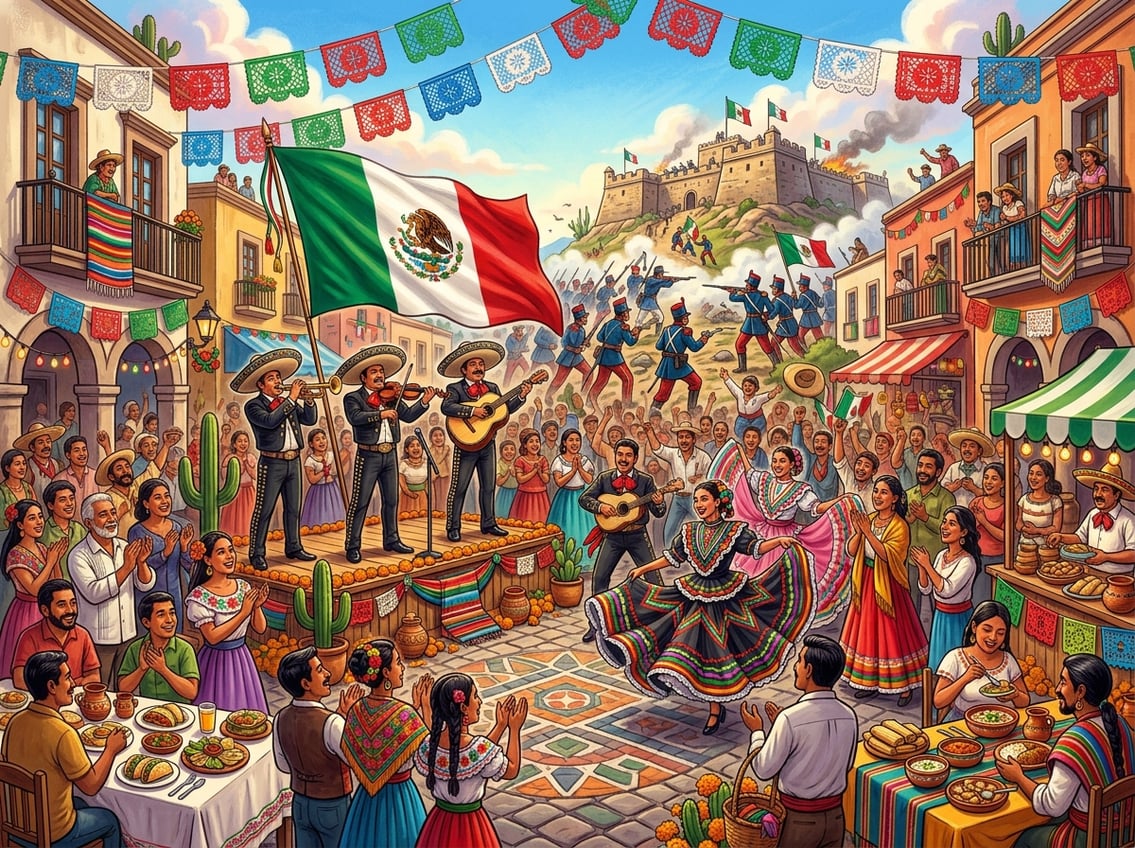
- In the U.S., Cinco de Mayo is all about Mexican-American culture - think food, music, and parties - while in Mexico, it’s mostly parades and reenactments in Puebla
Literal Translation and Spanish Date Structure
Cinco de Mayo translates to "the fifth of May" in English. The Spanish date format puts the day before the month. Spanish uses cardinal numbers for days (except the first).
How Dates Are Expressed in Spanish
| Element | Spanish | English |
|---|---|---|
| Day | número (cardinal) | number (ordinal) |
| Connector | de | of |
| Month | mes | month |
| Full format | el 5 de mayo | May 5th |
Cardinal vs. Ordinal Numbers in Dates
- May 5: el cinco de mayo ("the five of May")
- May 1: el primero de mayo (only day using ordinal)
- May 24: el veinticuatro de mayo
| Rule | Example |
|---|---|
| Day comes before month | el cinco de mayo |
| Use "el" before the date | el cinco de mayo |
Common Date Patterns
- Written: 5 de mayo de 2026
- Spoken: el cinco de mayo de dos mil veintiséis
- Abbreviated: 5/5/26 (day/month/year)
Understanding 'Cinco de Mayo' in Context
| Word | Meaning | Function |
|---|---|---|
| cinco | five | cardinal number |
| de | of | preposition |
| mayo | May | month name |
Cinco de Mayo refers to May 5, the date of Mexico's win at Puebla in 1862. When it’s a holiday name, it drops the article "el."
Usage Examples
- Holiday greeting: Feliz Cinco de Mayo
- Date reference: Es el cinco de mayo
- Event planning: Vamos a celebrar el Cinco de Mayo
Key Spanish Vocabulary for Holidays
| Spanish | English | Usage Example |
|---|---|---|
| celebrar | to celebrate | Vamos a celebrar |
| feliz | happy | Feliz Cinco de Mayo |
| fiesta | party/celebration | La fiesta es mañana |
| fecha | date | ¿Qué fecha es? |
| día festivo | holiday | Es un día festivo |
Month Names
- enero (January)
- febrero (February)
- marzo (March)
- abril (April)
- mayo (May)
- junio (June)
| Rule → Example |
|---|
| Months aren’t capitalized unless at sentence start → mayo, junio |
| Use "el" with dates → el cinco de mayo |
Date-Related Vocabulary
- hoy: today
- mañana: tomorrow
- año: year
- semana: week
- calendario: calendar
Historical Significance Beyond the Words
The Battle of Puebla and Its Impact
| Element | Detail |
|---|---|
| Date | May 5, 1862 |
| Location | Puebla (later Puebla de Zaragoza) |
| Mexican Commander | General Ignacio Zaragoza |
| Mexican Forces | 4,000 troops |
| French Forces | 6,500–8,000 troops |
| Outcome | Mexican victory (la victoria) |
- Mexican army (el ejército) beat the French, who hadn’t lost a big battle in decades.
- General Zaragoza led the defense against Napoleon III’s invasion.
- President Benito Juárez made the Battle of Puebla a national holiday just four days after the win.
What "ganar" meant that day:
- Ganar (to win) meant more than just military success
- Showed European armies could be beaten
- Mexico got a morale boost and some international respect
Mexican Resistance and National Pride
| Form of Resistance | Description |
|---|---|
| Guerrilla warfare | Continued for five years (1862–1867) |
| Political organizations | Formed in California and Mexico |
| Fundraising | Communities supported Juárez’s government |
| Cultural celebrations | Reinforced Mexican identity |
- French later took Mexico City in 1863 with 30,000 troops.
- Maximilian I ruled as emperor from 1864–1867. Resistance never stopped.
| Regional Response | Action Taken |
|---|---|
| Spain, Britain | Pulled out after early negotiations |
| U.S. | Sent military aid after Civil War (1865) |
| France | Faced pressure from Prussia, U.S. opposition |
| Napoleon III | Withdrew French troops starting in 1866 |
Symbolism of La Batalla de Puebla
| Phrase | Literal Meaning | Symbolic Meaning |
|---|---|---|
| La victoria | The victory | Triumph against the odds |
| La batalla | The battle | Standing up to imperial powers |
| El ejército mexicano | The Mexican army | Unity across Mexico |
| Benito Juárez | President’s name | Democratic resistance to monarchy |
- La resistencia (the resistance) became tied to democratic values
- El patriotismo (patriotism) linked to defending sovereignty
- La independencia (independence) is not Cinco de Mayo - it’s September 16
| Rule → Example |
|---|
| European/African military forces haven’t invaded the Americas since Puebla |
| Historian Justo Sierra: If France had won, the U.S. Civil War might’ve ended differently |
Common Misconceptions Compared to Mexican Independence Day
| Aspect | Cinco de Mayo | Mexican Independence Day |
|---|---|---|
| Date | May 5 | September 16 |
| Year Established | 1862 | 1810 |
| Event | Battle of Puebla vs. France | Start of independence movement |
| Outcome | Temporary win (French stayed 5 more years) | Full independence in 1821 |
| Celebration in Mexico | Minor, mostly in Puebla | Major, nationwide |
| Celebration in U.S. | Big festivals | Less recognized |
- Cinco de Mayo = Battle win, not independence
- September 16 = True independence day
- May 5, 1862 = Mexican army beat the French at Puebla
- September 16, 1810 = Start of freedom from Spain
| Rule → Example |
|---|
| Don’t confuse Cinco de Mayo with Independence Day → Independence Day is September 16 |
Grito de Dolores and September 16
| Element | Detail |
|---|---|
| The Grito | "The Cry" - battle cry on September 16, 1810 |
| Delivered by | Father Miguel Hidalgo y Costilla |
| Where | Dolores, Mexico |
| Result | Launched 11-year war, ended Spanish rule in 1821 |
Modern celebration:
- President reenacts the Grito at midnight, September 15
- People gather in town squares, ring bells, and set off fireworks
- Festivities continue through September 16
| Rule → Example |
|---|
| Independence Day celebrates start of freedom from Spain, not Battle of Puebla |
How Cinco de Mayo Is Observed in Mexico
| Location | Observance Type |
|---|---|
| Puebla | Parades, battle reenactments, local festivities |
| Rest of Mexico | Regular workday, minimal ceremonies |
Local Festivities in Puebla
Where the celebration happens:
- Puebla (site of la batalla de Puebla)
- Veracruz (neighboring state, full work holiday)
Main events in Puebla:
| Event Type | Spanish Term | Description |
|---|---|---|
| Parade | El desfile | People dress as French and Mexican soldiers |
| Battle reenactment | Recreación de la batalla | Live performance of the 1862 victory |
| Food festival | Festival Internacional del Mole | Showcases mole poblano |
| Arts celebration | Festival Internacional de Puebla | Musicians and traditional dancers |
Public schools in the city close to conmemorar la victoria mexicana over French forces.
What participants wear:
- French military uniforms (period costumes)
- Mexican army uniforms from 1862
- Traditional folkloric dress for dancers
All public schools close nationwide on May 5, but most businesses stay open.
Ceremonial and Historical Commemorations
National observance level:
- Not a statutory Mexican holiday
- Regular work day in most states
- Official holiday only in Puebla and Veracruz
Military commemorations:
| Location | Event Type | Frequency |
|---|---|---|
| Campo Marte (Mexico City) | Military parade | Occasional |
| Puebla | El ejército parade | Annual |
| Historic Center (Mexico City) | Avenida Cinco de Mayo | Permanent |
Spanish phrases used:
- El Día de la Batalla de Puebla
- Conmemorar el aniversario de la batalla de Puebla
- La victoria del ejército mexicano
| Rule | Example |
|---|---|
| Holiday promotion declined post-Porfirio Díaz | Commemoration faded after Díaz lost power |
Cinco de Mayo Celebrations in the United States
Cinco de Mayo celebrations in the United States focus on Mexican-American cultural pride and have grown a lot since the 1980s, thanks to commercialization. The first Juntas Patrióticas Mejicanas started in California in the 1860s, and now there are festivals in most big American cities.
Mexican-American Heritage and Cultural Pride
Purpose of U.S. Celebrations
- Recognize Mexican-American culture and heritage
- Celebrate democratic ideals and resistance to foreign occupation
- Gather the community and offer cultural education
- Distinguish from Mexican Independence Day (September 16)
Early Organizational Efforts
| Group Type | Year | Purpose |
|---|---|---|
| Juntas Patrióticas Mejicanas | 1862 | Raise funds for President Juárez |
| Number by 1863 | 129, mostly in California |
Women's Role in Early Celebrations
| Group Name | Year | Role |
|---|---|---|
| Junta Patriótica de las Señoras de Sonora | 1863 | Aid to war victims, annual events |
Growth and Commercialization of the Holiday
| Period | Development Stage |
|---|---|
| 1862-1863 | First celebrations in Columbia and San Francisco, California |
| 1940s-1950s | Boost from the Chicano Movement |
| 1980s | Beer, wine, and tequila companies run ad campaigns |
| Present | Beer sales rival Super Bowl levels |
Commercial Impact
- 1980s alcohol marketing made Cinco de Mayo a major commercial event
- Holiday spread nationwide in the 1950s–60s, but huge popularity came with corporate promotion
Cities with Major Celebrations
- Los Angeles
- Chicago
- Houston
- New York
- Denver
- San Antonio
- Phoenix
- San Diego
Regional Festivals and Juntas Patrióticas Mejicanas
Traditional Festival Elements
- Parades with mariachi bands
- Folkloric dancers
- Mexican food vendors
- Battle reenactments
- Live music
- Cultural exhibitions
Historical Origins in California
| Rule | Example |
|---|---|
| Continuous celebration since 1863 | Columbia, CA: rifle shots, fireworks, songs after Puebla victory news |
Modern Festival Scale
| Rule | Example |
|---|---|
| U.S. festivals often outsize Mexican ones | Major U.S. cities host huge Cinco de Mayo events |
Traditions: Food, Music, and Social Expressions
Celebrations feature Mexican dishes like mole poblano and guacamole, live mariachi music, traditional dance, and festive drinks - all central to the holiday.
Popular Foods: Mole, Tacos, Tamales, and Guacamole
Traditional Celebration Foods
| Dish | Description | Regional Connection |
|---|---|---|
| Mole poblano | Sauce with chocolate and pepitas | Puebla specialty |
| Tacos | Tortillas with assorted fillings | Everywhere in Mexico |
| Tamales | Masa dough steamed in corn husks | Traditional dish |
| Guacamole | Mashed avocado with lime, seasonings | Standard appetizer |
Key Food Terms
- Mole – sauce with 20+ ingredients
- Pepitas – pumpkin seeds in mole
- Masa – corn dough for tamales
- Churros – fried dough pastries with cinnamon sugar
| Rule | Example |
|---|---|
| Puebla-style dishes highlight the battle’s locale | Mole poblano served at parades and gatherings |
Role of Mariachi Music and Dance
Mariachi Performance Elements
- Instruments: violins, trumpets, guitars, guitarrón, vihuela
- Dress: charro suits for men, traditional dresses for women
- Songs: rancheras, corridos, boleros
Traditional Dance Styles
| Dance Type | Characteristics | Costume Colors |
|---|---|---|
| Folklórico | Regional folk dances | Bright, varied patterns |
| Jarabe Tapatío | Mexican hat dance | White and red |
| Danza de los Viejitos | Dance of the old men | Traditional regional |
- Dancers wear outfits from different Mexican states
- Floats decorated in Mexican flag colors (green, white, red) join the parade
Drinks and Festive Atmosphere
Common Celebratory Beverages
- Tequila – agave spirit from Jalisco
- Margaritas – tequila, lime, triple sec
- Mexican beer – Corona, Modelo, Dos Equis
- Agua fresca – fruit-based, non-alcoholic
- Horchata – rice milk with cinnamon
| Rule | Example |
|---|---|
| Alcoholic drinks drive U.S. celebration growth | Beer and tequila featured in marketing campaigns |
Spanish Celebration Terms
| Spanish | English | Usage Context |
|---|---|---|
| ¡Salud! | Cheers! | Toasting |
| Fiesta | Party | Celebrations |
| Baile | Dance | Dance events |
- Food, music, and drinks define the holiday’s festive mood and honor Mexican heritage
Frequently Asked Questions
Cinco de Mayo means "Fifth of May" in English. It marks the Battle of Puebla in 1862. The holiday is celebrated differently in Mexico and the U.S., and it’s not Mexico’s Independence Day or the Day of the Dead.
What is the literal translation of "Cinco de Mayo" into English?
| Spanish | English |
|---|---|
| Cinco de Mayo | Fifth of May |
What does "Cinco" mean in Spanish, and what does "Mayo" mean?
| Spanish Word | English Translation |
|---|---|
| Cinco | Five |
| Mayo | May |
Usage in other contexts:
- Cinco hermanos = Five brothers
- Cinco dólares = Five dollars
- El mes de mayo = The month of May
- Mayo es mi mes favorito = May is my favorite month
Why is the date May 5th significant in Mexican history?
On May 5, 1862, the Mexican army defeated French forces at the Battle of Puebla.
Battle details:
| Detail | Mexican Army | French Army |
|---|---|---|
| Troop strength | ~4,000, poorly equipped | 6,500–8,000, well-armed |
| Location | Forts of Loreto & Guadalupe, Puebla | Same |
| Commander | General Ignacio Zaragoza | - |
- The French hadn’t lost a battle in nearly 50 years before Puebla
- Mexico’s win gave a big morale boost, but France took Mexico City with 30,000 troops in 1863
Is Cinco de Mayo a national holiday in Mexico, or is it mainly regional?
Cinco de Mayo is not a national statutory holiday in Mexico.
Where it is observed:
- Official holiday: State of Puebla
- Full holiday: State of Veracruz
- School closures: All public schools nationwide
Celebration level by location:
| Location | Observance Level |
|---|---|
| Puebla | Festivals, parades, reenactments, mole festival |
| Veracruz | Full holiday |
| Mexico City | Occasional military commemoration at Campo Marte |
| Rest of Mexico | Minimal ceremonial observance |
How is Cinco de Mayo typically celebrated in Mexico versus the United States?
In Mexico:
- Military parades (mainly in Puebla)
- Battle reenactments with people dressed as French and Mexican soldiers
- Festival Internacional de Puebla - live music and traditional dancing
- Festival Internacional del Mole featuring local food and mole dishes
- Mostly a formal or ceremonial event
In the United States:
- Parades in cities with big Mexican-American communities
- Mexican food and drink deals at bars and restaurants
- Folkloric dance and live music shows
- Beer sales spike to Super Bowl levels
- Focus on Mexican-American pride and culture
Popularity comparison:
| Country | Celebration Level | Main Reason for Popularity |
|---|---|---|
| United States | Very popular | Boosted by alcohol brand marketing in the 1980s |
| Mexico | Mostly local, formal | Historic/ceremonial focus |