How to Say Thank You in Mexican Spanish: The Science of Real Fluency
The basics are the same across Spanish-speaking countries, but some regional slang gives Mexican Spanish its own flavor.
Posted by
 Stewart Kaplan
Related reading
What Does Adonde Mean in Spanish? How Movement 'Clicks' for Learners
You have to know when prepositions combine with donde to show direction or position
What Does Ahi Mean in Spanish? Cognitive Mastery That Sticks
Learners mix up ahí, hay, and ay because they sound the same but mean totally different things.
What Does Aki Mean in Spanish: Unpacking Real Usage for Learners
Regional differences exist, but nearly everyone in Spanish-speaking communities gets what "aki" means in a text
TL;DR
- The most common way to say thank you in Mexican Spanish is "gracias," and it's used in almost all informal situations, no matter the region.
- In formal settings, use "muchas gracias" or "le agradezco" to show respect. With friends or family, "mil gracias" or "te agradezco mucho" feels warmer.
- Slang like "chido" pops up in northern Mexico, but don't use it at work or with strangers.
- Phrases stick better if you pair them with the situation - think restaurants, the office, or family gatherings.
- The basics are the same across Spanish-speaking countries, but some regional slang gives Mexican Spanish its own flavor.
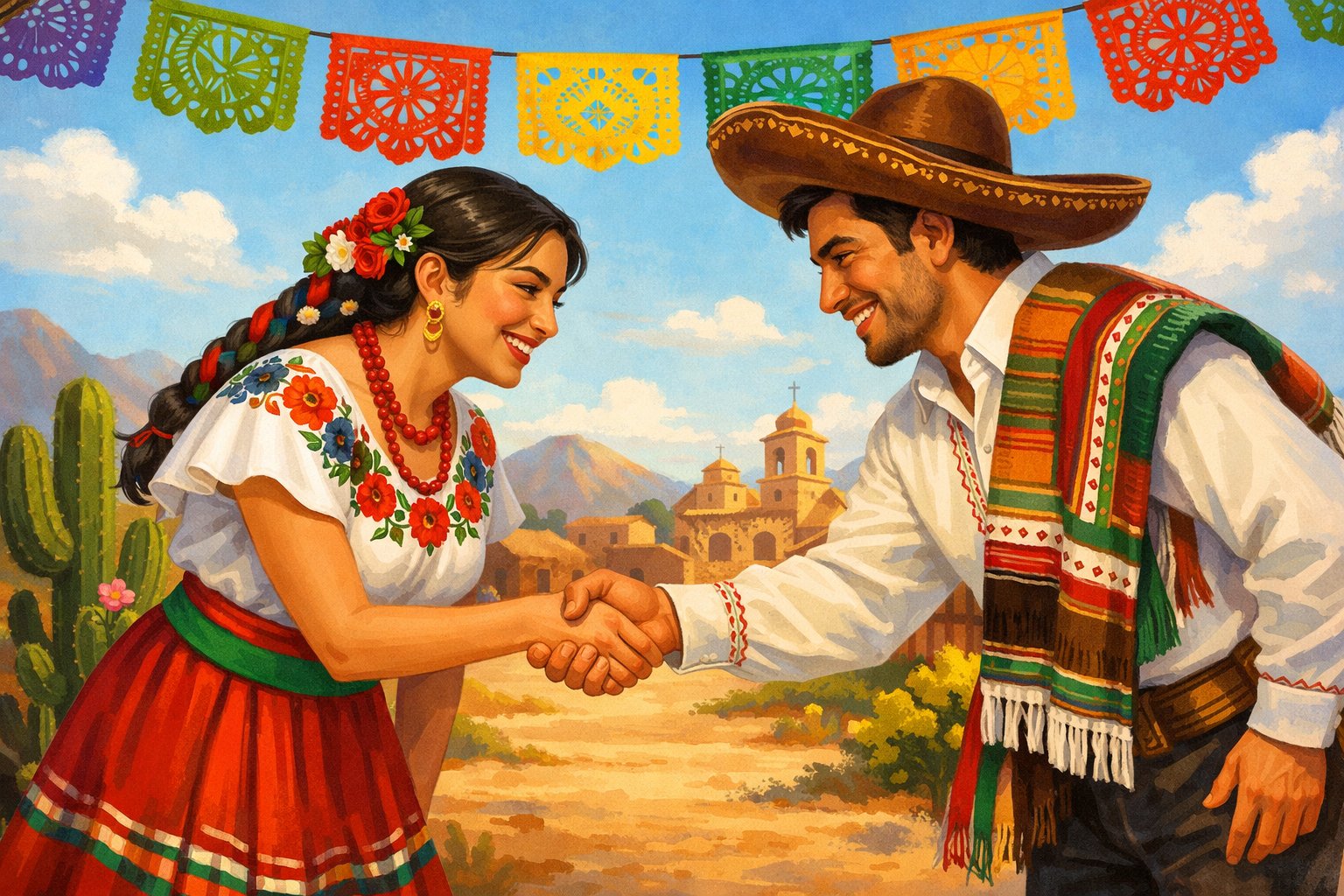
Essential Ways to Say Thank You in Mexican Spanish
Mexican Spanish has a handful of core phrases for saying thanks. Some are simple and work anywhere; others show deeper appreciation or fit specific situations.
Gracias: The Universal Thank You
Basic Usage
| Phrase | Translation | Context |
|---|---|---|
| Gracias | Thank you | Any situation |
| Gracias, amigo | Thanks, friend | Casual |
| Gracias, señor/señora | Thanks, sir/ma'am | Formal |
"Gracias" is the everyday way to say thank you. Use it at work, at a party, or when someone holds the door.
Common Responses
- De nada (You're welcome)
- No hay de qué (No problem)
- Para servirle (At your service)
You don't need to change "gracias" for gender or formality. If you know "gracias," you can get by in almost any conversation.
Muchas Gracias and Muchísimas Gracias for Extra Emphasis
Intensity Levels
| Phrase | Literal Translation | Intensity |
|---|---|---|
| Muchas gracias | Many thanks | Medium-high |
| Muchísimas gracias | Very many thanks | High |
| ¡Muchísimas gracias! | Very many thanks! | Maximum |
Add "muchas" or "muchísimas" to make your thanks stronger.
Usage Examples
- Muchas gracias por tu ayuda. (Thank you very much for your help.)
- Muchísimas gracias por el excelente servicio. (Thanks so much for the great service.)
- Te doy muchas gracias. (I give you many thanks.)
Stick an exclamation mark on there if you want to sound extra enthusiastic. These phrases fit when someone really helped you out.
Mil Gracias and Un Millón de Gracias: Deep Appreciation
Magnitude Comparisons
| Phrase | Literal Meaning | When to Use |
|---|---|---|
| Mil gracias | A thousand thanks | Big favors |
| Un millón de gracias | A million thanks | Huge help |
| Gracias mil | Thanks a thousand | Informal emphasis |
| Infinitas gracias | Infinite thanks | Profound gratitude |
"Mil gracias" and "un millón de gracias" crank up the appreciation. They're for those moments when "thanks" just isn't enough.
Practical Applications
- Mil gracias, compa. (Thanks a million, buddy.)
- Un millón de gracias por salvarme. (A million thanks for saving me.)
- Infinitas gracias por tu paciencia. (Endless thanks for your patience.)
Use these when someone really went out of their way for you.
Gracias Por Todo and Gracias de Todo Corazón: Heartfelt Thanks
Heartfelt Expressions
| Phrase | Translation | Emotional Weight |
|---|---|---|
| Gracias por todo | Thanks for everything | High |
| Gracias de todo corazón | Thanks from my whole heart | Very high |
| Te agradezco de todo corazón | I thank you from my whole heart | Maximum personal |
"Gracias por todo" is for when someone did a lot for you, maybe over time. Works for goodbyes or wrapping up a project.
Formal Variants
- Le agradezco de todo corazón. (Formal: I thank you from my whole heart.)
- Estoy muy agradecido/agradecida. (I'm very grateful.)
- Aprecio todo lo que has hecho. (I appreciate everything you've done.)
"Gracias de todo corazón" is about as heartfelt as it gets. Use it when you want to show real, deep gratitude.
Formal, Informal, and Slang Expressions of Gratitude
Mexican Spanish has different ways to say thanks depending on who you're with - formal, casual, or just plain slang.
Te Lo Agradezco, Le Agradezco, and Se Lo Agradezco: Polite Speech
These use the verb agradecer (to thank) and change up the pronoun for formality.
| Phrase | Formality | When to Use |
|---|---|---|
| Te lo agradezco | Informal | Friends, family |
| Le agradezco | Formal | Teachers, strangers |
| Se lo agradezco | Very formal | Groups, high-status folks |
Te agradezco is the short, casual version. The lo refers to whatever you're thanking them for.
- Le agradezco su apoyo. (I appreciate your support.)
- Gracias de antemano. (Thanks in advance.)
Common replies: de nada, por nada, no hay de qué.
Estoy (Muy) Agradecido and Muy Agradecido: Sincere Thanks
Agradecido means grateful - use it when you want to show real feeling.
Structure:
- Estoy muy agradecido. (Male speaker)
- Estoy muy agradecida. (Female speaker)
- Muy agradecido por tu ayuda. (Very grateful for your help.)
Pair it with su apoyo es invaluable (your support is invaluable) or me alegraste el día (you made my day) for extra warmth.
Rule → Example
- Rule: Match the adjective ending (-o/-a) to your gender.
- Example: Estoy agradecida (female), estoy agradecido (male).
Te Debo Una, Qué Amable, and Chido: Everyday and Slang Phrases
Casual and regional ways to say thanks:
| Phrase | Meaning | Context |
|---|---|---|
| Te debo una | I owe you one | Favors between friends |
| Qué amable | How kind | Polite appreciation |
| Es muy amable de tu parte | Very kind of you | Semi-formal |
| Chido | Cool/thanks | Slang, northern Mexico |
Chido is super informal - save it for friends, not your boss. No sé qué haría sin ti (I don't know what I'd do without you) is for close friends.
Common responses: con gusto (with pleasure), un placer (a pleasure).
Gracias de Antemano, Gracias Igual, and Gracias de Todos Modos: Unique Scenarios
Timing and context change up how you say thanks.
Timing-based thanks:
- Gracias de antemano – Thanks in advance
- Gracias igual – Thanks anyway
- Gracias de todos modos – Thanks regardless
Reciprocal expressions:
- Gracias a ti – Thanks to you
- Gracias a todos – Thanks to everyone
Gracias por nada means "thanks for nothing" (sarcastic). Dar las gracias is the formal way to say "give thanks."
Rule → Example
- Rule: Use por favor before a request, and gracias de antemano if you're thanking in advance.
- Example: Por favor, ayúdame con esto. Gracias de antemano.
Frequently Asked Questions
Mexican Spanish has a range of ways to say thanks, from casual to formal. Some are playful, and a few change depending on who's speaking.
What are some informal ways to express gratitude in Spanish among friends?
Common informal phrases:
- Gracias – Basic, works everywhere
- Mil gracias – A thousand thanks
- Muchísimas gracias – Tons of thanks
- Te agradezco – I thank you (personal)
Mexican slang examples:
| Phrase | Translation | Context |
|---|---|---|
| ¡Gracias, güey! | Thanks, dude! | Central/northern Mexico, friends |
| ¡Mil gracias, compa! | Thanks a million, buddy | Friendly, casual |
| ¡Gracias, carnal! | Thanks, brother! | Very informal, close friends |
Friends skip the formal stuff and go for chill phrases in daily chats.
What is the appropriate way to say thank you to a woman in Spanish?
Thank you phrases don't change for the recipient's gender. Only the speaker's adjective changes.
Gender agreement:
| Speaker Gender | Phrase |
|---|---|
| Male | Estoy agradecido |
| Female | Estoy agradecida |
Universal phrases:
- Muchas gracias
- Le agradezco
- Aprecio su ayuda
Can you list some formal expressions of appreciation in Spanish?
Formal gratitude phrases:
| Spanish | English | Best Used When |
|---|---|---|
| Muchas gracias | Many thanks | Business settings, formal situations |
| Le agradezco | I thank you | Addressing someone with respect |
| Aprecio su ayuda | I appreciate your help | Someone provided assistance |
| Estoy agradecido(a) | I am grateful | Showing sincere, deep gratitude |
| Le agradezco por su amabilidad | I thank you for your kindness | Recognizing specific kindness |
Rule → Example:Use "usted" forms (le, su) for formal settings and when talking to elders.
Example: Le agradezco su tiempo.
Adding specificity:
- Por + reason
Example: Muchas gracias por tu ayuda. (Thank you very much for your help) - Por la + reason
Example: Gracias por la oportunidad. (Thanks for the opportunity)
How do I say thank you humorously in Spanish?
Playful expressions:
- Te debo una - I owe you one
- Eres un sol - You're a sun (you're amazing)
- Me salvaste la vida - You saved my life
- Qué haría sin ti - What would I do without you
- Eres lo máximo - You're the best
Humorous with slang:
| Phrase | Literal Translation | Actual Meaning |
|---|---|---|
| ¡Gracias, crack! | Thanks, crack! | Thanks, superstar! |
| ¡Eres un/a chingón/chingona! | You're amazing! | You rock! (vulgar) |
Rule → Example:
Use playful or slang phrases with friends or people you know well.
Example: ¡Eres un sol!
Are there different phrases used for thanking men and women in Spanish?
| Usage | Male Form | Female Form |
|---|---|---|
| Self-description | Estoy agradecido | Estoy agradecida |
| Friend (noun) | amigo | amiga |
| Slang (familiar) | compadre | comadre |
No gender difference:
- Gracias
- Muchas gracias
- Te agradezco
- Le agradezco
- Mil gracias
Rule → Example:
Only change the ending when describing yourself or using gendered nouns.
Example: Estoy agradecida (if you're female).