What Does Chingona Mean in Spanish: Real-World Usage Unlocked
Related terms: chingón (masculine), chingonería (something excellent), chingonada (a magnificent action).
Posted by
 Stewart Kaplan
Related reading
What Does Adonde Mean in Spanish? How Movement 'Clicks' for Learners
You have to know when prepositions combine with donde to show direction or position
What Does Ahi Mean in Spanish? Cognitive Mastery That Sticks
Learners mix up ahí, hay, and ay because they sound the same but mean totally different things.
What Does Aki Mean in Spanish: Unpacking Real Usage for Learners
Regional differences exist, but nearly everyone in Spanish-speaking communities gets what "aki" means in a text
TL;DR
- Chingona means a badass, fierce, or highly skilled woman in Mexican Spanish - the feminine form of chingón, used to show admiration and respect.
- Comes from the verb chingar, which can be vulgar, but chingona has been reclaimed as a badge of empowerment and pride.
- Used informally to celebrate women who are excellent, independent, and unafraid to break expectations.
- Context matters: fine among friends and casual settings, but too informal for work or formal situations.
- Related terms: chingón (masculine), chingonería (something excellent), chingonada (a magnificent action).
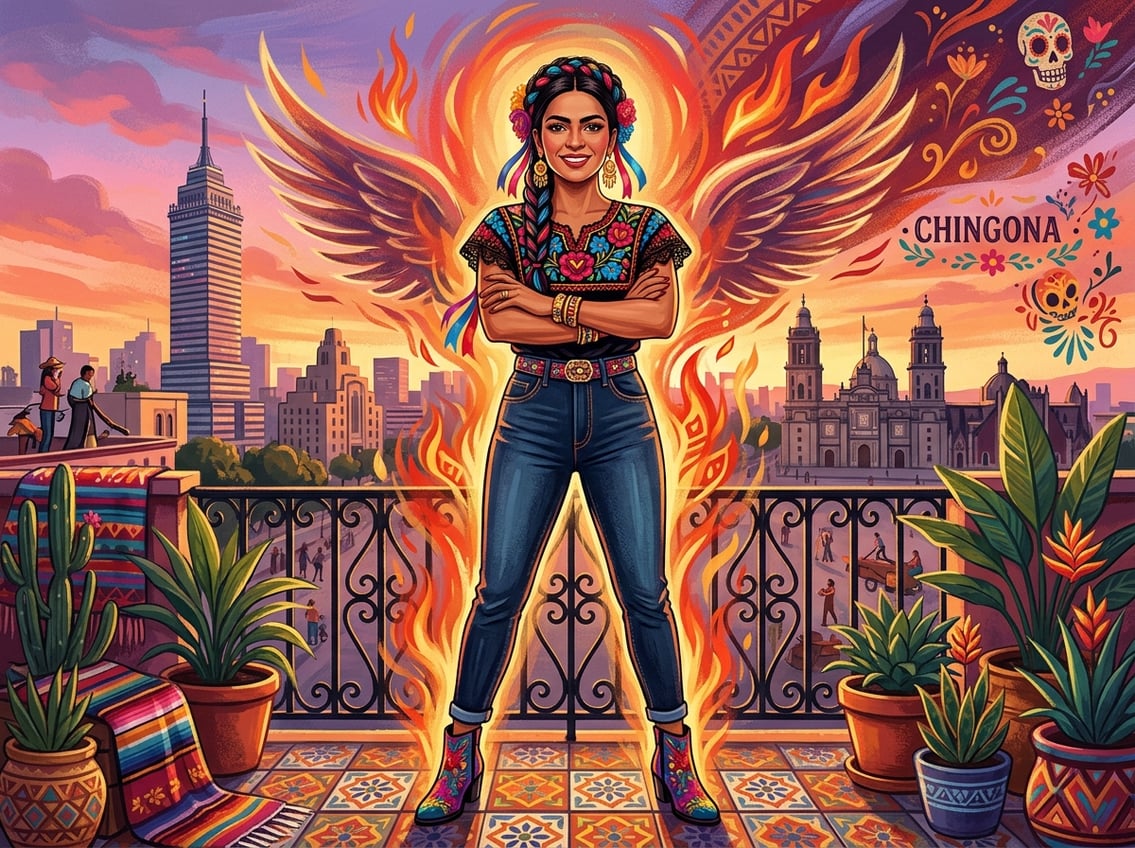
Defining Chingona in Modern Mexican Spanish
Chingona is empowering Mexican slang for a strong, fearless woman, though its meaning can shift with tone, relationship, or setting.
From Slang to Compliment: The Evolution
Chingona comes from chingar, which has vulgar meanings. Chingón means an intelligent, skilled person or something awesome in Mexican Spanish.
Over time, chingona shifted from being offensive to a term of admiration. Women reclaimed it to celebrate strength and independence.
Evolution Timeline:
- Traditional usage: Vulgar, negative connotation
- Mid-20th century: Used for tough, capable people
- Modern usage: Badge of empowerment, especially for Mexican and Mexican-American women
- Current context: Seen in business, social media, and cultural pride movements
Communities embraced the term to challenge stereotypes about women.
Comparing Chingona and Chingón
| Feature | Chingona | Chingón |
|---|---|---|
| Gender | Feminine | Masculine |
| Usage | Describes women | Describes men, situations, or things |
| Meaning | Badass, fearless woman | Excellent, skilled person |
| Cultural weight | Female empowerment | General praise |
| Formality | Informal, sometimes vulgar | Informal, sometimes vulgar |
Both terms share the same root, but chingona carries extra weight as a feminist expression.
When Context Changes Meaning
Positive contexts:
- Friends celebrating each other’s wins
- Social media posts about growth or achievement
- Talking about admired public figures
- Culturally aware circles
Negative or inappropriate contexts:
- Formal business settings
- With older generations who see it as vulgar
- Hostile or sarcastic tone
- Used by people outside Mexican culture
Key factors that shift meaning:
- Relationship between speaker and listener
- Tone of voice/body language
- Regional differences
- Generation gap
Rule → Example:
- Rule: Use chingona with friends or in casual spaces, not in formal business meetings.
- Example: “¡Eres una chingona!” (You’re a badass!)
Origins and Linguistic Roots
Chingona comes from chingar, a verb with strong meanings in Spanish. The feminine form fits Mexican Spanish grammar and links to a whole family of slang.
Tracing Chingona to Chingar
Root verb: chingar
Historical meanings:
- To force or disrupt
- To bother or annoy
- To break or damage
- To have sex (vulgar)
Chingar has roots in Nahuatl, the old Aztec language. Mexican Spanish morphed this verb into new slang forms.
Evolution in Mexican Spanish:
- Started as an aggressive, sometimes vulgar action
- Now used for expressing excellence
- Gender: chingón (masculine) / chingona (feminine)
The -ón/-ona suffix makes it more intense. With chingar, it flips from insult to compliment.
Chingadera and Related Slang Variations
| Term | Type | Meaning |
|---|---|---|
| chingón/chingona | Adjective | Excellent, skilled, badass |
| chingadera | Noun | Worthless object, bad action |
| chingonería | Noun | Something of great quality |
| se chingó | Verb phrase | It broke/stopped working |
Chingadera uses:
- Junk or low-value items
- Dirty tricks or bad actions
Example contrasts:
- "Esa artista es chingona." (That artist is excellent.)
- "¿Cuánto cuesta esta chingadera?" (How much is this junk?)
Same root, different meaning based on context and suffix.
Roles of Gender and Grammar
Rule → Example:
- Rule: Match chingona with feminine nouns, chingón with masculine.
- Example: “La doctora es chingona.” / “El doctor es chingón.”
Plural forms:
- chingonas (feminine)
- chingones (masculine)
Intensity variations:
- chingona (standard)
- chingonísima (superlative)
- bien chingona (very excellent)
Empowerment and Cultural Pride
Chingona now stands for female empowerment in Mexican culture, showing resilience and cultural identity for Latinas who don’t seek approval.
Chingona as Latina Strength
Core chingona traits:
- Confidence without apology
- Independence
- Resilience
- Breaking social norms
Chingona is an identity rooted in Latina pride. The word’s on t-shirts, mugs, and tote bags - kind of everywhere.
| Spanish | English | Usage Context |
|---|---|---|
| "Soy una chingona" | "I'm a badass" | Self-affirmation |
| "Mujer chingona" | "Badass woman" | Recognition |
| "Actúa como chingona" | "Act like a chingona" | Encouragement |
Reclaiming Chingona in Chicano Culture
Reclamation timeline:
- 1990s–2000s: Street slang, negative
- 2010s: Latinas use it for self-identity
- 2020s: Mainstream in music, festivals, social movements
Rule → Example:
- Rule: Chingona is embraced in Chicano/Latina spaces as empowerment, not insult.
- Example: Chingona Fest celebrates Latina power.
Key cultural markers:
- Rejecting respectability politics
- Celebrating Mexican heritage
- Supporting other chingonas
- Refusing assimilation
Identity and Mexican-American Expression
| Aspect | Mexican Connection | American Context |
|---|---|---|
| Language | Spanish slang term | Used in English too |
| Values | Mexican resilience | American determination |
| Community | Familia bonds | Individual empowerment |
| Expression | Cultural pride | Personal authenticity |
Where chingonas use the identity:
- Social media bios
- Community spaces
- Workplaces with Latino colleagues
- Personal affirmations
Rule → Example:
- Rule: Chingona bridges Mexican and American identity, not limited to one.
- Example: “I’m a chingona - both Mexican and American.”
Chingona in Everyday and Pop Culture
You’ll spot the word in media, fashion, and personal brands. Artists and entrepreneurs have turned chingona into merchandise and a movement for Latina strength.
How Chingona Shows Up in Media and Fashion
Common Product Categories
- T-shirts, hoodies
- Greeting cards, stickers
- Coffee mugs, tote bags
- Wall art, prints
- Phone cases, accessories
You'll spot the word all over merchandise as a symbol of strength for women. Artists and small businesses sell "chingona" gear in bold fonts, usually with roses, skulls, or old-school Mexican patterns.
Media Appearances
| Platform | Usage |
|---|---|
| Social media | Hashtags, bios, empowerment posts |
| Music | Lyrics celebrating strong women |
| Television | Latina character descriptions |
| Literature | Book/chapter titles on Latina identity |
Fashion brands for Latinas use the term in clothing lines, mixing traditional Mexican designs with modern streetwear.
Famous Chingonas: From Selena to Today
Historical and Contemporary Figures
Selena Quintanilla stands out as a chingona, breaking barriers in Tejano music and keeping it real with her culture.
Modern Examples
- Alexandria Ocasio-Cortez: Political leadership
- Dolores Huerta: Labor rights
- Sonia Sotomayor: Supreme Court Justice
- Frida Kahlo: Artistic trailblazer
These women are called chingonas for their achievements and impact, pushing against expectations while staying proud of their roots.
Who gets called chingona?
- Community leaders
- Activists for Latina rights
- Women making waves in their fields
La Chingona and Branding
Entrepreneurs trademark the term for their businesses. Eunice Munro Colosio launched "Somos Chingonas" in 2017 to uplift first-generation women of color who were taught not to brag.
Business Applications
- Consulting for Latina professionals
- Wellness brands for empowerment
- Educational programs for young women
- Networking and professional groups
Rule → Example
Rule: Use "chingona" branding to signal cultural understanding and a female-focused mission.
Example: A wellness brand named "Chingona Wellness" markets to Latinas seeking empowerment.
Board of Supervisors Chair Nora Vargas keeps a plaque in her office defining chingona as a woman who is "intelligent, fearless, and can get things done." HOPE (Hispanas Organized for Political Equality) gave her the plaque, showing how chingonas in professional settings own the word.
Nuanced Uses and Sensitive Contexts
"Chingona" means different things depending on who's speaking, where, and the relationship. Age and location play a big part in whether it feels empowering or rude.
When Chingona Can Offend
Contexts Where Offense Occurs:
- Formal settings – Work, church, official events
- Older family members – Grandparents, traditional parents
- Non-Mexican Spanish speakers – Doesn't translate well outside Mexico
- Unknown audiences – With strangers, can come off as disrespectful
The verb chingar has vulgar roots: "to screw with" or "to bother." Some Spanish speakers feel uneasy about it, no matter how positive the intent.
Who May Take Offense:
| Group | Reason |
|---|---|
| Conservative women | See it as unladylike or rude |
| Traditional groups | Connect it to rebellion against gender roles |
| Non-Mexican Latinos | Only know the vulgar root |
| Professional spaces | Consider it unprofessional language |
Generational and Regional Differences
By Generation:
- Older (60+) – Usually find it offensive, tied to "chingar"
- Middle-aged (40-59) – Use it rarely, only with close friends
- Younger (under 40) – Embrace it as empowerment, confidence
Regional Variations:
| Region | Usage Pattern |
|---|---|
| Mexico City | Common among young adults, becoming normalized |
| Northern Mexico | Used often, not controversial |
| Southern Mexico | Conservative, used with caution |
| U.S. Chicano communities | Reclaimed for identity and pride |
| Other Latin American countries | Often misunderstood or unknown |
Rule → Example
Rule: The masculine "chingón" faces less stigma than "chingona."
Example: "Él es un chingón" is widely accepted; "ella es una chingona" can still raise eyebrows.
Related Terms and Expressions
The Spanish slang word chingona comes from "chingar." Related terms have different meanings, from positive to negative.
Chingonería, Chingones, and Other Variations
Chingonería: Noun for something outstanding or impressive.
Common variations in Mexican Spanish:
| Term | Type | Meaning | Example |
|---|---|---|---|
| Chingonería | Noun | Something excellent | "Ese mural es una chingonería" |
| Chingones | Plural noun | Skilled/awesome people | "Todos son bien chingones" |
| Chingonada | Noun | Magnificent thing or action | "¡Qué chingonada de gol!" |
| Chingonsísimo | Superlative adj. | Extremely excellent | "El viaje estuvo chingonsísimo" |
| Chingadera | Noun | Junk or bad action | "¿Cuánto cuesta esta chingadera?" |
Chingones: Plural, for people who are really good at what they do.
Positive and Negative Connotations
| Use Case | Meaning | Example |
|---|---|---|
| Positive | Praising skill or quality | "Eres una chingona en tu trabajo" |
| Negative | Describing junk or something broken | "Se chingó la computadora" |
| Sarcastic | Mocking or criticizing | "Ay, qué chingona, ¿no?" |
Rule → Example
Rule: Intonation and context decide if the word is praise or criticism.
Example: "Qué chingona eres" (admiring) vs. "Qué chingona" (sarcastic tone).
Frequently Asked Questions
Is "chingona" a compliment or an insult depending on context?
| Context | Meaning | Tone |
|---|---|---|
| Friends celebrating achievement | Compliment ("badass") | Positive, empowering |
| Said sarcastically or with hostility | Insult ("too aggressive") | Negative, critical |
| Formal settings | Generally inappropriate | Potentially offensive |
| Mexican-American communities | Reclaimed as empowerment | Positive, prideful |
Rule → Example
Rule: The speaker's tone and relationship to the listener determine meaning.
Example: "Eres una chingona" from a friend = compliment; from a critic = insult.
What is the negative or offensive meaning associated with "chingona"?
Offensive interpretations:
- Woman seen as aggressive or difficult
- Someone who rejects traditional gender roles
- Person perceived as rude or confrontational
- Vulgar, tied to the verb "chingar"
Rule → Example
Rule: In professional or conservative settings, avoid using "chingona."
Example: Don't call a coworker "la chingona" at a board meeting.
Is it appropriate to call someone "la chingona," and in what situations?
| Situation | Appropriate? | Notes |
|---|---|---|
| Celebrating with friends | Yes | Casual, empowering |
| Empowerment events | Yes | Latina identity focus |
| Social media among peers | Yes | Audience understands the term |
| Workplace or formal events | No | Too informal, may offend |
| Speaking to elders or authority | No | Can be disrespectful |
Rule → Example
Rule: Use "la chingona" only when you know your audience is comfortable with it.
Example: "Ella es la chingona del grupo" at a friends' party.
How does "chingona" differ in meaning and usage from "chingón"?
| Aspect | Chingón (masculine) | Chingona (feminine) |
|---|---|---|
| Traditional usage | Compliment for excellence | Criticism for aggression |
| Modern usage | Still positive | Reclaimed as empowerment |
| Social acceptance | Widely accepted | Still controversial for some |
| Connotation | Skilled, expert | Fierce, independent, bold |
Rule → Example
Rule: "Chingón" is usually a compliment for men; "chingona" was negative but is now reclaimed.
Example: "Es un chingón en su trabajo" vs. "Es una chingona en su trabajo."
How do you use "chingona" correctly in a sentence in Spanish?
Common sentence patterns:
- Eres una chingona = You are a badass
- Qué chingona eres = How badass you are
- Ella es bien chingona = She is really badass
- Me siento chingona = I feel badass
- Las chingonas no piden permiso = Badass women don't ask permission
Rule → Example
Rule: Use "una" or "la" before "chingona" when it's a noun; as an adjective, pair with "ser" or "estar."
Example: "Soy una chingona" (noun) / "Estoy chingona hoy" (adjective)
Intensifiers like "bien," "muy," or "súper" make it stronger. Regional differences may apply.