How to Say Yes in Spanish: Science-Backed Mastery for Adults
Regional differences matter - "vale" is everywhere in Spain, "dale" pops up in Argentina and other parts of Latin America, and "sale" is classic Mexican Spanish.
Posted by
 Stewart Kaplan
Related reading
What Does Adonde Mean in Spanish? How Movement 'Clicks' for Learners
You have to know when prepositions combine with donde to show direction or position
What Does Ahi Mean in Spanish? Cognitive Mastery That Sticks
Learners mix up ahí, hay, and ay because they sound the same but mean totally different things.
What Does Aki Mean in Spanish: Unpacking Real Usage for Learners
Regional differences exist, but nearly everyone in Spanish-speaking communities gets what "aki" means in a text
TL;DR
- The standard way to say "yes" in Spanish is "sí" (with an accent). "Si" without an accent means "if" - mixing them up totally changes the meaning.
- Spanish speakers use lots of affirmative words besides "sí": "claro" (of course), "vale" (okay, especially in Spain), "dale" (alright, common in Latin America), and "por supuesto" (certainly, more formal).
- Which word you pick depends on context: formal settings use "por supuesto" or "de acuerdo," while casual chats go with "claro," "bueno," or local slang like "sale" (Mexico) or "cómo no" (for enthusiastic agreement).
- Regional differences matter - "vale" is everywhere in Spain, "dale" pops up in Argentina and other parts of Latin America, and "sale" is classic Mexican Spanish.
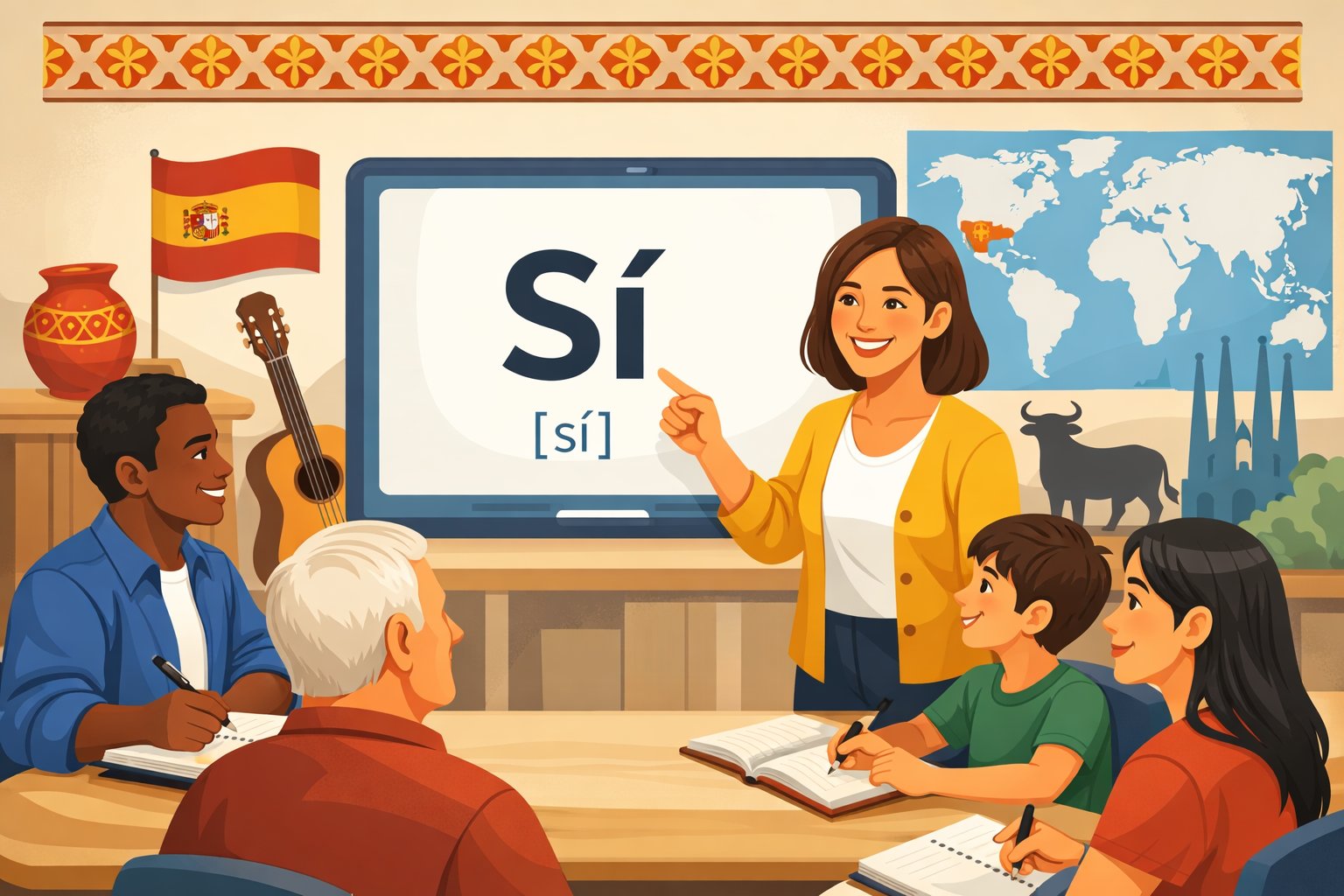
The Fundamental Meaning and Usage of 'Sí'
"Sí" is the direct translation for "yes" in Spanish. The accent is what separates it from "si" ("if"). You’ll see "sí" used as an adverb, interjection, and noun, so it’s handy to know how it works in conversation.
The Importance of the Accent: 'Sí' vs. 'Si'
| Word | Meaning | Accent? |
|---|---|---|
| sí | yes | Yes |
| si | if | No |
Example with sí (yes):¿Te gusta el café? - Sí, me gusta.Do you like coffee? - Yes, I like it.
Example with si (if):Si llueve, no vamos.If it rains, we're not going.
Rule → Example:
Rule: Always use the accent for "sí" meaning "yes."
Example: Sí, quiero ir. (Yes, I want to go.)
Using the wrong one can totally throw off your meaning. Spanish speakers spot this mistake right away.
Pronunciation and Function: Adverb, Interjection, Noun
Pronunciation:
"Sí" sounds like the English "see." The vowel is a bit longer, and the tone drops a little when you’re just saying yes.
| Function | How It’s Used | Example |
|---|---|---|
| Adverb | To answer a question | - ¿Vienes? - Sí. (Are you coming? - Yes.) |
| Interjection | To show strong agreement | ¡Sí! ¡Claro que sí! (Yes! Of course!) |
| Noun | To talk about the word "yes" | Dame un sí o un no. (Give me a yes or a no.) |
Rule → Example:
Rule: Use "sí" as a noun when talking about the answer itself.
Example: Necesito tres síes. (I need three yeses.)
Using 'Sí' in Sentences and Conversation
Quick replies:
- ¿Quieres agua? - Sí.
- ¿Estás listo? - Sí, estoy listo.
| Phrase | English | Formality |
|---|---|---|
| Sí, claro | Yes, of course | Neutral |
| Sí, por supuesto | Yes, of course | Formal |
| Sí, está bien | Yes, that’s fine | Neutral |
| Sí, con mucho gusto | Yes, with pleasure | Formal |
Longer answers:
Sí, me gustaría ir al cine esta noche.
Yes, I’d like to go to the movies tonight.
Common combos:
- Sí, gracias (Yes, thank you)
- Sí, por favor (Yes, please)
- Sí, perfecto (Yes, perfect)
Rule → Example:
Rule: Add "sí" at the start of a positive reply for emphasis.
Example: Sí, me encantaría. (Yes, I’d love to.)
Polite and Respectful Forms: 'Sí, señor' and 'Sí, señora'
| Phrase | Used For | Where/When |
|---|---|---|
| Sí, señor | Yes, sir | Talking to men, formal |
| Sí, señora | Yes, ma’am | Talking to women, formal |
| Sí, señorita | Yes, miss | Younger/unmarried women |
Examples:
Customer service:
- ¿Puedo ayudarle? - Sí, señor.
Can I help you? - Yes, sir.
Military or official:
- ¿Entendió la orden? - Sí, señor.
Did you understand the order? - Yes, sir.
| Region | Usage Frequency | Note |
|---|---|---|
| Latin America | High | Used often with elders, authority figures |
| Spain | Lower | Young people often skip the title |
Memory pattern:
Rule: "Sí" + title (señor, señora, doctor, profesor, etc.)
Example: Sí, doctor. (Yes, doctor.)
Beyond 'Sí': Variations and Regional Ways to Say Yes
Spanish speakers have loads of other ways to say yes, and which you use depends on how formal, friendly, or enthusiastic you want to sound.
Common Alternatives: 'Claro', 'Por Supuesto', 'De Acuerdo', 'Vale'
| Phrase | Meaning | Formality | Region |
|---|---|---|---|
| Claro | Of course / Sure | Informal | Everywhere |
| Por supuesto | Of course | Formal | Everywhere |
| De acuerdo | Agreed / Alright | Formal | Everywhere |
| Vale | OK / Alright | Informal | Spain |
Rule → Example:
Rule: Use "claro" for casual, "por supuesto" for formal.
Example: ¿Puedes ayudarme? - Por supuesto. (Can you help me? - Of course.)
"Vale" is super common in Spain, but in Latin America, people might not get it and prefer "está bien" or "bueno."
Expressive and Emphatic Phrases: 'Claro que sí', '¡Por supuesto que sí!', '¡Eso es!'
| Phrase | Literal Meaning | Emotional Tone |
|---|---|---|
| Claro que sí | Of course yes | Strong agreement |
| ¡Por supuesto que sí! | Of course yes! | Emphatic |
| ¡Eso es! | That’s it! | Confirmation |
| ¡Cómo no! | How not! | Enthusiastic yes |
| Exacto | Exactly | Precise agreement |
Rule → Example:
Rule: Add "que sí" for more enthusiasm.
Example: Claro que sí, vamos. (Of course, let’s go.)
¡Cómo no! is big in Latin America for an excited yes, especially in Colombia, Mexico, and Central America.
Exacto is used when confirming a fact or detail.
Informal and Slang Expressions Used by Spanish Speakers
| Expression | Region | Register | Meaning |
|---|---|---|---|
| Simón | Mexico | Slang | Hell yeah / Yep |
| Dale | Argentina, Uruguay | Informal | OK / Let’s do it |
| Sale | Mexico | Informal | Deal / Agreed |
| Sipo | Chile | Informal | Yup |
| Sisas | Colombia | Slang | Hell yes |
| Ajá | All regions | Casual | Uh-huh / Mmhmm |
| Órale | Mexico | Slang | Alright! / Right on! |
| Obvio | All regions | Informal | Obviously |
| Listo | All regions | Informal | Ready / OK |
Rule → Example:
Rule: Use local slang with friends, not at work.
Example: ¿Vamos al cine? - Dale. (Want to go to the movies? - OK.)
Ajá works everywhere as a quick yes, but tone matters - a bored "ajá" can sound dismissive.
Órale is pure Mexican Spanish, showing agreement or excitement.
Obvio (obviously) and listo (ready/OK) are informal, but you’ll hear them everywhere.
Matching Context and Formality: Choosing the Right Affirmative
| Context | Go-To Phrases | Avoid |
|---|---|---|
| Job interview | Por supuesto, de acuerdo, desde luego | Simón, dale, órale |
| Customer service | Con mucho gusto, por supuesto, claro | Sisas, sale, ajá |
| Friends / peers | Claro, sí, obvio, dale, sale | Por supuesto, desde luego |
| Text message | Sip, ok, listo, va | Por supuesto que sí |
| Academic setting | Sí, claro, de acuerdo, exacto | Simón, sisas, órale |
Rule → Example:
Rule: Match your "yes" to the setting - formal for work, casual for friends.
Example: In a meeting: De acuerdo. With friends: Sale.
Regional awareness:
Rule: Use local affirmatives for the country you’re in.
Example: In Spain: Vale. In Argentina: Dale.
Written communication:
Rule: Use standard forms in emails, casual forms in texts.
Example: Email: Sí, por supuesto. Text: Sip, va.,
Frequently Asked Questions
Spanish has plenty of ways to say yes besides just "sí." You’ll hear informal stuff like "dale" or "vale," regional favorites such as "simón" in Mexico, and phrases like "claro que sí" when you want to sound extra sure.
What are some informal ways to agree in Spanish?
| Expression | Region | Literal Meaning | Usage Context |
|---|---|---|---|
| Dale | Latin America | Give it | Friends, casual plans |
| Vale | Spain | It's valid | Everyday conversation |
| Sale | Mexico | It comes out | Informal agreement |
| Órale | Mexico | Right on | Enthusiastic acceptance |
| Listo | Various | Ready | Quick confirmation |
- Use these with friends, family, or people your own age.
Common Exchanges:
- "¿Nos vemos a las ocho?" "Dale."
- "¿Vamos al cine?" "Sale."
- "¿Me pasas la sal?" "Vale."
Informal ways to say yes change a lot depending on where you are and who you’re talking to.
How can I express strong agreement in Spanish?
| Phrase | Translation | Intensity Level |
|---|---|---|
| Claro que sí | Of course yes | High |
| Por supuesto que sí | Certainly yes | Very high |
| Sin duda | Without doubt | High |
| Exacto | Exactly | Medium-high |
| Totalmente | Totally | High |
Rule → Example:
Add "que sí" to "claro" or "por supuesto" for extra emphasis.
Example: "Por supuesto que sí."
Emphatic Structures:
Sí, sí, sí (repeating for effect)
¡Claro!
¡Cómo no!
Using exclamation marks and tone boosts enthusiasm in writing.
What phrases in Spanish are equivalent to 'okay' or 'alright'?
| Spanish Phrase | English Equivalent | Formality |
|---|---|---|
| Está bien | It's fine | Neutral |
| De acuerdo | Agreed | Formal |
| Bueno | Well/Okay | Informal |
| Vale | Alright | Informal (Spain) |
| Okey/OK | Okay | Universal |
Rule → Example:
Draw out "bueno" ("Bueeeeno...") to show hesitation.
Response Patterns:
- "¿Te parece bien mañana?" - "Está bien."
- "¿Empezamos?" - "De acuerdo."
- "¿Pedimos pizza?" - "Bueno."
Phrases equivalent to okay depend on certainty and who’s talking.
Are there regional variations of affirmatives in Spanish-speaking countries?
| Country/Region | Common Expression | Usage Notes |
|---|---|---|
| Mexico | Sale, órale, simón | "Simón" is slang for yes |
| Spain | Vale, venga | "Venga" means come on/okay |
| Argentina | Dale, bárbaro | "Bárbaro" means great/okay |
| Colombia | Listo, chévere | "Chévere" means cool/okay |
| Chile | Ya po' | Informal, very casual |
"Vale" is everywhere in Spain, but not in Latin America.
"Dale" fits almost anywhere in Latin America.
"Sale" signals you’re in Mexico.
Listen to locals to pick up the right words.
How can one humorously affirm something in Spanish?
| Humorous Expression | Literal Translation | Tone |
|---|---|---|
| Simón | Yes (slang) | Playful |
| Arre | Giddy up | Jovial |
| Eso mero | That's it exactly | Casual/funny |
| Ahí nos vidrios | See you there (glass pun) | Joking |
| Sepo | Yes (inverted "pos") | Sarcastic |
- Use these only with people who get the joke.
Playful Variations:
- Sip (internet slang for sí)
- Sisas (Colombian slang)
- Nel pastel (joking "no" - the opposite)
Rule → Example:
Humorous affirmatives work only in very informal settings.
Example: "Simón, vamos."