How to Say Good Afternoon in Spanish: Science-Driven Fast Fluency
Context matters: at work or with strangers, use "buenas tardes." With people you know, shorter greetings are fine.
Posted by
 Stewart Kaplan
Related reading
What Does Adonde Mean in Spanish? How Movement 'Clicks' for Learners
You have to know when prepositions combine with donde to show direction or position
What Does Ahi Mean in Spanish? Cognitive Mastery That Sticks
Learners mix up ahí, hay, and ay because they sound the same but mean totally different things.
What Does Aki Mean in Spanish: Unpacking Real Usage for Learners
Regional differences exist, but nearly everyone in Spanish-speaking communities gets what "aki" means in a text
TL;DR
- The go-to way to say good afternoon in Spanish is "buenas tardes," which you’ll hear from noon to about 7 p.m. in most places.
- "Buenas" is a laid-back shortcut among friends, and "buen día" sometimes stretches into the afternoon in certain areas.
- If it’s formal, stick with "buenas tardes." With friends or in chill settings, "hola" or "qué tal" work too.
- Spanish greetings use the plural by default ("buenas" not "buena") - that’s just how time-based greetings roll.
- Context matters: at work or with strangers, use "buenas tardes." With people you know, shorter greetings are fine.
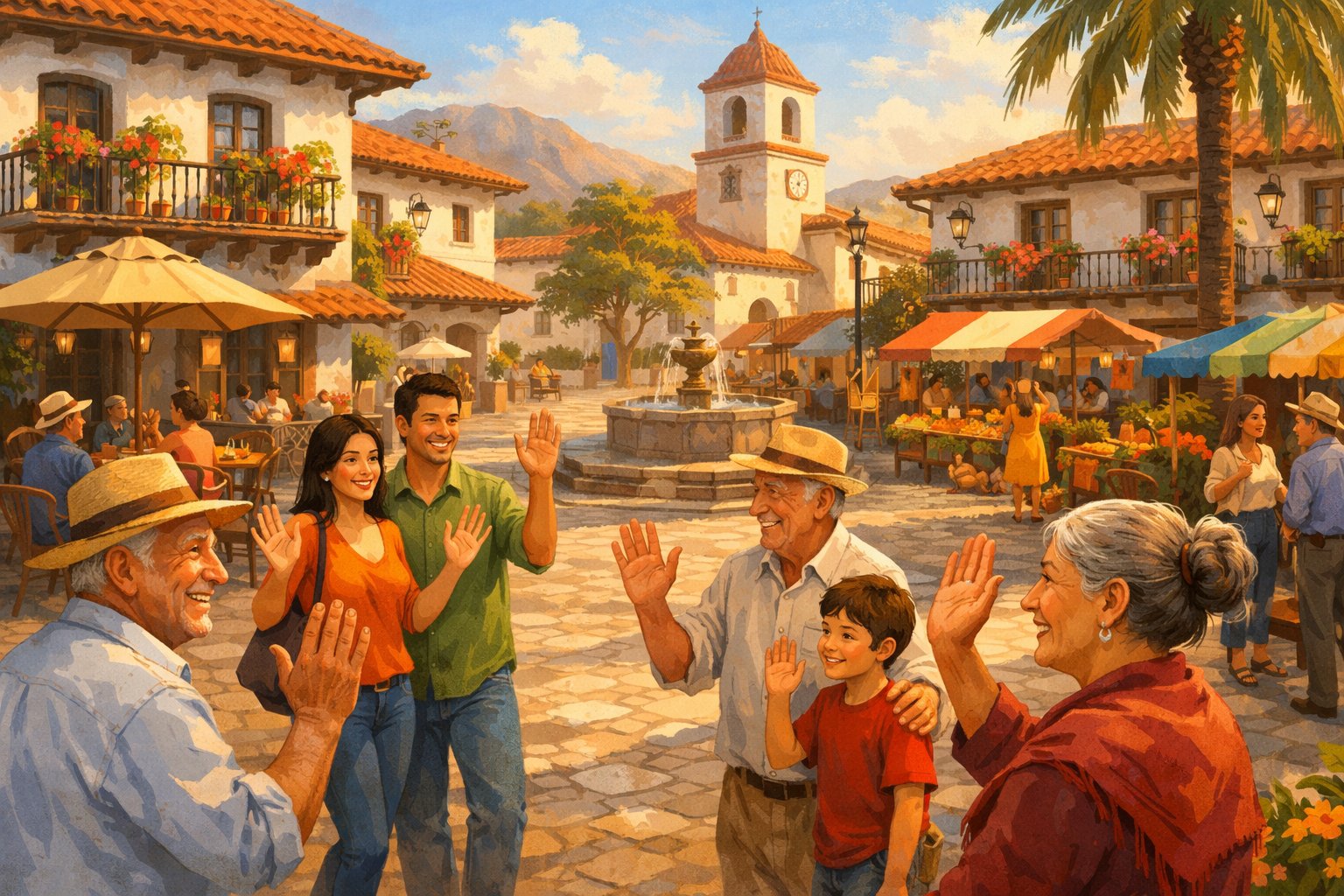
Essential Spanish Greetings for the Afternoon
The main phrase for the afternoon is "buenas tardes." It’s what you’ll hear from noon until evening. People sometimes just say "buenas" if things are casual.
Standard Good Afternoon: Buenas Tardes
Primary Forms
| Spanish | Formality | Usage Context |
|---|---|---|
| Buenas tardes | Formal/Neutral | Work, strangers, customers |
| Buenas | Informal | Friends, family, casual encounters |
| Buen día | Semi-formal | Sometimes used in the afternoon, regionally |
Pronunciation Guide
- Buenas tardes: BWEH-nahs TAR-des
- Emphasis is on the first syllable in "tardes"
- The Spanish "d" is softer than in English
Common Pairings
- Buenas tardes, ¿cómo estás? - Good afternoon, how are you?
- Buenas tardes, señor - Good afternoon, sir
- Buenas, ¿qué tal? - Hey, what’s up?
The short form "buenas" drops "tardes" completely, but everyone knows what time you mean if it’s between noon and 7 p.m.
When to Use Each Variation
Time-Based Selection
- Noon to 7 p.m.: Buenas tardes (most common)
- 12-2 p.m.: Buen día might still be used in some places
- 6-7 p.m.: Buenas tardes is still fine
Context-Based Selection
| Situation | Best Choice | Why |
|---|---|---|
| Job interview | Buenas tardes | Professional and respectful |
| Meeting friends | Buenas | Feels natural, not stiff |
| Restaurant server | Buenas tardes | Standard for service |
| Passing neighbor | Buenas | Quick, friendly |
Regional Differences
- Latin America: Buenas tardes is used strictly for afternoons.
- Spain: "Buenas" is common in casual settings.
- Mexico: More formality in business; "buenas tardes" preferred at work.
Response Patterns
Rule → Example
Rule: Match the formality of the greeting you receive.
Example: If someone says "buenas tardes," reply with "buenas tardes" or an equally polite phrase.
Alternative and Contextual Ways to Say Good Afternoon
Spanish has a bunch of afternoon greetings besides buenas tardes. Some are short and casual, others are warm goodbyes or formal group greetings.
Casual Openers: Buenas, Muy Buenas, Hola
Shortened Forms for Informal Contexts
| Phrase | Formality | When to Use |
|---|---|---|
| Buenas | Casual | Friends, family, relaxed coworkers |
| Muy buenas | Casual-friendly | A bit more enthusiastic than "buenas" |
| Hola | Universal casual | Any time, with people you know |
- Buenas skips tardes and works from noon to evening.
- Muy buenas adds a friendly vibe.
- Hola fits any time - pair it with ¿qué tal? for a natural flow.
Common Pairings
- Buenas, ¿cómo va todo? (Hey, how’s everything?)
- Muy buenas, ¿qué tal el día? (Hi there, how’s your day?)
- Hola, ¿todo bien? (Hi, all good?)
These are super common in Spain and Latin American cities where people keep things informal.
Warm Wishes & Farewells: Que Tengas Una Buena Tarde, Feliz Tarde, Excelente Tarde
Departure Phrases With Emotional Tone
| Phrase | Literal Translation | Usage Context |
|---|---|---|
| Que tengas una buena tarde | Have a good afternoon | Friends saying bye after lunch or coffee |
| Que tengas una linda tarde | Have a nice afternoon | Affectionate, close friends or family |
| Feliz tarde | Happy afternoon | Cheerful, informal send-off |
| Excelente tarde | Excellent afternoon | Professional or warm closing in work/emails |
- These are for saying goodbye, not hello.
- Que tengas una buena tarde uses the subjunctive (tengas) to show care.
- Excelente tarde is good for meetings or group emails.
Group or Formal Settings: Buenas Tardes a Todos
Addressing Multiple People Formally
- Buenas tardes a todos - For mixed or large groups
- Buenas tardes a todas - For all-female groups
- Buenas tardes, equipo - For a specific team
Rule → Example
Rule: Use a plural greeting to open meetings or address groups.
Example: "Buenas tardes a todos, comenzamos la reunión."
Frequently Asked Questions
What are the formal and informal ways to greet someone in the afternoon in Spanish?
Formal greetings:
- Buenas tardes - polite, for work, strangers, elders
- Que tenga una excelente tarde - "Have an excellent afternoon" (business)
- Le deseo una tarde agradable - "I wish you a pleasant afternoon" (formal)
Informal greetings:
- Buenas - short, for friends and family
- Hola - works any time
- Qué tal - "How’s it going?" for friends
- Que tengas una linda tarde - "Have a nice afternoon" (friends)
Is there a humorous way to say good afternoon in Spanish?
- There’s no standard funny version of buenas tardes.
- Humor usually comes from how you say it, your tone, or adding slang like ¿Qué onda? after the greeting.
How does the greeting change when addressing a male or a female in Spanish?
Gender-neutral afternoon greetings:
- Buenas tardes
- Buenas
- Hola
- Feliz tarde
Rule → Example
Rule: Afternoon greetings don’t change for gender.
Example: "Buenas tardes" works for any person.
If you’re wishing someone a nice afternoon, the verb changes for formality (tengas vs tenga), not for gender.
What's the appropriate time to transition from 'good morning' to 'good afternoon' in Spanish?
Time-based greeting schedule:
| Greeting | Time Range |
|---|---|
| Buenos días | Sunrise to 11:59 AM |
| Buenas tardes | 12:00 PM to 7:00 PM |
| Buenas noches | After 7:00 PM or sunset |
- In some places, people say buenos días until after lunch (1-2 p.m.), depending on when they eat.
Is 'buenas tardes' used differently in various Spanish-speaking countries?
Regional variations:
| Region | Common Practice |
|---|---|
| Spain | Buenas tardes from noon, "buenas" common as short form |
| Mexico | Noon start, "buen día" sometimes used into afternoon |
| Argentina | "Buenas" more common in casual situations |
| Colombia | "Feliz tarde" popular for afternoon goodbyes |