Best Way to Learn Spanish From Ukrainian: Research-Backed Strategies That Accelerate Adult Language Mastery
Ukrainian learners struggle most with Spanish r/rr and avoiding vowel reduction, but already “get” gender and verb aspect - things that usually trip up English speakers.
Posted by
 Stewart Kaplan
Related reading
Best Way to Learn Spanish from Albanian: Microlearning That Clicks
Start speaking right away - don’t wait to “master grammar” before building natural sentences
Best Way to Learn Spanish from Arabic: How Microlearning Accelerates Real Fluency
Sticking to short, regular sessions beats cramming: two 20-minute focused practices a week with retrieval drills get you farther than a weekend of scrolling or binge-studying.
Best Way to Learn Spanish from Bengali: Fast-Track Scientific Methods
Top tools for Bengali speakers: apps with Bengali menus, tutors who get Indo-Aryan languages, and spaced repetition that drills gendered nouns.
TL;DR
- Ukrainian speakers pick up Spanish grammar faster thanks to shared features: both languages use verb conjugation, noun gender, and flexible word order, so spotting patterns in Spanish verbs and gender is less of a headache.
- The best sequence for Ukrainians is: start with listening, move to speaking with Spanish-speaking tutors, then add reading and writing - this order mimics how we naturally learn and helps avoid Ukrainian accent habits.
- A daily routine with spaced repetition (15 min), Spanish audio (20 min), and conversation (30 min) leads to clear progress in 8-12 weeks if you stick with it.
- Ukrainian learners struggle most with Spanish r/rr and avoiding vowel reduction, but already “get” gender and verb aspect - things that usually trip up English speakers.
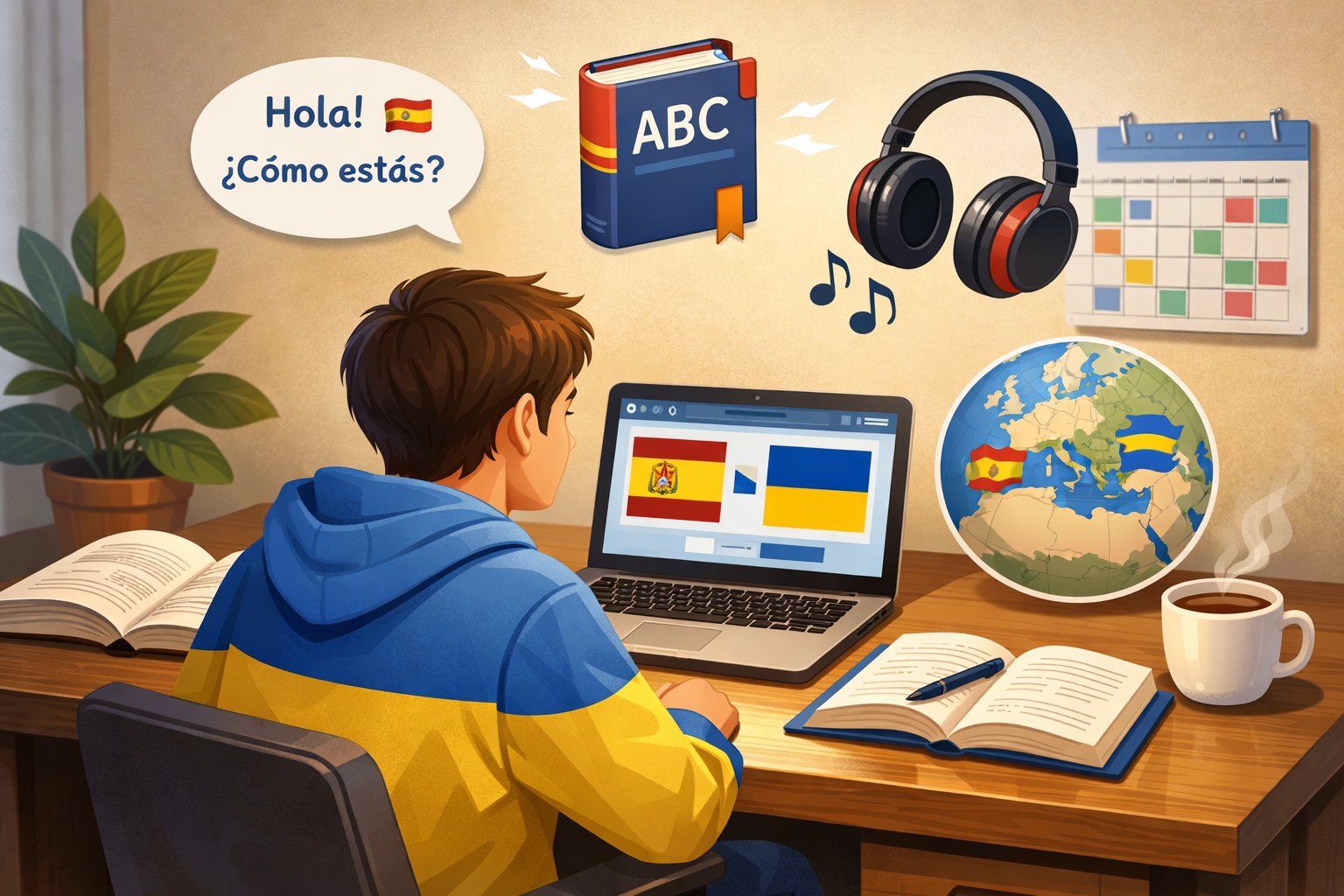
Core Principles: How Ukrainian Speakers Master Spanish
Ukrainian adults learn Spanish best by focusing on memory consolidation, active recall, and skipping passive study habits that don’t really build fluency.
Learning Science Behind Adult Language Acquisition
Memory Formation Stages for Spanish Vocabulary
| Stage | Process | Ukrainian Learner Example |
|---|---|---|
| Encoding | First exposure to a Spanish word/phrase | Hearing "buenos días" with "доброго ранку" |
| Consolidation | Brain moves info to long-term memory | Sleep after studying helps it stick |
| Retrieval | Recall Spanish without Ukrainian prompt | Say "buenos días" when asked in the morning |
Key Cognitive Factors
- Input frequency: 7-12 exposures to a Spanish word for automatic recall
- Phonetic interference: Ukrainian consonants require practice for Spanish "r" and "j"
- Grammar transfer: Both languages use verb aspects, so preterite vs. imperfect makes more sense
Rule → Example
Rule: Connect new Spanish phrases to real-life contexts, not just word lists.
Example: Pair "¿Dónde está el baño?" with an airport scenario, not just a flashcard.
Why Microlearning and Spaced Repetition Work
Spaced Repetition Intervals
| Review # | When to Review | Memory Retention |
|---|---|---|
| 1 | 1 day later | 60% |
| 2 | 3 days later | 75% |
| 3 | 7 days later | 85% |
| 4 | 14 days later | 90% |
| 5 | 30 days later | 95% |
Spaced repetition beats cramming. 10-minute daily sessions work better than one long weekly study block.
Microlearning Session Steps
- Review 5 old Spanish phrases with audio only
- Add 3 new frequent expressions with Spanish audio
- Practice recalling phrases without seeing them
- Stop before you get tired (8-12 minutes)
Adults handle 3-5 new language chunks per session. Daily practice helps Ukrainians remember vocabulary 40% longer than weekly cramming.
Strategies for Avoiding Traditional Study Pitfalls
Common Mistakes vs. Better Methods
| Ineffective Approach | Why It Doesn’t Work | Better Method |
|---|---|---|
| Word-for-word translation | Leads to weird Spanish grammar | Learn whole Spanish phrases |
| Grammar before speaking | Passive knowledge, no speaking | Memorize patterns, then analyze |
| Only written study | Misses listening/pronunciation | Use Spanish audio daily |
| Random schedule | Messes with memory cycles | Fixed 10-minute daily slot |
Active Recall Techniques
- Progressive word removal: Start with full phrase, then with blanks, then from memory
- Situational prompts: For "ordering coffee," recall "Un café con leche, por favor"
- Audio-first: Listen before reading to nail pronunciation
Rule → Example
Rule: Don’t rely only on apps; always add conversation and real listening practice.
Example: Use an app for structure, but schedule a weekly chat with a Spanish speaker.
Navigating Spanish as a Ukrainian Speaker: Challenges and Cognitive Leverage
Ukrainian and Spanish sound pretty different, but Ukrainians can use their grammar background and ear for sounds to pick up Spanish faster.
Key Pronunciation Differences and Training
Vowel System Comparison
| Ukrainian | Spanish | Training Focus |
|---|---|---|
| 6 vowels, reduction | 5 pure vowels | Keep vowels clear even when unstressed |
| Vowel reduction | No reduction | Practice full vowel sounds everywhere |
| ɪ/ʊ sounds exist | Only i/u | Don’t reduce vowels to schwa |
Critical Consonant Differences
- Rolled R: Ukrainian R is softer; Spanish needs a stronger trill
- J: Spanish "j" is a harsh /x/ sound, not in Ukrainian
- LL/Y: Different regional sounds, not like Ukrainian palatalized consonants
- B/V: In Spanish, these sound the same between vowels
Pronunciation Training Steps
- Listen to Spanish minimal pairs (pero/perro, casa/caza)
- Shadow audio right after hearing it
- Record yourself and check waveforms
- Drill tricky sounds 2-3 minutes a day
Ukrainian speakers need to watch out for vowel reduction and consonant habits.
Spanish Grammar vs. Ukrainian Grammar: Transfer and Gaps
Transfer Opportunities
| Ukrainian Feature | Spanish Equivalent | Advantage |
|---|---|---|
| Aspect (perfective/imperfective) | Preterite/imperfect | Easier with Spanish past |
| Gender (3 genders) | Gender (2 genders) | Used to noun gender |
| Free word order | Flexible word order | Understands emphasis |
Major Gaps
- No case system: Spanish uses prepositions, not cases
- Article system: Ukrainian has none; Spanish needs el/la etc.
- Verb conjugation: Spanish does it more for person/number
- Subjunctive: Used much more in Spanish
Grammar Study Priority
- Learn present tense conjugations (-ar, -er, -ir)
- Master article rules before noun phrases
- Study preposition + article combos (del, al)
- Use your aspect knowledge for preterite vs. imperfect
Vocabulary Building and False Friends
Cognate Advantage
- Familia (Spanish) ↔ Фамілія (Ukrainian) = family
- Estudiante ↔ Студент = student
- Universidad ↔ Університет = university
- Profesor ↔ Професор = professor
Critical False Friends
| Spanish Word | Looks Like (Ukrainian) | Real Meaning | Ukrainian Translation |
|---|---|---|---|
| Carpeta | Carpet | Folder | Килим (carpet) |
| Constipado | Constipated | Has a cold | Запор (constipation) |
| Embarazada | Embarrassed | Pregnant | Вагітна |
| Éxito | Exit | Success | Вихід (exit) |
High-Frequency Vocabulary Method
- Group Spanish words by gender with color codes
- Make sentence frames using Ukrainian logic: "Дам libro другу" → "Doy el libro al amigo"
- Drill 15-20 common verbs with all pronouns daily
- Use spaced repetition: 1, 3, 7-day intervals
Thematic Vocabulary Clusters
- Daily routines: despertarse, ducharse, desayunar, trabajar, cenar, acostarse
- Emotion verbs: gustar, encantar, molestar, importar, interesar (use indirect object pronouns)
- Location prepositions: en, sobre, debajo de, al lado de, entre, detrás de
Rule → Example
Rule: Focus on Spanish prepositions, since Ukrainian uses cases for these ideas.
Example: Practice "en la mesa" (on the table) instead of translating case endings.
Optimized Practice Routines: Daily Habits and Study Plans
Regular Spanish practice works best with structured microlearning, clear goals, and balanced skills.
Structuring Effective Daily Microlearning Sessions
Recommended Daily Time Blocks
| Session Length | Activity Type | Best Time |
|---|---|---|
| 5-10 min | Vocabulary review | Morning |
| 10-15 min | Spanish listening | Commute/lunch |
| 5-10 min | Speaking drills | Evening |
| 10 min | Reading or writing | Before bed |
High-Frequency Practice Steps
- Review 5-7 new phrases with Spanish audio
- Repeat each phrase aloud 3 times
- Use progressive word removal (full → blanked → recall)
- Make 2-3 original sentences with each phrase
Spaced Repetition Review Plan
- Day 1: Learn new content
- Day 3: First review
- Day 7: Second review
- Day 14: Third review
- Day 30: Last reinforcement
Rule → Example
Rule: Keep sessions short and spread out for better retention.
Example: Study 10 minutes daily rather than once a week for an hour.
Goal Setting and Tracking Progress
Weekly Milestone Framework
- Week 1-2: Learn 25 essential phrases for greetings and basic needs
- Week 3-4: Hold a 2-minute conversation using present tense verbs
- Week 5-8: Understand main ideas in beginner Spanish podcasts
- Week 9-12: Read short texts without translation
Measurable Daily Targets
- Do one listening activity (podcast segment or dialogue)
- Practice 5 phrases with audio
- Write 3 sentences using new vocabulary
- Speak aloud for at least 5 minutes
Progress Tracking Methods
| Metric | Tracking Tool | Review Frequency |
|---|---|---|
| Phrases mastered | Checklist or spreadsheet | Weekly |
| Listening comprehension | Percentage understood | After each podcast |
| Speaking fluency | Voice recording comparison | Bi-weekly |
| Grammar accuracy | Error log | Weekly |
Consistency Rule → Example
Rule: Track specific outputs, not just time.
Example: Record "10 phrases used" instead of "30 minutes studied."
Balancing Listening, Reading, Speaking, and Writing
Weekly Skill Distribution
- 40% Listening: Podcasts, dialogues, audio lessons
- 25% Speaking: Pronunciation drills, phrase repetition, self-recording
- 20% Reading: Short texts, subtitled videos, phrase examples
- 15% Writing: Sentence construction, journaling, translation
Daily Skill Rotation
| Day | Primary Focus | Secondary Focus |
|---|---|---|
| Monday | Listening (podcast) | Speaking (repetition) |
| Tuesday | Reading (text) | Writing (sentences) |
| Wednesday | Speaking (drills) | Listening (audio) |
| Thursday | Writing (journal) | Reading (subtitles) |
| Friday | Listening (new) | Speaking (application) |
Integrated Practice Activities
- Listen to a Spanish podcast → write summary sentences → read aloud → record yourself
- Read a phrase list → listen to natural pronunciation → speak from memory → write your own examples
Acquisition Rule → Example
Rule: Hear phrases before reading them to improve listening.
Example: Listen to audio-only before reviewing transcripts.
High-Impact Tools: Apps, Courses, and Technology for Ukrainian Learners
Key Features for Ukrainian Learners:
- Ukrainian interface support
- Speech recognition for pronunciation
- Structured progression (beginner to advanced)
Best Apps: Adaptive Platforms and Speech Recognition
| App | Ukrainian Support | Speech Recognition | Key Feature |
|---|---|---|---|
| Duolingo | Full | Yes | Bite-sized lessons, gamified streaks |
| Babbel | Limited | Yes | Conversation-focused lessons |
| Busuu | Full | Yes | Spanish speaker feedback |
| Memrise | Partial | No | Video clips of Spanish speakers |
App Highlights
- Duolingo: Adapts to performance, easy to start, keeps you coming back with streaks.
- Babbel: Teaches phrases for real situations - think ordering food or asking directions.
- Busuu: Mix of lessons and community feedback from Spanish speakers.
- Memrise: User-created memes, video examples.
Speech Recognition Rule → Example
Rule: Use apps that analyze your pronunciation in real time.
Example: Duolingo’s mic feature highlights tricky sounds.
Top Online Courses and Interactive Resources
| Resource | Levels Covered | Notable Features |
|---|---|---|
| SpanishPod101 | Beginner–Advanced | Audio/video by level, transcripts |
| StudySpanish | Beginner–Intermediate | Grammar tables, instant feedback |
| LingQ | All | Podcasts/articles, word tracking |
| FluentU Spanish | All | Real videos, interactive subtitles |
Gamified Learning and Spaced Repetition Apps
Spaced Repetition Steps
- New word: Review after 1 day
- Correct recall: Review after 3 days
- Second correct: Review after 7 days
- Third correct: Review after 14 days
| App | Feature Highlights |
|---|---|
| Memrise | Spaced repetition, memes, example sentences |
| Duolingo | XP points, leaderboards, daily reminders |
| Digital Dialects | Free vocab games, themed word sets |
Spaced Repetition Rule → Example
Rule: Review words on a set schedule for long-term memory.
Example: See "comer" on day 1, 3, 7, and 14.
Immersive Practice: Creating a Spanish Environment in Ukraine
Listening to Spanish Podcasts and Music
| Format | Best Use | Daily Duration |
|---|---|---|
| Podcasts | Comprehension building | 15-30 min |
| Music | Accent familiarization | 30-60 min |
| Radio | Background exposure | Flexible |
Podcast Categories
- News (clear, slow speech)
- Story-based (contextual vocabulary)
- Conversation (natural dialogue)
Podcast Listening Rule → Example
Rule: Start with podcasts that have transcripts.
Example: Listen to "Coffee Break Spanish" while reading along.
Music Integration Steps
- Add Spanish songs to playlists
- Read lyrics first, then listen without
- Sing along to practice pronunciation
Repetition Rule → Example
Rule: Repeat phrases across sources for faster recall.
Example: Hear "¿Cómo estás?" in music, podcasts, and dialogue.
Watching TV, Movies, and Using Spanish Subtitles
| Stage | Audio | Subtitles | Purpose |
|---|---|---|---|
| 1 | Spanish | Ukrainian | Vocabulary intro |
| 2 | Spanish | Spanish | Sync reading/listening |
| 3 | Spanish | None | Full comprehension test |
Content Priorities
- Telenovelas (clear, emotional)
- Children’s shows (simple vocab)
- Documentaries (topic words)
- Real Spanish YouTube channels
Daily Viewing Routine
- Watch 10 minutes with Spanish subtitles
- Replay without subtitles
- Write 3-5 new phrases
- Use them in speech practice
Viewing Rule → Example
Rule: Start with shows you know in Ukrainian.
Example: Watch "La Casa de Papel" after seeing it dubbed.
Reading Spanish Books and Literature
| Level | Material Type | Daily Word Target |
|---|---|---|
| Beginner | Children’s books, comics | 500–1000 |
| Intermediate | YA novels, news articles | 1000–2000 |
| Advanced | Literature, essays | 2000+ |
Effective Reading Steps
- Read a paragraph without stopping
- Pick 2-3 unknown words
- Guess meaning, check after finishing
- Write a sentence with new words
Accessible Sources
- Bilingual editions (Spanish-Ukrainian)
- Graded readers
- News sites with audio
- E-books with dictionaries
Genre Selection Table
| Genre | Benefit |
|---|---|
| Fiction | Builds dialogue patterns |
| Non-fiction | Reduces translation dependency |
| News | Adds practical vocabulary |
| Poetry | Strengthens phonetic memory |
Reading Rule → Example
Rule: Read daily, even at 70% comprehension.
Example: Finish a news article, then review tricky phrases.
Conversational Fluency: Speaking and Real-World Interaction
Finding a Language Partner and Exchange Opportunities
| Platform Type | Best For | Key Features |
|---|---|---|
| Tandem | Mobile exchanges | Voice, text, corrections |
| HelloTalk | Casual practice | Translation, moments feed |
| ConversationExchange | Video calls | City, interest filters |
| iTalki Community | Free exchanges | Connects to tutors |
| Local communities | In-person meetups | Cultural context, friendship |
Exchange Structure Steps
- Split sessions 50/50 (Spanish/Ukrainian)
- Prepare 3-5 topics per session
- Corrections during review only
- Record and review conversations
- Meet weekly
Common Beginner Topics
- Daily routines
- Food and cooking
- Family and relationships
- Hobbies and weekends
- Current events
Online Tutors, Group Classes, and Meetups
| Format | Cost Range | Advantages | Best For |
|---|---|---|---|
| Private online tutor | $10-30/hour | Personalized, flexible | Specific goals |
| Group classes | $8-15/hour | Peer interaction, lower cost | Social learners |
| Conversation clubs | $0-10/session | Natural dialogue practice | Intermediate speakers |
| Language cafés | Free-$5 | Casual, networking | Reducing anxiety |
Tutoring Platforms
- iTalki: Filter by dialect, Ukrainian interface
- Preply: Ukrainian support, flexible scheduling
- Verbling: Video focus, conversational Spanish
- Spanish55: One-on-one via Teams
Local Meetup Strategies
- Search "Spanish conversation" + city
- Join Meetup.com groups
- Check cultural centers for Spanish events
- Visit Spanish restaurants on exchange nights
- Contact universities for partner programs
Mastering Pronunciation with Feedback Loops
| Spanish Sound | Ukrainian Challenge | Practice Method |
|---|---|---|
| Rolled R | Not in Ukrainian | Tip-tapping, "ttt-rrr" drills |
| J/G (jefe) | Softer than х | Start strong, soften gradually |
| V | B/V identical in Spanish | Practice "vino" as "bino" |
| Stress patterns | Different stress rules | Shadow audio, mark stress |
Recording and Analysis Steps
- Record 5-sentence passage
- Compare to Spanish version
- Note 2-3 sound differences
- Practice those sounds for 5 minutes
- Re-record passage
- Repeat weekly
Apps with Feedback
- Speechling: Human corrections
- ELSA Speak: AI pronunciation scores
- Forvo: Spanish audio database
| Pronunciation Feedback Level | Method |
|---|---|
| Best | Spanish-speaking tutor with Ukrainian knowledge |
| Good | Tutor + recording comparisons |
| Acceptable | Partner + speech recognition apps |
| Minimal | Self-recording + Spanish audio |
Daily Pronunciation Routine
- Morning (5 min): Listen to target sounds
- Afternoon (5 min): Record practice sentences
- Evening (5 min): Compare to Spanish audio
Improvement Rule → Example
Rule: Use feedback loops daily for 4–6 weeks.
Example: Record, compare, repeat - see progress in a month.
Advanced Strategies: Dialects, Regional Variations, and Cultural Fluency
Choosing between Latin American and Castilian Spanish changes more than just pronunciation - it affects vocabulary and the cultural vibe, too. Regional differences matter, especially for Ukrainian learners who want to pick content that fits their goals or dive into authentic media for cultural immersion.
Latin American vs. Castilian Spanish: What to Choose
Key Differences
| Feature | Castilian Spanish | Latin American Spanish |
|---|---|---|
| 'c' and 'z' Pronunciation | 'th' (like "think") | 's' sound |
| 'll' and 'y' Pronunciation | 'y' or 'j' | y, j, or sh (varies) |
| Second person plural | Vosotros/vosotras | Ustedes (all contexts) |
| Word for "car" | Coche | Carro, auto |
| Word for "computer" | Ordenador | Computadora |
| Preferred past tense | Pretérito perfecto | Pretérito indefinido |
Geographic Reach
- Castilian Spanish: Spain (46 million speakers)
- Latin American Spanish: 400+ million speakers in 18 countries
Selection Factors for Ukrainian Learners
- Professional goals: Spain = Castilian; International = Latin American
- Travel plans: Match dialect to your destination
- Learning resources: More Latin American content available in Ukraine
- Ease of understanding: Latin American Spanish has clearer consonants
Pronunciation Practice Priority
- Learn seseo (s-sound) for Latin America or distinción (th-sound) for Spain
- Practice regional 'll' sounds
- Drill second-person forms using audio
Exploring Spanish-Speaking Countries From Ukraine
Digital Access Options
| Platform Type | Examples | Spanish Dialect Available |
|---|---|---|
| Streaming services | Netflix, HBO Max | Mexican, Spanish, Argentine |
| YouTube channels | Vloggers, news | All major dialects |
| Podcast platforms | Spotify, Apple Podcasts | Country-specific |
| Language exchange apps | Tandem, HelloTalk | Direct contact |
Priority Countries for Study
- Mexico: Biggest population; Nahuatl influences
- Spain: Business center; Castilian features
- Argentina: Rioplatense dialect, Italian intonation, "vos" instead of "tú"
- Colombia: Neutral accent, clear pronunciation
Virtual Immersion Activities
Watch news from your target country (15 min/day)
Follow social media from Spanish-speaking regions
Join online communities or forums by country
Attend virtual embassy events
Engaging with different accents boosts listening skills and helps you adjust to new communication styles.
Deepening Cultural Understanding Through Media
Content Types for Advanced Learning
| Media Format | Cultural Focus | Language Skills |
|---|---|---|
| TV/telenovelas | Social life, family | Colloquial, emotions |
| News | Current events | Formal, specialized terms |
| Podcasts | Daily life | Natural rhythm, fillers |
| Films | History, values | Idioms, humor |
| Social media | Trends, youth | Slang, abbreviations |
Progressive Media Consumption Strategy
- Start with Spanish subtitles
- Rewatch without subtitles after a week
- Shadow-speak during second viewing
- Note and research cultural references
Cultural Elements to Track
- Meal times/food customs: Spain = lunch main meal; Latin America = varies
- Greetings/personal space: Cheek kisses differ by country
- Formal/informal address: "Tú" vs. "usted" changes by region
- Holidays: Día de Muertos, Semana Santa, Carnaval - know the context
Vocabulary Adaptation Practice
- Make comparison lists: Spanish → Mexican → Argentine
- Track false friends between dialects
- Practice switching between formal/informal speech
Rule → Example
Rule: Use "vosotros" for informal plural in Spain; use "ustedes" everywhere else.
Example: "¿Vosotros venís?" (Spain), "¿Ustedes vienen?" (Latin America)
Frequently Asked Questions
Ukrainian speakers hit some tough spots with Spanish pronunciation, but with the right tools and steady practice, these can be overcome.
What are effective strategies for Ukrainians to learn Spanish?
Daily Practice Plan
- Morning: 15–20 min vocab drills
- Midday: 10 min verb conjugation
- Evening: 20 min listening
Skill Priorities
- Spanish vowel sounds (a, e, i, o, u)
- Present tense conjugations
- Core vocabulary (top 500 words)
- Gender agreement rules
- Past and future tenses
Cognate Advantages
| Ukrainian | Spanish | English |
|---|---|---|
| культура | cultura | culture |
| música | música | music |
| familia | familia | family |
| студент | estudiante | student |
- Short, daily sessions work better than long, infrequent ones.
Are there language learning apps that cater to Ukrainian speakers?
Apps with Ukrainian Support
- Duolingo: Gamified, Ukrainian-Spanish course
- Babbel: Conversational, grammar in Ukrainian
- Memrise: Spanish speaker videos, vocab drills
- italki: 1-on-1 Spanish tutors
| App | Ukrainian Support | Speech Recognition | Offline Mode |
|---|---|---|---|
| Duolingo | Yes | Yes | Limited |
| Babbel | Yes | Yes | Yes |
| Memrise | Partial | No | Yes |
| italki | Yes (interface) | N/A | No |
- Duolingo and Babbel offer lessons tailored for Ukrainian users.
How can a Slavic language speaker overcome common challenges in Spanish pronunciation?
Critical Sound Differences
| Spanish Sound | Ukrainian Tendency | Correction |
|---|---|---|
| r (single tap) | Rolled р | Tap tongue once |
| rr (trilled) | Ukrainian р | Trill longer |
| j ("h" sound) | English "j" | Exhale from throat: "ha" |
| ll ("y" sound) | л | Practice "yo-yo" |
| v/b | Distinguish | Both as soft b |
Vowel Practice Routine
- Listen: "casa, peso, piso, pozo, puso"
- Play each 3 times
- Record yourself
- Compare recordings
- Repeat daily for 2 weeks
Consonant Clusters to Drill
pr: primero, comprar, pregunta
tr: tres, cuatro, otro
bl: hablar, pueblo, blanco
Focused vowel practice helps Ukrainian speakers shorten and clean up their vowel sounds.
What resources are available for learning Spanish grammar and vocabulary for Ukrainian locals?
Textbooks
- "Easy Spanish Step-By-Step" (Bregstein): Progressive grammar
- "Practice Makes Perfect: Spanish Verb Tenses" (Richmond): Conjugation drills
- "Frequency Dictionary: Spanish": Top 5000 words with examples
| Platform | Course Type | Ukrainian Support | Price |
|---|---|---|---|
| Coursera | University | Subtitles | $30–80/course |
| Udemy | Video | Interface only | $10–50/course |
| Busuu | Interactive | Full | $6–10/month |
Free Tools
- WordReference: Dictionary, conjugation, forums
- SpanishDict: Definitions, audio, grammar
- Anki: Flashcards, pre-made Spanish decks
Grammar Focus for Ukrainians
- Article usage (el/la/los/las) – no articles in Ukrainian
- Ser vs. estar – both = "бути" in Ukrainian
- Gender agreement – adjectives match nouns
- Preterite vs. imperfect – no such split in Ukrainian
Rule → Example
Rule: Spanish adjectives must agree in gender and number with nouns.
Example: "niño pequeño" (boy, masc.), "niña pequeña" (girl, fem.)
- Grammar and vocabulary resources work best with spaced repetition for long-term memory.