What Does Calavera Mean in Spanish: Brain Science for Real Recall
The word shares roots with English "calvaria" and "calvary," both tracing back to Latin words for skull or bald head.
Posted by
 Stewart Kaplan
Related reading
What Does Adonde Mean in Spanish? How Movement 'Clicks' for Learners
You have to know when prepositions combine with donde to show direction or position
What Does Ahi Mean in Spanish? Cognitive Mastery That Sticks
Learners mix up ahí, hay, and ay because they sound the same but mean totally different things.
What Does Aki Mean in Spanish: Unpacking Real Usage for Learners
Regional differences exist, but nearly everyone in Spanish-speaking communities gets what "aki" means in a text
TL;DR
- Calavera means "skull" in Spanish - used for human skulls and decorative skulls, especially in Day of the Dead celebrations.
- The word also covers sugar skulls, skeleton art, satirical poems, and folk art motifs at the heart of Mexican traditions.
- Calavera pops up in several contexts: anatomical (skull), cultural (Day of the Dead), literary (comic death poems), and slang (reckless person).
- Spanish learners usually meet calavera in Day of the Dead settings, where it’s all about sugar skulls or artsy skeletons, not real bones.
- The word shares roots with English "calvaria" and "calvary," both tracing back to Latin words for skull or bald head.
Etymology and Core Definitions
Calavera comes from Latin calvaria, meaning skull, which is tied to calvus (bald) - makes sense, since a skull is pretty much a bald head, right?
Origins from Latin and Historical Evolution
Latin Root Path:
- calvaria (Latin): skull, cranium
- calvus (Latin): bald
- calavera (Old Spanish): leads to modern Spanish
The word calavera comes from Latin calvaria, meaning skull. It shifted through Old Spanish before landing in today’s vocabulary.
The Latin root calvus means bald, linking to the bare look of a skull.
Related Spanish Words:
- calvo (bald)
- calvario (calvary, ordeal)
- calvaria (medical term for skull cap)
Calavera entered English from Mexican Spanish, keeping its cultural flavor.
Primary Modern Meanings: Skull and Beyond
Core Definitions:
| Meaning | Context | Example |
|---|---|---|
| Skull (anatomical) | Medical, literal | la calavera humana (human skull) |
| Skeleton figure | Day of the Dead | calavera de azúcar (sugar skull) |
| Reckless person | Colloquial | es un calavera (he's a daredevil) |
| Tail light | Automotive (Mexico) | calavera rota (broken tail light) |
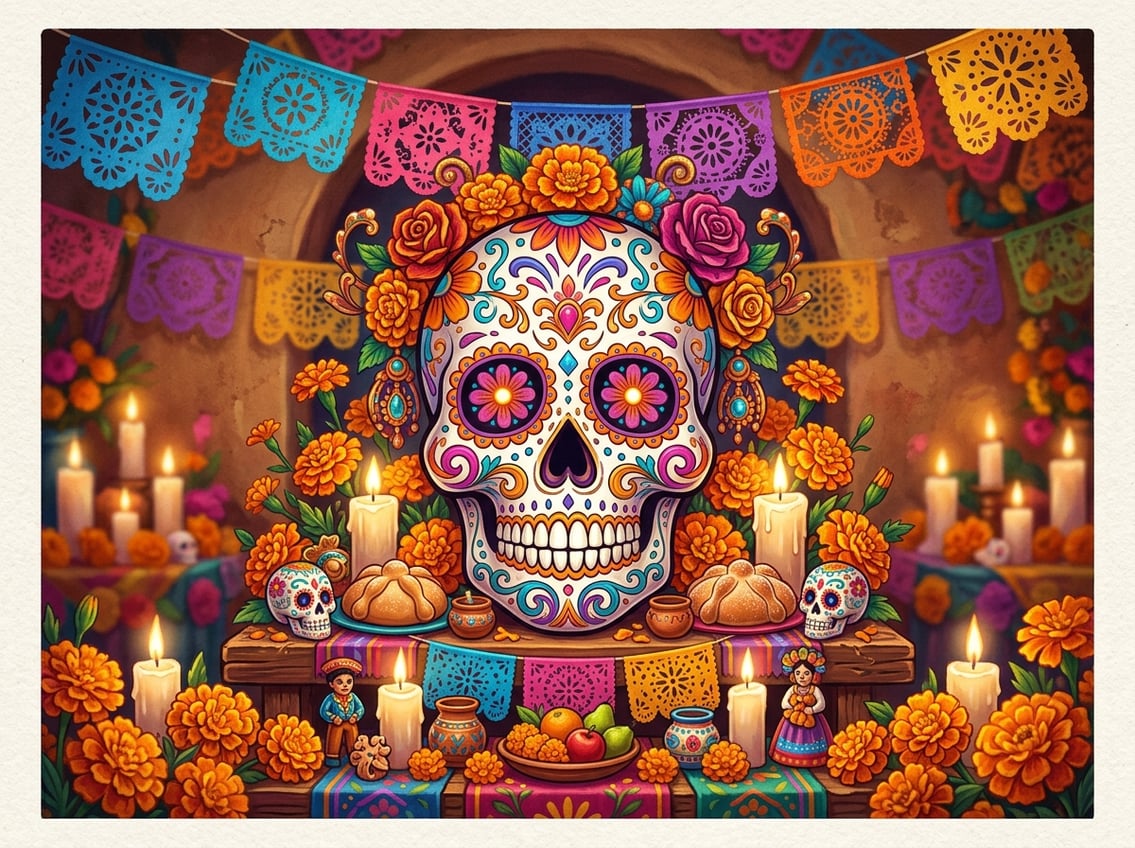
The main meaning is still skull or cranium. For Day of the Dead, calavera means skull or skeleton figures made from sugar, clay, or whatever’s handy.
Literary Usage:
- Satirical poems: calaveras literarias
- Skull drawings in newspapers
- Jokes about death
Different Noun Genders and Uses
Gender Classification:
- La calavera (feminine): main form
- la calavera decorada (the decorated skull)
- las calaveras de Posada (Posada's skulls)
- El calaber: rare masculine form, not really used anymore.
Diminutive Forms:
- calaverita: little skull, used affectionately, often for kids’ festivities
- calaveritas: plural, small sugar skulls or short poems
Gender Agreement Examples:
| Spanish | English |
|---|---|
| una calavera colorida | a colorful skull |
| la calavera mexicana | the Mexican skull |
| esta calavera brillante | this shiny skull |
Always use the feminine article la with calavera. Keep adjectives in the feminine form (-a endings).
Skull Symbolism in Spanish and Global Culture
Skull images mean a lot of things, depending on where you are - from danger signs to punk fashion, and from nature to everyday slang.
Skull and Crossbones: Caution and Rebellion
Main meanings for skull and crossbones:
- Poison warning: Universal hazard symbol
- Piracy: Jolly Roger flag
- Military: Death's-head insignia
- Counterculture: Punk, rock, biker identity
The skull and crossbones started as European memento mori and turned into a warning sign. Pharmacists slapped it on poison bottles in the 1800s.
| English | Spanish | Context |
|---|---|---|
| skull and crossbones | calavera y tibias cruzadas | warning labels |
| crossbones | tibias cruzadas | pirate imagery |
| cranium | cráneo | anatomical term |
Rebels use the skull to push back against authority. Punk fans and bikers wear skull gear to stand out.
Death's-Head Moth and Other Natural Associations
Natural skull patterns:
- Death's-head hawkmoth (Acherontia atropos): skull-shaped mark on thorax
- Skull spiders: spiders with skull-like markings
- Skull flowers: Antirrhinum pods that look like tiny skeleton faces
The death’s-head moth got famous from "The Silence of the Lambs." In Spanish, it’s called esfinge de la calavera or mariposa calavera.
Moth symbolism by region:
| Region | Meaning |
|---|---|
| Europe | death omen |
| Mexico | spirit of an ancestor |
| Asia | symbol of transformation |
Scientists list three death’s-head species globally. The skull mark helps scare off predators.
Skull in Art, Jewelry, and Everyday Language
Traditions and uses:
- Vanitas paintings: Dutch still lifes with skulls, showing life is short
- Mexican folk art: sugar skulls and decorative calaveras
- Tattoos: memorials, style choices
- Fashion: skull rings, pendants, scarves - Alexander McQueen made skull scarves iconic
Jewelry makers use silver, gold, and gems for skull pieces.
Common Spanish expressions with skull/death:
| Spanish Phrase | Literal Translation | Meaning |
|---|---|---|
| estar de calavera | to be of skull | to party all night |
| calavera no llora | skull doesn't cry | accept consequences |
| ir de calavera | go skulling | go bar-hopping |
Young people use calavera for reckless types. You’ll hear it in music and slang across Latin America.
Calavera in Mexican Traditions
Calaveras are key in Mexican celebrations for the dead, especially as sugar skulls, altar decorations, and in blended indigenous and Catholic traditions.
Day of the Dead: Origins and Syncretism
Historical Foundations
| Period | Tradition | Key Elements |
|---|---|---|
| Pre-Columbian | Aztec, Mayan, Toltec | Skulls as life energy, carved in stone |
| Colonial Era | Spanish Catholic | Memento mori, All Souls’ Day |
| Modern Era | Blended celebration | Día de Muertos combining both traditions |
First skeletal figures for sale: 1740s. Spanish colonizers tried to ban indigenous death rituals, so locals mixed them with Catholic customs.
Syncretic Elements
- November 1: For children who died (Día de los Inocentes)
- November 2: For adults (Día de los Muertos)
- Catholic structure hides indigenous ceremonies
- Bones show life force, not just decay
Sugar Skulls and Calaveras de Azúcar
Production Methods
- Cast from cane sugar in molds
- Craftsmen prep designs months ahead
Materials Used
| Material | Use |
|---|---|
| Cane sugar | Base |
| Vanilla | Flavoring (optional) |
| Vegetable dyes | Coloring |
| Colored foil, icing | Decoration |
| Feathers, hats | Decoration |
Key Characteristics
- Ephemeral
- Seasonal
- Humorous
- Secular
- Commercial
- Made for living people
- Meant for play
- Small, portable
- Crafted by city dwellers
The Alfeñique fair in Toluca is the top spot for buying sugar skulls and related treats near Mexico City. Names of the deceased are often written in icing.
Role of Ofrendas and Day of the Dead Altars
Ofrenda Components
| Element | Purpose |
|---|---|
| Food offerings | Spirits enjoy aroma or essence |
| Calaveras | Honor individuals by name |
| Photos | Identify spirits |
| Candles | Light the way home |
Rule → Example:
- Rule: Use edible calaveras for living people or as altar decoration.
- Example: Place a sugar skull with a loved one’s name on the ofrenda.
Edible calaveras can be eaten right away or kept for a few days. Fancy ones with beads and foil aren’t really for eating - they’re more like folk art.
November 2 and All Souls' Day
Celebration Timeline
| Date | Focus |
|---|---|
| November 1 | Spirits of deceased children |
| November 2 | Spirits of deceased adults |
| Before Nov 2 | Market stalls with calaveras |
November 2 matches Catholic All Souls’ Day, blending Mexican and European traditions. This is when families finish their altars and gather to remember adult relatives.
Market Activity
- Calaveras sold at market stalls days or weeks before Día de Muertos
- Vendors offer sugar, chocolate, marzipan skulls, and candies shaped like bones
Literary and Artistic Expressions
Calaveras show up everywhere in Mexican culture - poems that poke fun at death, printed sheets full of political jokes, and all kinds of art with skeletons. These traditions mix humor and social critique, especially during Day of the Dead.
Literary Calaveras and Mock Obituaries
Literary calaveras are short, satirical poems that picture living people as if they’re already dead. Writers often call them calaveritas (“little skulls”), especially when teasing friends or public figures.
Core characteristics:
- Fake epitaphs or mock obituaries
- Rhyme and humor used for social critique
- Subject imagined as deceased
- Called panteones in the 1800s
Popular nicknames for death:
| Spanish | English meaning |
|---|---|
| la flaca | the skinny one |
| la pelona | the bald one |
| la huesuda | the bony one |
| la parca | the grim reaper |
Writers create these verses for Day of the Dead. The first calaveras appeared in 1879 in El Socialista, a Guadalajara newspaper. Early examples often got censored - they went after politicians and social issues with sharp wit.
Broadsides and Satirical Commentary
Broadsides were single sheets that spread calaveras to the public. They usually paired verses with skull cartoons.
Purpose and function:
- Share political opinions safely with humor
- Say things that are hard to state directly
- Criticize public figures without naming names
- Distributed during Day of the Dead
Governments often destroyed these broadsides if the satire hit too close to home.
La Calavera Catrina and Iconic Figures
La Calavera Catrina (or just La Catrina) is probably the best-known calavera figure. Artist José Guadalupe Posada drew this fancy skeleton lady in a big hat around 1910.
Visual elements:
- Female skeleton in upper-class European dress
- Wide hat with feathers or flowers
- Mocks rich Mexicans who turned their backs on indigenous roots
- Stands for death’s equality, no matter your class
Diego Rivera made La Catrina even more famous in his 1947 mural, Dream of a Sunday Afternoon in Alameda Park. Posada’s original etchings showed skeletons doing everyday things - dancing, drinking, celebrating - to drive home that death comes for everyone, rich or poor.
Mexican Folk Art and the Calavera Motif
Calaveras pop up in all sorts of Mexican folk art, from molded sugar skulls at markets to clay toys and detailed decorations. Artisans spend months making these, with the Alfeñique fair near Mexico City as the main marketplace.
From Sugar to Clay: Artistic Media
Primary Materials Used in Calavera Creation:
| Material | Features | Main Use |
|---|---|---|
| Cane sugar (alfeñiques) | Molded, vanilla or plain | Edible gifts, offerings |
| Clay | Painted silver, white, black, red | Toys, decorations |
| Chocolate | Molded, edible | Treats |
| Marzipan | Shaped by hand or mold | Specialty sweets |
Sugar skulls get decorated after molding. Typical extras: colored foil, icing, beads, feathers, sometimes tiny sombreros.
Clay calaveras look like human skulls, often with beaded eyes in different colors. These last much longer than sugar calaveras and work as toys or permanent decor.
Decoration Techniques:
- Colored with vegetable dyes
- Names iced across the forehead
- Foil used for contrast
- Beads for eyes
- Feathers for flair
Artisans, Markets, and the Alfeñique Fair
Craftsmen spend four to six months making calaveras for Day of the Dead. The fanciest pieces are considered folk art, not food.
Traditional markets start selling calaveras days or weeks before November 1 and 2. The Alfeñique fair in Toluca is the most famous spot for sugar skulls and related sweets.
Items Sold at Seasonal Markets:
- Sugar skulls (various sizes)
- Chocolate skulls
- Marzipan figures
- Candied veggies
- Decorated skeletons
- Mini skull accessories
Many decorative calaveras aren’t safe to eat - they’re made for looks, not taste.
The Enduring Impact on Visual Culture
Calavera imagery is everywhere in Mexican visual culture - not just for Day of the Dead. You’ll find it in art, prints, textiles, and even commercial designs.
Cultural Applications:
- Fine art: Diego Rivera and others use skulls in their work
- Fashion: Calavera prints on fabric
- Commercial goods: Packaging, clothes, accessories with skulls
- Public art: Murals, big outdoor skeleton displays
Modern takes combine calavera tradition with pop culture and politics. Artists keep the Day of the Dead connection but update the message.
Calaveras are now a symbol of Mexican folk art worldwide. Museums and galleries show these works all year.
Other Meanings and Rare Usages
Besides meaning “skull,” calavera has slang usess in Mexican Spanish and can be misspelled, which confuses learners.
Calavera as Slang and Alternate Meanings
Grammatical Gender
- calavera = feminine noun (la calavera)
- Means skull, skeleton figure, or sugar skull
Slang Usage in Mexican Spanish
| Context | Meaning | Example |
|---|---|---|
| Person description | Reckless person | "Es un calavera" (He's a daredevil) |
| Person description | Party animal | "Ese calavera no para" (That party animal doesn't stop) |
| Diminutive | Small skull, affectionate term | "Mira esa calaverita" (Look at that little skull) |
The slang usually means someone who lives wild or takes risks. It’s common in Mexico, less so elsewhere.
calaverita is the cute or small version, for little skulls or as a term of endearment.
Masculine reference (“un calavera”) describes a man, but the word itself is feminine.
Non-Cultural References and Misspellings
Common Misspellings
- calaber = not a Spanish word
- calabera = wrong (mix-up with "calabaza" = pumpkin)
- calevera = wrong
- calavaira = wrong
Why “calaber” is common:
- English speakers confuse “v” and “b” (they sound the same in Spanish)
- Autocorrect and searches spread the error
Other Confusions:
- Learners mix up calavera with “calaveras” (car taillights in some places)
- Sometimes confused with Portuguese “caveira” (skull)
Frequently Asked Questions
Calavera has several meanings in Spanish: literal “skull,” slang, and deep cultural roots in Mexico.
How do you pronounce "calavera" correctly in Spanish?
Pronunciation:
| Syllable | English sound |
|---|---|
| ca | "kah" (like "car") |
| la | "lah" (like "la" in "ladder") |
| ve | "VEH" (emphasis here, like "vet") |
| ra | "rah" (soft r, like Spanish "pero") |
- IPA: [kalaˈβeɾa]
- Stress falls on “ve”
- The “v” is soft, almost like “b”
- The “r” is tapped lightly
Is "calavera" used as slang, and what does it imply in conversation?
Main slang meanings:
| Meaning | Description |
|---|---|
| Reckless person | Takes risks, acts wild |
| Party animal | Stays out late, loves fun |
| Daredevil | Doesn’t think about consequences |
Example phrases:
| Spanish | English |
|---|---|
| "Ese tipo es un calavera" | "That guy is a hellraiser" |
| "No seas calavera" | "Don’t be reckless" |
This slang is usually about men and can be negative or just playful, depending on context.
What is the cultural meaning of a calavera in Mexico and Day of the Dead traditions?
Day of the Dead context:
| Calavera Type | Material | Use |
|---|---|---|
| Sugar skulls (alfeñiques) | Cane sugar | Gifts, altar offerings, decorations |
| Clay skulls | Painted clay | Toys, decor |
| Literary calaveras | Poems | Satirical verses |
| Artistic calaveras | Mixed media | Art, prints |
Traditional features:
- Decorated with foil, icing, beads, feathers
- Names written on forehead
- Placed on altars (ofrendas) for the dead
- Kids celebrated Nov 1, adults Nov 2
Sugar skulls were originally for kids to eat. Today, many are just for display.
Historical roots:
| Era | Symbolism |
|---|---|
| Pre-Columbian | Bones = life energy, power |
| Colonial/Spanish | Skulls as memento mori (reminders of death) |
What is the difference between "calavera" and "cráneo" in Spanish?
| Term | Context | Meaning |
|---|---|---|
| Calavera | Culture, art, informal | Skull, skeleton, Day of the Dead, slang |
| Cráneo | Medical, scientific | Anatomical skull bone |
Rule → Example:
- Use calavera for Day of the Dead, art, or slang.
Example: “calaveras de azúcar” (sugar skulls) - Use cráneo for anatomy or science.
Example: “cráneo humano” (human skull)
What does a calavera tattoo typically symbolize?
| Symbolism | Meaning |
|---|---|
| Celebrate life | Embrace mortality |
| Memorial | Honor a loved one |
| Cultural pride | Show Mexican heritage |
| Life’s impermanence | Reminder that life is short |
| Day of the Dead | Connect to tradition |
| Design Element | Symbol |
|---|---|
| Flowers (marigolds) | Remembrance |
| Bright colors | Celebration, joy |
| Name on forehead | Tribute to someone |
| Decorative patterns | Beauty in mortality |
Calavera tattoos are popular worldwide for both their look and the balance they represent between life and death.