How to Say Good Evening in Spanish: The Mental Shift for Fluent Greetings
Most adult learners struggle with Spanish not because they lack motivation, but because traditional study methods ignore how adult brains form durable memory.
Posted by
 Stewart Kaplan
Related reading
What Does Adonde Mean in Spanish? How Movement 'Clicks' for Learners
You have to know when prepositions combine with donde to show direction or position
What Does Ahi Mean in Spanish? Cognitive Mastery That Sticks
Learners mix up ahí, hay, and ay because they sound the same but mean totally different things.
What Does Aki Mean in Spanish: Unpacking Real Usage for Learners
Regional differences exist, but nearly everyone in Spanish-speaking communities gets what "aki" means in a text
TL;DR
- In Spanish, "good evening" is said as "buenas tardes" before dark and "buenas noches" after dark.
- The choice between these phrases depends on daylight, not clock time, and varies slightly by region.
- Mastering high-frequency greetings through spaced repetition and contextual exposure builds automatic recall faster than memorizing vocabulary lists.
- Adult learners retain phrases better when they practice progressive retrieval with Spanish audio rather than passive recognition drills.
- Small, daily practice of essential phrases creates disproportionate gains in real-world conversation ability.
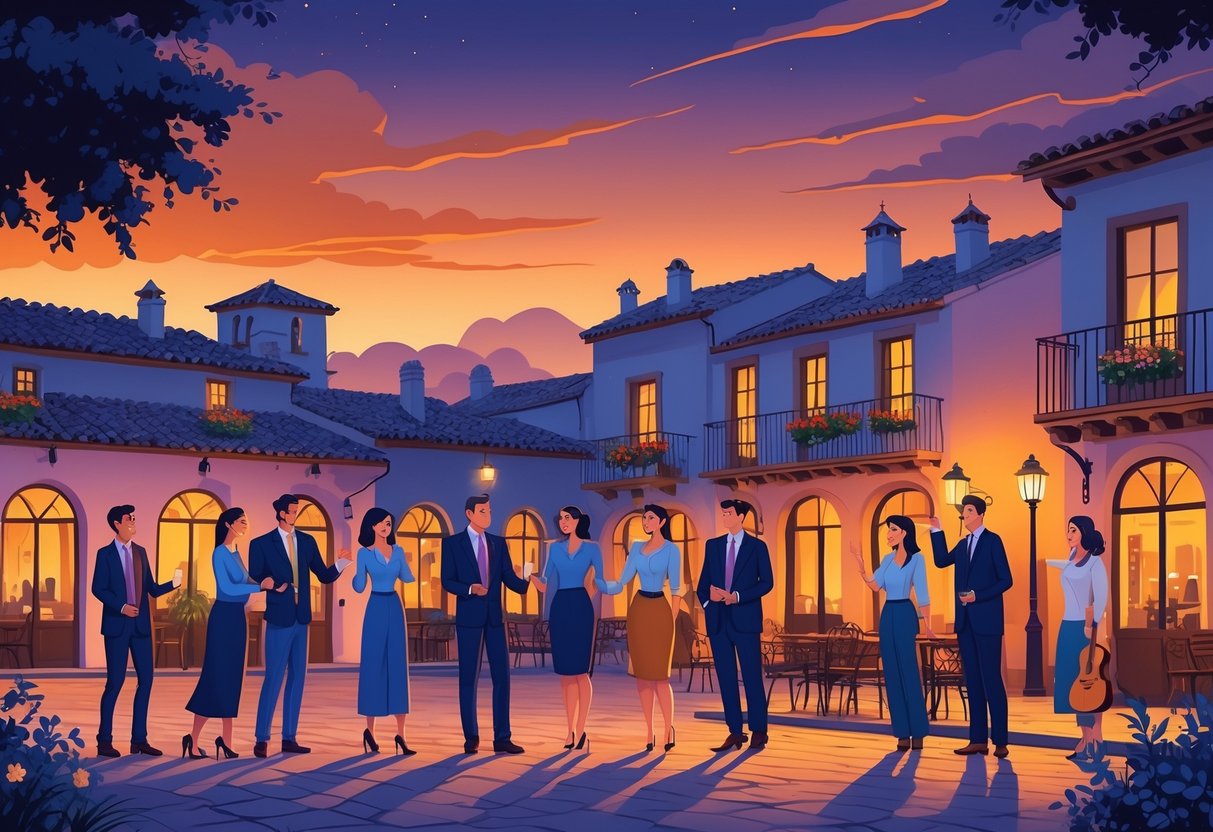
Most adult learners struggle with Spanish not because they lack motivation, but because traditional study methods ignore how adult brains form durable memory. Cramming vocabulary lists and drilling isolated words through apps produce shallow recognition that fails under real-world pressure. Adults need cognitively efficient methods that prioritize long-term retention over short-term recall.
Saying "good evening" in Spanish requires understanding that "buenas tardes" is used before dark and "buenas noches" is used after dark. This distinction represents a high-frequency language pattern that appears in thousands of daily interactions. When learners master small phrases like these through spaced repetition, contextual exposure, and progressive retrieval, they build automatic language production that transfers across contexts.
This article breaks down expert-level language acquisition principles used by linguists and cognitive scientists into immediately applicable steps. It explains why microlearning, habit-based training, and memory-efficient study outperform traditional methods from a cognitive and memory-formation perspective. Readers will learn how to encode, retrieve, and reinforce essential Spanish greetings using scientifically optimized recall methods that produce disproportionate gains in comprehension and speaking ability.
Essential Phrases for Saying Good Evening in Spanish
Spanish uses two different phrases for good evening: buenas tardes before dark and buenas noches after dark. The timing of sunset determines which greeting a learner should use, and this context-based distinction helps encode the phrase into long-term memory more effectively than memorizing isolated translations.
When to Use Buenas Noches
Learners should use buenas noches after dark as both a greeting and a way to say goodnight. This phrase applies once the sun has set, typically starting around 8 or 9 PM depending on the season and location.
Spanish speakers use buenas noches in contexts such as:
- Entering a restaurant for dinner
- Greeting someone at an evening event
- Starting a conversation after sunset
- Saying goodbye before bed
The brain encodes this phrase more effectively when learners practice it alongside specific visual cues like darkness or evening activities. Contextual recall works because the memory anchors to environmental triggers rather than abstract word pairs. A learner who practices saying buenas noches while actually experiencing evening darkness creates stronger neural pathways than one who drills flashcards during random times of day.
Example phrases:
- ¡Buenas noches, señoras y señores! (Good evening, ladies and gentlemen!)
- ¡Buenas noches! ¿Qué tienen hoy para cenar? (Good evening! What do you have tonight for dinner?)
When to Use Buenas Tardes
Buenas tardes works as a greeting before dark, typically from noon until sunset. This phrase covers the afternoon and early evening hours when natural light remains visible.
Learners encounter buenas tardes in situations such as:
- Arriving at an office for an afternoon appointment
- Greeting someone between 12 PM and sunset
- Entering a store in the late afternoon
- Starting a business meeting after lunch
Adults learning Spanish benefit from auditory reinforcement when they hear Spanish speakers use buenas tardes in real-time contexts. The memory loop strengthens through encoding (hearing the phrase), retrieval (using it in similar lighting conditions), and reinforcement (receiving appropriate responses from conversation partners). This process outperforms isolated vocabulary drilling because it builds procedural memory alongside declarative knowledge.
Example phrases:
- ¡Buenas tardes! ¡Llegaste justo a tiempo! (Good evening! You got here just in time!)
- ¡Buenas tardes! - Una mesa para dos, por favor. (Good evening! - A table for two, please.)
Difference Between Buenas Noches and Buenas Tardes
The primary distinction between these Spanish greetings depends on daylight visibility. Buenas tardes applies before dark, while buenas noches applies after dark.
| Phrase | Time of Day | Visual Cue |
|---|---|---|
| Buenas tardes | Noon to sunset | Daylight visible |
| Buenas noches | After sunset | Darkness |
This environmental trigger system helps adult learners avoid the common error of treating greetings as fixed time slots. Sunset shifts throughout the year, so learners develop better accuracy by linking the phrase to darkness rather than clock time.
Progressive word-removal training reinforces this distinction effectively. A learner might start with the full phrase "I say buenas tardes when I can see daylight," then remove words over successive retrievals: "I say ___ when I can see ___," forcing active recall rather than passive recognition. This retrieval difficulty builds stronger memory traces than recognition-based flashcard apps, which allow learners to identify correct answers without generating them independently.
The cognitive advantage emerges from forcing production rather than selection. When learners must recall which phrase matches current lighting conditions without multiple-choice options, they strengthen the neural pathways connecting environmental context to linguistic output.
Formal and Informal Ways to Greet in the Evening
Spanish evening greetings follow distinct formality patterns that signal social distance and context. The brain encodes these patterns more reliably when learners practice retrieval in matching social contexts rather than memorizing isolated translations.
Formal Expressions and Pronunciation
Buenas noches serves as the standard formal way to say good evening in Spanish. The phrase translates literally to "good nights" and functions in professional settings, first meetings, and when addressing strangers or elders.
Pronunciation follows a two-syllable stress pattern: BWEH-nahs NOH-chehs. The "u" blends with "e" to form a single sound unit.
Adult learners retain formal greetings faster when they pair auditory input with immediate verbal reproduction. This creates a stronger encoding pathway than reading alone because the motor cortex activates during speech production.
Buenas tardes applies during late afternoon hours, typically from 2 PM until sunset. Context determines whether this phrase means "good afternoon" or "good evening" based on regional customs and daylight patterns.
Learners should practice these phrases in full sentences rather than isolation. The retrieval challenge increases when the greeting must be selected based on time of day and formality level simultaneously.
Informal Alternatives and Contexts
Qué tal functions as a casual evening greeting among friends and family. The phrase asks "how's it going" and expects a brief response rather than formal acknowledgment.
Informal ways to say good evening in Spanish include Hola, ¿cómo estás? (Hello, how are you?) for relaxed social situations. The brain processes informal language in different neural regions than formal speech, which explains why switching between registers requires deliberate practice.
Spaced repetition builds this switching ability when learners alternate between formal and informal greeting scenarios across multiple days. Each retrieval attempt strengthens the contextual associations that trigger appropriate language selection.
The phrase ¿Cómo ha sido tu día? (How has your day been?) works in semi-formal evening contexts. This middle-register option demonstrates how Spanish formality exists on a spectrum rather than a binary.
The Use of Buenas as a Casual Greeting
Buenas alone functions as a shortened casual greeting in Spanish-speaking regions. Speakers drop "noches" or "tardes" in familiar settings where the time of day is obvious.
This abbreviated form appears most frequently in:
- Neighborhood interactions between acquaintances
- Workplace exchanges among colleagues
- Service encounters at local shops or restaurants
The single-word greeting reduces cognitive load in routine social exchanges. Adult learners benefit from this simplification because it allows faster verbal production while maintaining social appropriateness.
Progressive word removal during practice sessions mimics this natural abbreviation pattern. Learners start with full phrases like "buenas noches," then practice dropping elements while maintaining meaning and context.
Spanish speakers recognize buenas as friendly but not intimate. The greeting signals familiarity without the warmth of qué tal or the distance of buenas noches. This middle position makes it useful for learners who need a versatile default option while building contextual judgment skills.
Regional and Cultural Variations
Spanish evening greetings shift based on geography and local timekeeping customs. In Spain, "buenas tardes" extends later into the evening than in most Latin American countries, while some regions use hybrid phrases that blend afternoon and night terminology.
How Evening Greetings Differ in Spain and Latin America
Spain, particularly in Madrid and other central regions, uses "buenas tardes" until around 8:00 or 9:00 PM, even after sunset. This extended use reflects Spain's late dining culture and social schedule.
Most Latin American countries transition to "buenas noches" earlier, often around 6:00 or 7:00 PM. In Mexico and Central America, speakers switch greetings closer to sunset rather than clock time. This pattern creates stronger contextual recall because the greeting links directly to visible environmental cues.
Argentina and Uruguay favor "buenas noches" more consistently in evening contexts. Caribbean Spanish-speaking regions often use informal greetings like "¿cómo estás?" in casual settings, which reduces the cognitive load of choosing between formal time-based phrases.
Learners who practice greetings with regional context encode stronger memory associations than those who memorize isolated phrases.
Hybrid and Less Common Greetings
Some Spanish speakers combine greetings or use variations that don't appear in formal instruction. "Buena tarde" (singular form) exists in informal speech in certain regions, though "buenas tardes" remains standard.
"Feliz tarde" and "feliz noche" appear in written messages, particularly on social media or greeting cards. These phrases translate to "happy afternoon" and "happy evening/night" but sound overly formal or archaic in spoken conversation.
The phrase "muy buenas" serves as a shortened, casual greeting usable throughout the day. It functions similarly to "hey" or "hello" in English and reduces decision-making about time-appropriate greetings.
Adults learning Spanish benefit from exposure to these variations through Spanish audio recordings that demonstrate natural usage patterns. Hearing contextual variations strengthens auditory reinforcement and helps learners recognize when informal alternatives appear in authentic conversations.
Time and Sunlight: Cultural Norms for Evening Greetings
Spanish speakers use different environmental cues to determine appropriate greetings. In Spain, clock time matters more than sunlight, creating predictable greeting patterns that learners can practice through spaced repetition.
Latin American speakers typically rely on daylight as the primary signal. Once darkness falls, "buenas noches" becomes standard regardless of the hour. This sunlight-based system varies by season and latitude, requiring learners to develop flexible contextual recall rather than memorizing fixed time rules.
Equatorial countries with consistent sunset times around 6:00 PM year-round create simpler patterns. Countries farther from the equator experience seasonal variation that shifts greeting times by one to two hours.
Learners who practice greetings at varied times of day encode stronger retrieval pathways than those who drill phrases in isolation. A five-minute daily routine that pairs greeting phrases with actual time-of-day context reinforces the encoding → retrieval → reinforcement loop more effectively than vocabulary lists or app-based drilling that present phrases without temporal anchors.
Expanding Your Evening Greeting Toolbox
Learning multiple evening expressions and understanding when to apply them strengthens contextual recall - the brain's ability to retrieve language based on situational cues rather than isolated memorization. Adults who practice greetings in varied contexts encode stronger memory traces than those who drill single phrases.
Unique and Creative Ways to Wish a Good Evening
Beyond the standard buenas tardes and buenas noches, Spanish speakers use feliz tarde (happy afternoon/evening) and feliz noche (happy night) to convey warmth in informal settings. These variations work best when greeting friends, family, or familiar colleagues after 6 PM.
Buena tarde (singular form) appears less frequently but functions identically to buenas tardes in some regions. Learners should prioritize the plural form for standard communication.
The phrase que tengas buena noche (may you have a good night) adds specificity when parting ways. This construction forces active recall of verb conjugation and pronoun agreement, which strengthens encoding compared to repeating fixed expressions.
Regional alternatives include:
| Expression | Region | Usage Context |
|---|---|---|
| Feliz velada | Spain | Evening events or gatherings |
| Buenas | Latin America | Casual shorthand for any time after noon |
| Que descanses | Universal | When someone is going to rest |
Learners who practice these variations in role-play scenarios - simulating restaurant arrivals, phone calls, or neighborhood encounters - build stronger retrieval pathways than those who study lists alone.
Integrating Evening Greetings into Daily Conversations
Adults strengthen long-term retention by pairing Spanish greetings with specific daily routines. The brain encodes information more efficiently when actions trigger language use rather than relying on isolated study sessions.
A practical approach involves setting time-based reminders. At 5 PM, learners practice saying buenas tardes aloud when checking email. After sunset, they switch to buenas noches when starting dinner preparation. This method creates contextual anchors that automate retrieval.
Step-by-Step Integration Process:
- Week 1: Say the greeting aloud at the appropriate time while looking at written text
- Week 2: Say the greeting with partial text visible (only first letter of each word)
- Week 3: Produce the greeting from memory with no visual support
- Week 4: Add one follow-up phrase like ¿Cómo estás? after the greeting
This progressive removal technique forces active recall rather than passive recognition, which builds stronger neural pathways for spontaneous production.
Phone conversations offer high-value practice opportunities. When calling Spanish-speaking contacts, learners should consciously select the time-appropriate greeting before dialing. This pre-planning step activates retrieval before the conversation begins.
Common Mistakes and How to Avoid Them
The most frequent error involves using buenas tardes after dark or buenas noches in late afternoon. Adults often struggle with this timing distinction because English uses "good evening" across both periods. The cognitive challenge stems from interference - existing language patterns disrupting new ones.
Learners incorrectly apply singular forms like buena noche when greeting (correct only when wishing someone well at departure). Spanish greetings require plural forms: buenas tardes and buenas noches. This error persists because singular forms appear in other contexts, creating retrieval confusion.
Common error patterns:
- Saying buenas noches at 6 PM in summer when still light outside (use darkness as the trigger, not clock time)
- Using feliz noche as an arrival greeting instead of buenas noches (feliz works for departure, buenas for arrival)
- Dropping the "s" in rushed speech, which changes meaning and sounds unnatural
Auditory reinforcement eliminates these errors more effectively than written correction. Listening to Spanish speakers in evening scenarios - podcasts starting after 7 PM, dinner scene dialogues - trains the ear to associate acoustic patterns with specific contexts. The brain processes spoken language through different pathways than written text, creating redundant memory traces that improve accurate retrieval under pressure.
Frequently Asked Questions
Spanish evening greetings do not change based on the gender of the person being addressed. The standard phrases "buenas tardes" and "buenas noches" work for all situations, though timing and formality level determine which phrase fits best.
What is the appropriate evening greeting in Spanish for a male acquaintance?
The greeting remains "buenas tardes" or "buenas noches" regardless of whether the person is male or female. Spanish greetings do not require gender-specific modifications in their standard forms.
Spanish uses "buenas tardes" from approximately 1 or 2 p.m. until 7 or 8 p.m. After 8 p.m., speakers switch to "buenas noches."
The brain processes formulaic phrases like greetings as complete units rather than individual words. This chunking process allows faster retrieval during real conversations because the entire phrase activates as one memory trace. Adults learning Spanish benefit from hearing these phrases in context with Spanish audio, which encodes both the phonetic pattern and the social timing cues simultaneously.
What phrase is used to say good evening to a woman in Spanish?
The same phrases apply when greeting women. "Buenas tardes" and "buenas noches" serve all genders equally in Spanish-speaking contexts.
Spanish does not require speakers to adjust greetings based on the listener's gender. This differs from languages that mark formality through gendered pronouns in every sentence.
Learners acquire greetings most effectively through repeated exposure in varied social contexts. Hearing "buenas tardes" directed at different people reinforces that the phrase functions identically regardless of who receives the greeting. This contextual repetition strengthens the memory trace more effectively than isolated vocabulary drills because it links the phrase to multiple retrieval cues.
How can one wish someone a good evening in a more formal Spanish context?
In formal settings, "buenas tardes" functions as the standard polite greeting. Adding "señor," "señora," or a professional title increases formality further.
For example, "Buenas tardes, señor García" or "Buenas tardes, doctora" demonstrates appropriate professional respect. The phrase structure remains unchanged, but the addition of titles signals recognition of social hierarchy.
Adults learning formal register benefit from seeing these phrases used in professional email templates and business dialogues. The brain encodes register markers more effectively when they appear alongside the contexts that require them. Isolated study of formal versus informal vocabulary creates weak memory links because the retrieval cue (the social situation) remains disconnected from the linguistic form.
Progressive practice builds register awareness effectively through a specific sequence. First, learners hear and repeat the base greeting in neutral contexts. Second, they encounter the greeting with various titles added. Third, they practice selecting the appropriate title based on described social scenarios. Each step increases retrieval difficulty slightly, forcing active recall rather than passive recognition.
What is the common way to say good night in a Spanish-speaking setting?
"Buenas noches" serves as both an evening greeting and a farewell before sleep. The phrase functions in casual settings with friends and family as well as formal situations.
When used as a greeting, "buenas noches" typically begins after 8 p.m. As a farewell, it indicates the speaker expects no further interaction that evening, similar to the English "good night."
The dual function of "buenas noches" requires learners to attend to conversational context beyond just clock time. Memory research shows that phrases with multiple functions encode more slowly but ultimately create richer retrieval networks. Learners who encounter "buenas noches" only as a bedtime phrase struggle when they hear it used as an evening greeting in restaurants or shops.
Effective practice exposes learners to both functions within the same week. Day one might feature "buenas noches" as a greeting when entering an evening event. Day three presents it as a farewell when leaving. Day five requires the learner to choose which function fits a described scenario. This spaced exposure with varied contexts forces the brain to retrieve and distinguish between uses rather than defaulting to a single memorized meaning.
How do you express a casual 'have a good evening' in Spanish?
"Que tengas buena tarde" or "Que tengas buena noche" expresses this wish informally. The verb "tengas" uses the informal "tú" form appropriate for friends, family, and peers.
For formal situations, "Que tenga buena tarde" or "Que tenga buena noche" substitutes the formal "usted" conjugation. The phrase structure requires the subjunctive mood, which triggers a distinct grammatical pattern in Spanish.
Adults learning Spanish often struggle with subjunctive forms because English lacks direct equivalents. The memory system encodes these structures most effectively through repeated exposure in fixed phrases before attempting to generate subjunctive forms independently. Hearing and using "que tengas" as a complete unit builds implicit knowledge of the subjunctive pattern without requiring explicit grammatical analysis first.
Daily exposure to high-frequency subjunctive phrases creates the foundation for later productive use. The encoding sequence works most efficiently when learners first hear the complete phrase multiple times, then practice saying it in appropriate contexts, and finally encounter the same structure with different verbs. Each repetition strengthens the underlying grammatical pattern while maintaining focus on practical communication.