What Does Sopes Mean in Spanish: Fast-Track Lexical Clarity
Regional variations include different sizes, toppings, and preparation methods across Mexico and Central America
Posted by
 Stewart Kaplan
Related reading
What Does Adonde Mean in Spanish? How Movement 'Clicks' for Learners
You have to know when prepositions combine with donde to show direction or position
What Does Ahi Mean in Spanish? Cognitive Mastery That Sticks
Learners mix up ahí, hay, and ay because they sound the same but mean totally different things.
What Does Aki Mean in Spanish: Unpacking Real Usage for Learners
Regional differences exist, but nearly everyone in Spanish-speaking communities gets what "aki" means in a text
TL;DR
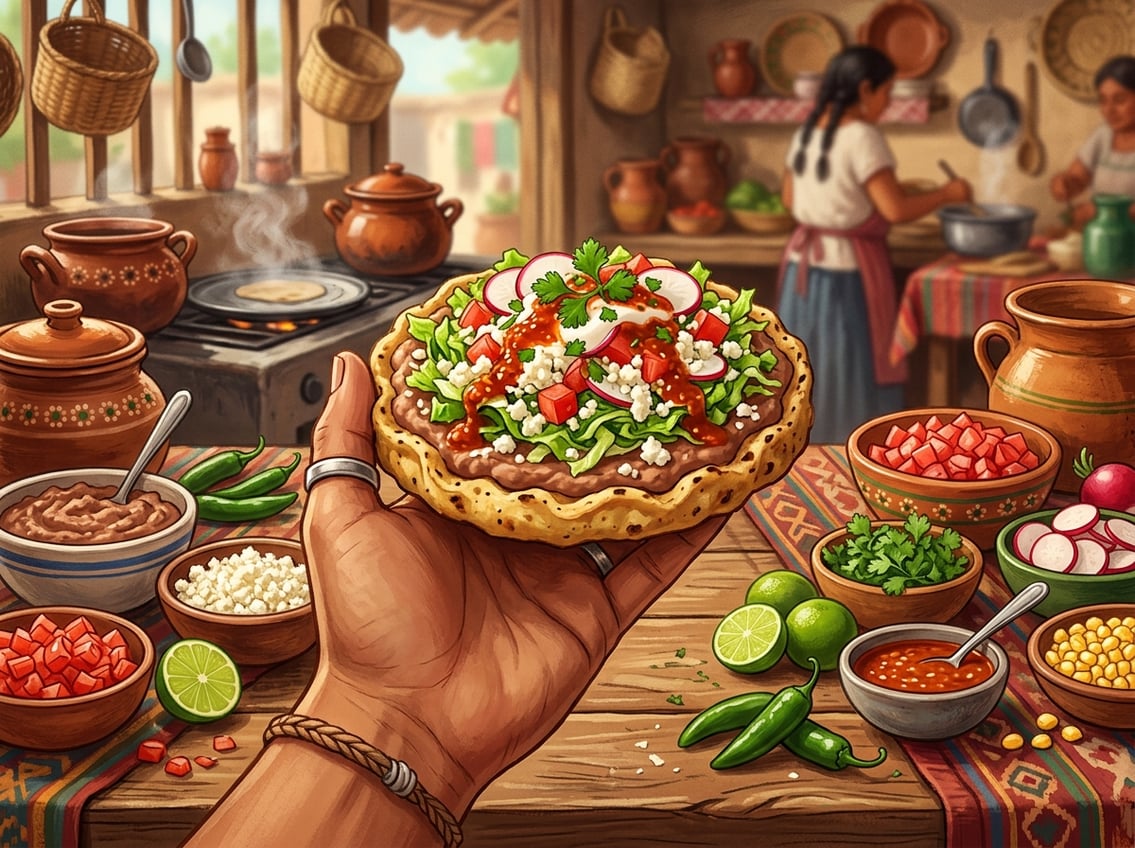
- A sope is a traditional Mexican dish made from a thick fried masa base with pinched sides, topped with beans, meat, cheese, and salsa
- The word "sope" in Spanish refers specifically to this food item and is pronounced the same way in both English and Spanish
- Sopes originated in central and southern Mexico and are also called pellizcadas or picaditas in some regions
- The dish differs from tortillas and tostadas by its thickness and soft texture with crispy edges
- Regional variations include different sizes, toppings, and preparation methods across Mexico and Central America
Core Meanings of Sopes in Spanish
- "Sopes" is the plural form; "sope" means one piece.
- Used in Mexican Spanish to talk about food, especially in restaurants and street food spots.
Definition in Mexican Cuisine
Primary Meaning
A sope is a traditional Mexican dish with a fried masa (corn dough) base and savory toppings.
Physical Characteristics
- Thick, round corn dough base
- Pinched or raised edges, kind of like a shallow bowl
- About 3-4 inches across
- Soft inside, firmer outside after frying
Standard Toppings
| Base Layer | Middle Layer | Top Layer |
|---|---|---|
| Refried beans | Crumbled cheese | Lettuce, onions |
| - | Meat (optional) | Red or green salsa |
| - | - | Sour cream |
Alternative Names by Region
- Pellizcadas (central/southern Mexico)
- Picadita (Tierra Caliente, Guerrero)
- Garnacha (some regions)
| Dish | Masa Thickness | Edges | Texture |
|---|---|---|---|
| Sope | Thick | Pinched up | Soft inside, crisp edge |
| Tostada | Thin | Flat | Crunchy all the way |
Common Usage in Daily Language
- Singular: un sope, el sope
- Plural: unos sopes, los sopes
- "Voy a pedir unos sopes" (I'm going to order some sopes)
- "¿Cuánto cuestan los sopes?" (How much do the sopes cost?)
- "Sopes de pollo" (chicken sopes)
- "Sopes con frijoles" (sopes with beans)
| Context | Usage Example |
|---|---|
| Restaurant | "Unos sopes, por favor" |
| Street vendor | "¿De qué son los sopes?" |
| Home cooking | "Hoy hacemos sopes" |
Non-Culinary and Slang Contexts
- "Sope" almost always means the food, not something else.
- Diminutive form: "sopecitos" (tiny sopes), used mainly in Acapulco and Guerrero.
| Term | Meaning | Notes |
|---|---|---|
| Sope | Mexican food dish | Standard everywhere |
| Sopecitos | Miniature sopes | Diminutive, not slang |
Linguistic Origins and Etymology
Historical Roots of the Word
| Language | Original Term | Meaning |
|---|---|---|
| Nahuatl | tzopelli | Related to pinched or shaped masa |
| Spanish | sope | Thick fried masa base with toppings |
- Pellizcadas comes from pellizcar (to pinch), describing the edge of the sope.
- Picadita is used in Tierra Caliente, Guerrero.
- Sopecitos is a diminutive used in Acapulco for smaller sopes.
Evolution and Loanwords
| Word | Language | Meaning | Relation to Food |
|---|---|---|---|
| sope | Mexican Spanish | Fried masa dish | Direct culinary term |
| sopar | Catalan/Spanish | To have supper | Unrelated etymology |
- Sope is a masculine noun: un sope, los sopes
- The English translation keeps the Spanish word, especially in food contexts.
- The term spread through Mexican cuisine’s popularity.
Culinary Identity of Sopes
Masa and Corn Dough Foundation
Core Ingredients:
- Corn masa (corn dough)
- Water
- Salt
- Manteca (lard) or vegetable oil
| Property | Sope Masa | Tortilla Masa |
|---|---|---|
| Thickness | 1/4–1/2 inch | 1/8 inch or less |
| Edges | Pinched | Flat |
| Texture after cooking | Soft center, firm outside | Pliable throughout |
- The thick masa holds wet toppings.
- Lard or oil gives flavor and helps texture.
Preparation Methods and Techniques
Cooking Steps:
- Shape thick masa rounds (3-4 inches wide, 1/4–1/2 inch thick)
- Cook on a hot comal/griddle
- Pinch edges up while warm
- Fry in lard or oil until outside firms
- Add toppings while still warm
Traditional Toppings Layer:
- Refried beans (base)
- Shredded meat
- Crumbled cheese
- Lettuce, onions
- Salsa (red or green)
- Crema or sour cream
| Dish Type | Masa Thickness | Frying Method | Topping Support |
|---|---|---|---|
| Sope | Thick | Fry until exterior firms | Holds heavy/wet toppings |
Distinguishing Sopes from Similar Dishes
| Dish | Shape | Thickness | Texture | Edges |
|---|---|---|---|---|
| Sope | Round | Thick | Soft inside, firm outside | Pinched up |
| Tostada | Round/oval | Thin | Crunchy throughout | Flat |
| Huarache | Oblong | Thick | Like sope | Raised |
| Chalupa | Boat-shape | Thin/med | Crispy cup | Formed sides |
Key Differences:
- Sopes: pinched sides, thick, only fried until outside is set
- Tostadas: thin, flat, fried until crunchy
- Thick tortillas: flat, not fried, no rim
Toppings, Fillings, and Typical Recipes
Classic and Regional Toppings
Standard Base Layer:
- Refried beans
- Queso fresco or cotija cheese
- Shredded lettuce
- Diced white onions
- Red or green salsa
- Sour cream (crema)
| Region | Distinctive Toppings | Preparation Notes |
|---|---|---|
| Northern Mexico | Black beans, longaniza, chorizo | No vegetables |
| Acapulco/Guerrero | Beans and salsa only | Fried in seafood oil (sopecitos) |
| Oaxaca | Chapulines, mole negro | Also called memelas |
| Puebla | Red & green sauce (estilo bandera) | Served with onions and cheese |
Meat and Vegetarian Variations
Meat Options:
- Sopes de pollo (shredded chicken)
- Shredded beef (carne deshebrada)
- Chorizo (spicy sausage)
- Carnitas (pulled pork)
- Chicharrón (fried pork skin)
- Longaniza
Vegetarian Builds:
- Beans and cheese
- Rajas con crema (poblano strips)
- Nopales (cactus)
- Huitlacoche (corn fungus)
| Variation | Main Filling | Notes |
|---|---|---|
| Chicken | Shredded chicken | Most common |
| Beef | Shredded beef | Usually larger sopes |
| Vegetarian | Beans, cheese, veggies | No meat |
Rule → Example:
Rule: Use "sope" for one, "sopes" for more than one.
Example: "Quiero un sope" vs. "Quiero tres sopes"
Essential Accompaniments
Fresh Additions:
- Avocado slices or guacamole
- Chopped cilantro
- Lime wedges
- Pickled jalapeños
- Radish slices
Salsas and Sauces:
- Salsa roja (red, tomato-based)
- Salsa verde (tomatillo-based)
- Hot sauce (bottled or homemade)
- Chipotle sauce
- Habanero salsa (Yucatán style)
Dairy Components:
- Mexican crema
- Queso fresco
- Cotija cheese
- Melted Oaxaca cheese
Sope Structure
| Feature | Purpose |
|---|---|
| Pinched edges | Holds wet toppings, prevents spillage |
| Fried exterior | Keeps moisture out, soft inside remains |
Regional Varieties and Related Dishes
Sopes go by different names around Mexico, and some similar dishes change up the size, shape, or toppings.
Major Regional Terms and Variants
| Term | Region | Key Differences |
|---|---|---|
| Pellizcada/Pellizcadas | Central/Southern Mexico | "Pinched" edges, original name |
| Picadita/Picaditas | Tierra Caliente, Guerrero | Same prep, local name |
| Memela | Oaxaca | Beans, salsa, cabbage, mole negro, cheese |
| Garnacha | Guatemala | Smaller, usually just onion and salsa |
| Sopecitos | Acapulco, Guerrero | Mini size, fried in seafood oil, beans and salsa only |
- Northern Mexico: skips veggies; uses black beans, spicy salsa, longaniza or chorizo.
- Oaxaca: sometimes topped with chapulines (roasted grasshoppers); memelas with "estilo bandera" sauces in Puebla.
How Sopes Compare with Gordita, Huarache, and Others
Size & Shape
| Dish | Shape/Size | Topping/Filling Style |
|---|---|---|
| Sope | Round, 3-4", pinched | Toppings on top |
| Huarache | Oblong, much larger | Toppings on top |
| Gordita | Thick, round, split | Stuffed with filling |
| Tostada | Flat, thin, crunchy | Toppings on top |
Texture
- Sope: soft, a little pliable after frying
- Tostada: thin, totally crunchy
- Gordita: thick, forms a pocket
- Huarache: same masa, stretched longer
Rule → Example
- Rule: Gorditas are split and stuffed; sopes, huaraches, and tostadas are topped.
- Example: "Una gordita de chicharrón" (stuffed with pork rind); "Un sope de pollo" (topped with chicken)
Sopes in Language Learning and Translation
Pronunciation and Ordering
| Word | Spanish Pronunciation | IPA | Syllable Stress |
|---|---|---|---|
| Sope | soh-peh | /ˈso.pe/ | First syllable |
| Sopes | soh-pehs | /ˈso.pes/ | First syllable |
Ordering Sopes
| English phrase | Spanish equivalent | Context |
|---|---|---|
| I want some sopes | Quiero unos sopes | Casual ordering |
| May I have sopes? | ¿Me puede dar sopes? | Polite request |
| Sopes with chicken | Sopes de pollo | Specify filling |
| How much are the sopes? | ¿Cuánto cuestan los sopes? | Asking price |
Word Forms
- Singular: un sope
- Plural: unos sopes
- Diminutive: sopecito
Rule → Example
- Rule: Use "de" to specify filling.
- Example: "Un sope de frijoles" (a sope with beans)
Sopes in Dictionaries and Phrasebooks
| Resource | Entry Type | Details/Notes |
|---|---|---|
| SpanishDict | Noun | Masculine, from Nahuatl, Mexican Spanish |
| Reverso | Noun | Food-specific definition |
| Linguee | Usage examples | Real sentences showing "sope" in context |
Dictionary Entry Components
- Part of speech: masculine noun
- Plural: sopes
- Etymology: Nahuatl
- Regional use: Mexico
Common Confusions
| Word | Meaning | Context |
|---|---|---|
| sope | Mexican food item | Culinary |
| sopar | To dine/to soak bread | Verb form |
Rule → Example
- Rule: Context determines if "sope" is food or verb.
- Example: "Quiero un sope" (food); "Voy a sopar pan" (soak bread)
Frequently Asked Questions
Is "sopes" a Spanish slang term or a food-related word?
| Category | Classification |
|---|---|
| Type | Food-related noun |
| Origin | Mexican Spanish |
| Usage context | Culinary/restaurant |
| Formality | Standard, not slang |
Related Terms
- Pellizcada
- Picadita
- Antojito (street food category)
What is the meaning of "sope" in Spanish, and how is it used?
| Context | Example phrase | When used |
|---|---|---|
| Ordering | "Un sope de pollo, por favor" | Requesting a sope |
| Describing | "Los sopes tienen frijoles" | Explaining ingredients |
| Plural | "Dos sopes de carne" | Ordering multiples |
Rule → Example
- Rule: "Sope" is a countable noun for the masa-based dish.
- Example: "Tres sopes, por favor."
How do you pronounce "sopes" correctly in Spanish?
| Word | Phonetic | Syllable breakdown | Stress |
|---|---|---|---|
| Sope | SOH-peh | so-pe | First syllable |
| Sopes | SOH-pehs | so-pes | First syllable |
- "So" as in "soap"
- "pe" as in "pet"
- Final "s" is pronounced
What is the English translation or closest equivalent for "sopes"?
| English term | Accuracy | Usage context |
|---|---|---|
| Sopes (untranslated) | Most common | Menus, food writing |
| Fried masa cakes | Descriptive | Explanatory |
| Mexican corn cakes | Simplified | General audiences |
Component Terms
- Masa = corn dough
- Base = foundation
- Toppings = garnishes
Are sopes considered a Mexican dish, and how are they typically served?
| Attribute | Details |
|---|---|
| Country of origin | Mexico |
| Regional roots | Central/southern Mexico |
| Category | Antojito (street food) |
| Serving style | Individual portions |
Standard Serving Components
- Fried masa base, pinched edges
- Refried beans
- Protein (chicken, beef, pork)
- Fresh toppings (lettuce, cheese, onions)
- Salsa (red or green)
- Sour cream
| Region | Distinctive features |
|---|---|
| Northern Mexico | No veggies; black beans, spicy salsa, longaniza/chorizo |
| Acapulco/Guerrero | Sopecitos; fried in seafood oil |
| Oaxaca | Chapulines (roasted grasshoppers) as topping |