What Does Pastor Mean in Spanish Food: Real Culinary Origins Unlocked
Marinade: guajillo chiles, garlic, cumin, vinegar, pineapple; cooked on a "trompo" (spinning top)
Posted by
 Stewart Kaplan
Related reading
What Does Adonde Mean in Spanish? How Movement 'Clicks' for Learners
You have to know when prepositions combine with donde to show direction or position
What Does Ahi Mean in Spanish? Cognitive Mastery That Sticks
Learners mix up ahí, hay, and ay because they sound the same but mean totally different things.
What Does Aki Mean in Spanish: Unpacking Real Usage for Learners
Regional differences exist, but nearly everyone in Spanish-speaking communities gets what "aki" means in a text
TL;DR
- "Pastor" translates to "shepherd" or "herdsman" in Spanish, but in Mexican food it means marinated pork cooked on a vertical spit and shaved for tacos
- Lebanese immigrants brought shawarma-style spit roasting to Mexico in the late 1800s/early 1900s; it blended with Mexican marinades - dried chilies, achiote, pineapple
- Al pastor is usually served in small corn tortillas with onion, cilantro, and pineapple; it’s been a street food staple since the 1960s
- Regional names: "tacos de trompo" (north), "tacos de adobada" (coast)
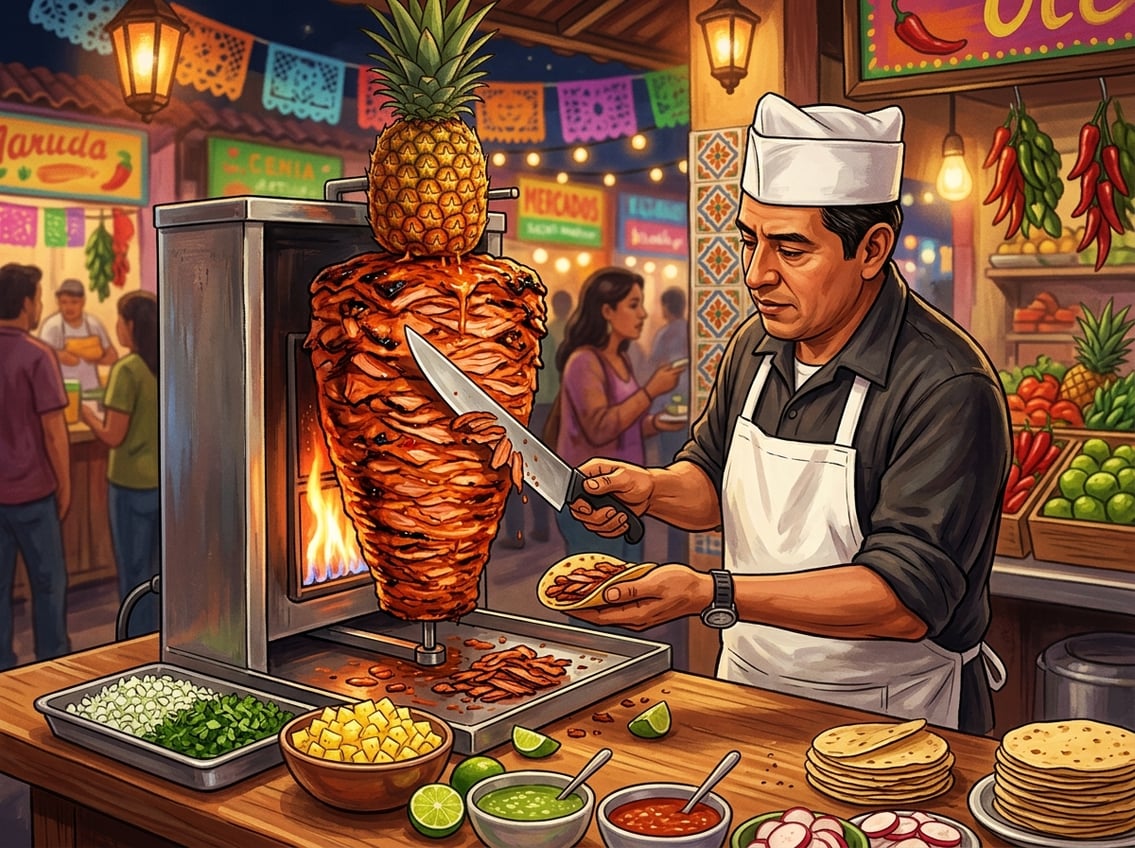
- Marinade: guajillo chiles, garlic, cumin, vinegar, pineapple; cooked on a "trompo" (spinning top)
Literal and Culinary Meanings of Pastor
The word "pastor" means "shepherd" in Spanish. In Mexican food, it’s a method for cooking marinated pork on a vertical spit. The name links to the cooking style and the cultural history behind it.
Shepherd Style: The Direct Translation
Basic Translation
| Spanish Term | English Meaning | Culinary Context |
|---|---|---|
| Pastor | Shepherd | Cooking style reference |
| Al pastor | In the style of shepherd | Spit-roasted preparation |
| Asado al pastor | Shepherd’s roast | Open-fire roasting method |
Historical Connection to Shepherding
- Whole animals roasted on stakes over open fires
- Common at countryside fiestas and cattle roundups
- Mainly veal, mutton, or beef in 19th-century Mexico
- Seen at hacienda parties and family gatherings
Pastor as a Cooking Method in Mexico
Core Preparation Elements
Tacos al pastor require:
- Vertical rotisserie (trompo) – spinning spit, meat near flame
- Thin-sliced pork – shaved as it browns
- Adobo marinade – dried chilies, achiote, pineapple, spices
- Charcoal or gas flame – slow, steady heat
Common Marinade Ingredients
| Main Ingredients | Flavor Boosters | Optional Extras |
|---|---|---|
| Dried guajillo | Cumin | Cinnamon |
| Achiote paste | Garlic | Mexican oregano |
| Pineapple | Bay leaf | Black peppercorns |
| Vinegar | Clove | Coriander |
Pineapple tenderizes and sweetens the pork, and the al pastor cooking method gives you crispy outside, juicy inside.
Origins of the Name on Menus
Lebanese Immigration Influence
- Lebanese immigrants brought shawarma to Mexico (late 1800s/early 1900s)
- They adapted spit-roasting with Mexican ingredients
Evolution Timeline
| Era | Technique/Meat | Notable Change |
|---|---|---|
| 1840s-1880s | Asado al pastor, whole animals | Outdoor celebrations |
| 1890s-1920s | Shawarma technique arrives | Vertical spit introduced |
| 1920s | Lamb replaced by pork | Pork becomes standard |
| 1960s | Tacos al pastor spread | Widespread in Mexico City |
Regional Name Variations
| Region | Name | Meaning/Notes |
|---|---|---|
| Northern Mexico | Tacos de trompo | Spinning top tacos |
| Baja California | Tacos de adobada | Marinated tacos |
| Puebla | Tacos árabes | Arab tacos (in pita) |
Al pastor style is a fusion of Middle Eastern technique and Mexican flavor. Menu names reflect both the spit and the shepherding roots.
Lebanese Roots and Global Influences
Lebanese immigrants brought shawarma to Mexico in the late 1800s/early 1900s, blending vertical spit roasting with local Mexican flavors and ingredients.
Lebanese Immigrants and Shawarma
Immigration Timeline and Impact
- Late 1800s–early 1900s: Lebanese Christians arrived in Mexico
- Brought shawarma from the Levant
- No pork restrictions; pork adopted quickly
- Opened restaurants in Puebla and Mexico City
Original Shawarma Characteristics
- Lamb stacked on vertical spit
- Middle Eastern spices
- Sliced thin as it cooks
- Served in flatbread
By the 1920s, Mexican-born kids of Lebanese immigrants swapped lamb for pork and started their own restaurants, experimenting with local flavors.
Middle Eastern Techniques in Mexico
Adaptation Process
| Middle Eastern Element | Mexican Swap |
|---|---|
| Lamb | Pork |
| Middle Eastern spices | Mexican adobo |
| Flatbread | Corn tortillas |
| Garlic sauce | Pineapple, cilantro, onion |
Key Ingredient Changes
- Achiote paste for color and flavor
- Dried guajillo chilies for heat
- Pineapple for sweetness and acidity
- Mexican oregano instead of za’atar
Shawarma morphed into al pastor by the 1960s - same spit method, totally new flavors.
Development of the Vertical Spit Method
Trompo Construction and Function
- Trompo = "spinning top" in Spanish
- Metal rod stacks marinated pork slices
- Gas or charcoal flame cooks meat vertically
- Rotates for even browning
Cooking Process
- Pork slices marinated 4–24 hours
- Stacked on vertical rotisserie
- Pineapple on top
- Outer layer browns as spit turns
- Sliced straight into tortillas
Vertical spit cooking means the outer layer crisps up, cooks shave off portions as needed, and the rest keeps cooking. Juicy inside, crispy outside - hard to beat.
Transformation Into a Mexican Icon
Lebanese immigrants brought shawarma to Mexico in the late 1800s/early 1900s. By the 1920s, Mexican cooks swapped lamb for pork and added local chiles and spices. Pineapple and onion sealed the deal.
How Marinated Pork Became the Star
| Period | Main Meat | Region |
|---|---|---|
| Pre-1920s | Lamb (shawarma) | Puebla |
| 1920s–1930s | Pork replaces lamb | Central Mexico |
| 1960s onward | Marinated pork standard | All Mexico |
Why Pork Took Over
- Cheaper and easier to get than lamb
- No religious issues for Mexicans
- Fat content perfect for spit roasting
- Soaks up Mexican marinades better
Pork shoulder, with its fat and marbling, became the go-to. It stays juicy on the spit for hours.
Mexican-born Lebanese started their own spots and ditched shawarma spices for Mexican adobo, giving al pastor its own flavor.
Adapting the Marinade: Chiles and Achiote
| Ingredient Type | Common Choices | Purpose |
|---|---|---|
| Dried chiles | Guajillo, ancho | Heat, color |
| Spices | Cumin, clove, cinnamon | Depth, warmth |
| Acidic | Vinegar, citrus | Tenderizes meat |
| Color/flavor | Achiote paste | Red color, earthiness |
Chile Rules → Example
- Rule: Use guajillo for mild heat and tang; ancho for smoky notes.
- Example: “Guajillo and ancho chiles blended for a balanced marinade.”
Achiote paste (from annatto seeds) gives al pastor its signature deep orange-red color and earthy taste.
Other Marinade Must-Haves
- Garlic
- Mexican oregano
- Black peppercorns
- Bay leaves
- White vinegar
Marinate pork for hours (overnight is best) before stacking it on the spit.
The Role of Pineapple and Onion
| Topping | Prep | Function |
|---|---|---|
| Pineapple | Diced, fresh | Sweet, acidic, juicy |
| Onion | Finely chopped | Sharp, crunchy |
| Cilantro | Rough chopped | Fresh, herbal |
Pineapple Integration Methods
- Pineapple placed on top of spit; juice caramelizes meat
- Grilled pineapple sliced onto tacos
- Fresh diced pineapple as a topping
Topping Rules → Example
- Rule: Always use pineapple and onion for classic al pastor tacos.
- Example: “Top tacos with diced pineapple, raw onion, and cilantro.”
Why these toppings? They cut through the fatty pork, add crunch and brightness, and give every bite a punch of sweet, sharp, and fresh flavors.
Lime and salsa are optional, but pineapple and onion are non-negotiable for the true al pastor experience.
Signature Street Food and Serving Styles
Al pastor is that classic street food you see spinning on a vertical spit, mostly served in tacos. Taqueros slice the meat to order - fast and precise - then throw on onions, cilantro, and pineapple. You’ll also spot it in tortas, burritos, and a bunch of other dishes all over Mexico and, honestly, wherever good tacos are found.
Tacos al Pastor and the Trompo Tradition
Core Components
| Element | Description |
|---|---|
| Trompo | Vertical rotisserie ("spinning top") for pork |
| Tortilla | Small corn, about 4–5 inches |
| Cooking | Charcoal/gas flame browns outside, inside stays juicy |
| Slicing | Thin shavings cut straight from the spit |
Trompo tradition means pork stacked on a spit, with a pineapple on top.
Traditional Serving Format
- Two corn tortillas per taco (for sturdiness)
- Meat sliced fresh per order
- Pineapple chunk sliced from the crown
- Served hot and fast
The trompo’s rotation caramelizes the meat’s edges and keeps the center tender. Stands set the spit right up front so you see your taco come together.
The Role of the Taquero
Key Skills
| Skill | Purpose |
|---|---|
| Knife Control | Shave thin slices, avoid waste |
| Heat Control | Rotate spit for even browning |
| Speed | Build multiple tacos at once |
| Timing | Slice when meat’s at its best |
A good taquero never stops moving - slicing, flipping tortillas, grabbing garnishes. It takes years to get that knife angle just right.
Typical Setup
- Trompo set at chest height
- Warm tortillas in a cloth basket
- Toppings in small bowls within reach
- Salsa bottles ready for customers
Common Toppings and Salsas
Standard Toppings
- Onion: Finely diced, raw
- Cilantro: Chopped fresh
- Pineapple: Small chunks or slices
- Lime: Wedges on the side
Salsa Options
| Type | Characteristics | Heat Level |
|---|---|---|
| Salsa Verde | Tomatillo, tangy | Mild–medium |
| Salsa Roja | Tomato, chile, smooth | Medium |
| Árbol | Thin, vinegary | Hot |
| Habanero | Fruity, orange/green | Very hot |
Taquerias usually offer 2–4 salsas in bottles or bowls. Customers top their tacos how they like. Extras sometimes include pickled jalapeños, radishes, or grilled onions.
How Al Pastor Compares to Other Fillings
Popular Mexican Street Taco Fillings
| Filling | Meat | Cooking Method | Typical Toppings |
|---|---|---|---|
| Al Pastor | Pork | Vertical spit | Onion, cilantro, pineapple |
| Carne Asada | Beef | Flat grill | Onion, cilantro, guacamole |
| Carnitas | Pork | Braised/fried | Onion, cilantro, salsa |
| Barbacoa | Beef/lamb | Steamed | Onion, cilantro, consommé |
| Pollo | Chicken | Grilled | Onion, cilantro, cream |
Al pastor meat shows up in tortas, burritos, alambre (with cheese and peppers), nachos, and enchiladas. The vertical spit makes it unique - caramelized, smoky, and nothing like flat-grilled carne asada or fatty carnitas.
Regional Variations and Other Mexican Meat Preparations
Pastor meat is everywhere in Mexico, but the name and style change by region. Carnitas, barbacoa, and birria use totally different cooking methods. These days, you’ll find chicken and beef pastor, too.
Differences Across Central Mexico and Beyond
Regional Names for Pastor Meat
| Region | Name | Key Difference |
|---|---|---|
| Puebla | Tacos al pastor | Original style |
| Baja California | Taco de trompo | Same spit method |
| Northern Mexico | Taco de adobada | Focus on marinade |
| Coastal areas | Taco de trompo | Local name |
In Nuevo León and the north, serve it as "gringas" - that’s pastor with cheese on flour tortillas.
Other Serving Vehicles
- Gorditas (thick masa cakes)
- Huaraches (oval masa bases)
- Tortas (sandwiches)
- Burritos (flour tortillas)
Puebla, in Central Mexico, is the heart of pastor - still a street food staple.
Carnitas, Barbacoa, and Birria: Unique Identities
Distinct Mexican Meat Preparations
| Preparation | Meat Type | Cooking Method | Flavor Profile |
|---|---|---|---|
| Carnitas | Pork | Braised in lard | Rich, tender, crispy edges |
| Barbacoa | Beef/lamb/goat | Pit-roasted, slow-cooked | Smoky, savory |
| Birria | Goat or beef | Stewed with dried chiles | Spicy, rich broth |
| Pastor | Pork | Vertical spit-roasted | Sweet, tangy, pineapple |
- Carnitas: Cooked in copper pots for hours.
- Barbacoa: Traditionally in underground ovens, wrapped in maguey leaves.
- Birria: Served with consommé for dipping.
- Pastor: Shaved from the spit, thin and caramelized.
Pollo, Carne Asada, and Modern Adaptations
Alternative Proteins for Pastor-Style
- Pollo al pastor: Chicken, same marinade, cooks faster
- Carne asada: Grilled beef, no spit or pineapple
- Beef al pastor: Less common, but you’ll find it
Chicken pastor uses the same achiote, dried chiles, and pineapple marinade. Cooks faster, still on a vertical spit when possible.
A chicken pastor version even popped up as "shawarma mexici" in the Middle East.
Modern Applications
- Pizza toppings
- Nachos
- Fusion dishes
Core marinade: dried guajillo chiles, garlic, cumin, vinegar, achiote paste. Mole-based recipes are a different thing - those use chocolate and more complex chiles, not the adobo style.
Making Al Pastor at Home and Its Modern Evolution
Home cooks can get al pastor flavor without a trompo. Spice level depends on the marinade. The technique now covers all sorts of proteins, not just pork.
Adapting the Vertical Spit for Home Cooks
Equipment Alternatives
| Method | Heat Source | Best For | Limitations |
|---|---|---|---|
| Vertical rotisserie attachment | Gas/charcoal | Closest to trompo | Needs special grill |
| Slow cooker | Electric | Easy, hands-off | No crispy edges |
| Oven broiler | Electric/gas | Accessible | Manual flipping |
| Skillet sear after marinade | Stovetop | Fastest | Not self-basting |
Vertical spit lets the meat self-baste as it turns. At home, layer thin pork slices in a slow cooker with marinade for a similar effect.
Home Prep Steps
- Marinate pork shoulder 4–8 hours with dried chiles, garlic, vinegar, achiote
- Stack meat tight to mimic trompo
- Cook low and slow (275°F oven or slow cooker)
- Sear in cast iron for crispy bits
- Slice thin against the grain
Top with pineapple during cooking for that signature sweet-tart note.
Is Al Pastor Spicy?
Spice Level Variables
- Chile type: Guajillo = mild, árbol = hot
- Seed removal: Less heat if deseeded (cuts capsaicin 50–70%)
- Marinade: More vinegar or pineapple juice = milder
- Region: Mexico City versions tend mild, northern styles hotter
Al Pastor Heat Scale
| Component | Scoville Range | Heat Level |
|---|---|---|
| Guajillo chile | 2,500–5,000 | Mild-medium |
| Chile de árbol | 15,000–30,000 | Medium-hot |
| Chipotle | 2,500–8,000 | Medium |
| Typical adobo | 3,000–7,000 | Medium |
Most restaurant al pastor is medium heat. Pineapple balances the chiles. At home, swap in some paprika for a milder take.
Creative Uses Beyond Tacos
Protein Swaps
- Chicken thighs (marinate 2–4 hrs)
- Beef sirloin strips
- Fish (mahi-mahi, swordfish, 30 min marinade)
- Jackfruit for plant-based
Al Pastor Applications
- Burrito bowls (with cilantro-lime rice)
- Quesadillas (Oaxaca cheese)
- Pizza topping (pineapple chunks)
- Nachos (pickled onions)
- Tortas (Mexican sandwiches)
- Fried rice fusion
Evolution from pork-only comes from ingredient swaps and new diets. The adobo marinade works for nearly any protein if you adjust cook times.
Marinade Timing by Protein
| Protein | Minimum Time | Maximum Time |
|---|---|---|
| Pork | 4 hours | 24 hours |
| Chicken | 2 hours | 8 hours |
| Beef | 4 hours | 12 hours |
| Fish/seafood | 15 minutes | 1 hour |
Horizontal roasting works for these swaps if you don’t have a vertical spit.
Frequently Asked Questions
"Pastor" in Spanish food means a specific style of marinated, spit-roasted meat, with regional and ingredient variations across Mexico.
What does "al pastor" translate to in English on a menu?
| Spanish Term | Literal Translation | Menu Context |
|---|---|---|
| al pastor | shepherd style | Marinated pork cooked on a vertical spit |
Rule → Example:
Rule: "al" means "in the style of," "pastor" means "shepherd."
Example: "Tacos al pastor" = "Shepherd-style tacos"
The original meaning pointed to countryside cooking over fire, but now it’s all about the spit.
What does "pastor" mean in Mexican Spanish in food?
Rule → Example:
Rule: "Pastor" refers to pork marinated with dried chiles and achiote, cooked on a trompo, served thin and with pineapple.
Example: "Carne al pastor" = Pork cooked on a spit with adobo and pineapple
It still means "shepherd," but in food, it’s that Lebanese-Mexican vertical rotisserie thing from the early 1900s.
Why are tacos al pastor called "al pastor" and what is the origin of the name?
| Historical Element | Details |
|---|---|
| Time period | 1920s–1930s |
| Location | Puebla, Central Mexico |
| Origin culture | Lebanese immigrants |
| Original dish | Shawarma (lamb on vertical spit) |
| Mexican adaptation | Pork swapped for lamb, chilies used instead of Middle Eastern spices |
- Lebanese immigrants brought the vertical spit-roasting style to Mexico.
- Local cooks in Puebla and later Mexico City started using pork and local seasonings.
- The name "al pastor" means "shepherd style" - a nod to the original method, but now it’s all about the Mexican twist.
What kind of meat is typically used for tacos al pastor?
| Meat Type | Usage Level | Reason |
|---|---|---|
| Pork shoulder (butt) | Most common | Fat keeps it juicy and flavorful |
| Pork sirloin | Also common | Leaner, firmer bite |
| Lamb | Rare, historical | Used in original Lebanese shawarma |
- Pork became the go-to because it’s widely available in Mexico and fit the community’s dietary needs.
- Meat is sliced thin, stacked on the spit, and basted as it cooks - simple but genius.
What is chicken al pastor and how does it differ from traditional al pastor?
| Aspect | Traditional Al Pastor | Chicken Al Pastor |
|---|---|---|
| Protein | Pork shoulder | Chicken thighs (preferred) |
| Fat content | High (self-basting) | Lower (can dry out) |
| Cooking time | Longer | Shorter |
| Authenticity | Classic | Modern spin |
- Chicken al pastor uses the same marinade: chilies, achiote, pineapple.
- Chicken thighs are best - they stay juicy.
- The taste stays pretty close, just a lighter protein swap.