How to Say Compliments in Spanish: Rapid Patterns for Real Fluency
Food compliments need adjective gender to match the dish (La sopa está buenísima vs. Los tacos están deliciosos).
Posted by
 Stewart Kaplan
Related reading
What Does Adonde Mean in Spanish? How Movement 'Clicks' for Learners
You have to know when prepositions combine with donde to show direction or position
What Does Ahi Mean in Spanish? Cognitive Mastery That Sticks
Learners mix up ahí, hay, and ay because they sound the same but mean totally different things.
What Does Aki Mean in Spanish: Unpacking Real Usage for Learners
Regional differences exist, but nearly everyone in Spanish-speaking communities gets what "aki" means in a text
TL;DR
- Four main words for "compliment" in Spanish: halago, cumplido, piropo, elogio. Each pairs with verbs like hacer un cumplido or decir un piropo.
- Spanish compliments usually follow subject-verb-adjective order (Eres muy amable). Adjectives must agree in gender and number.
- Context matters: workplace compliments use Excelente trabajo or Bien hecho. Personal compliments like Eres muy guapo/guapa depend on relationship and setting.
- Food compliments need adjective gender to match the dish (La sopa está buenísima vs. Los tacos están deliciosos).
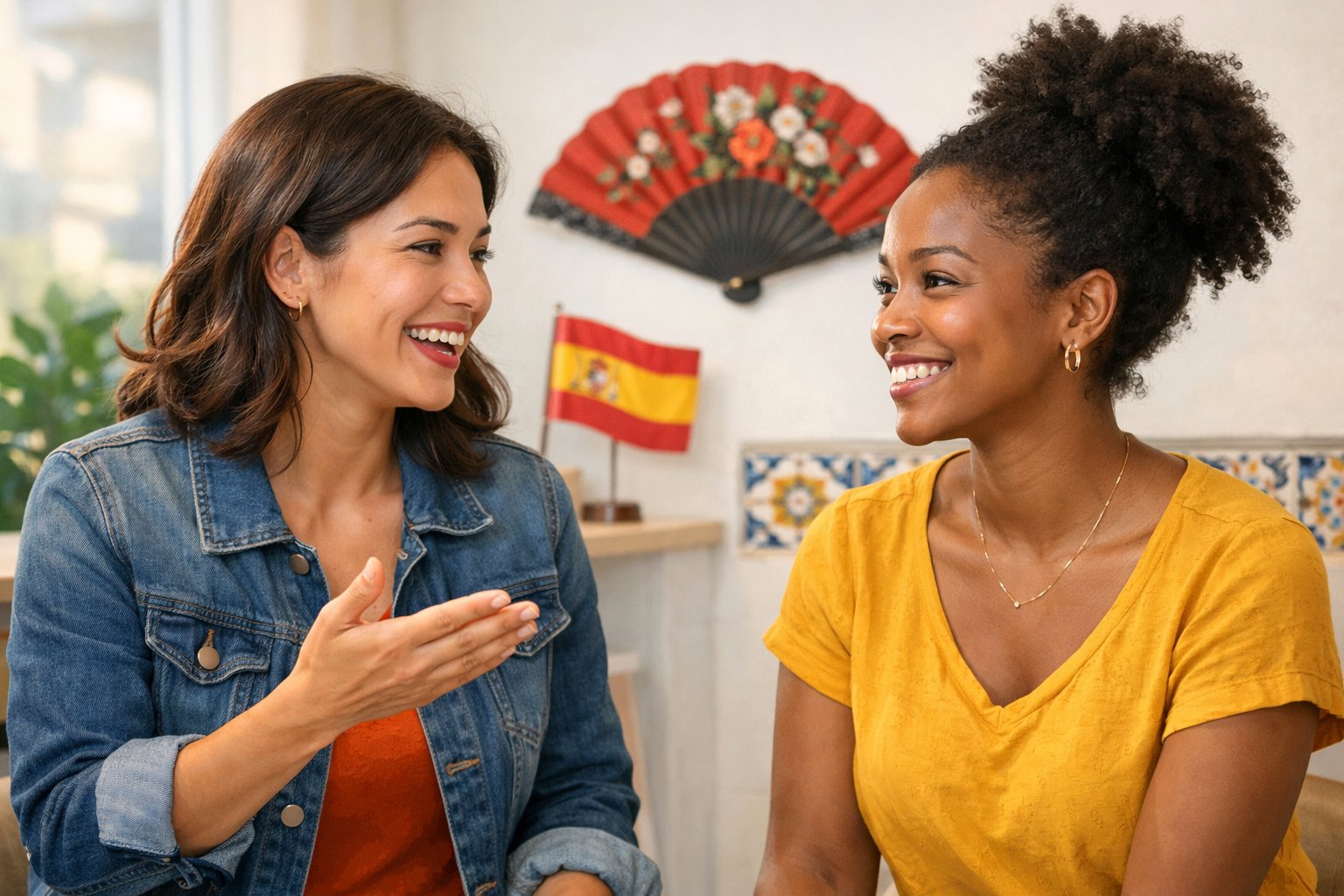
- Halago, cumplido, piropo, and elogio all mean "compliment" but suit different verbs and situations.
- Adjective endings must match the gender and number of the person or thing you’re complimenting. Example: Eres muy guapa (to a woman), Estás muy guapo (to a man).
- Core phrase structures, situational examples, and essential grammar patterns make Spanish compliments sound natural.
Fundamentals of Saying Compliments in Spanish
Spanish uses three main words for compliment - cumplido, halago, and piropo - each with its own vibe and context. Each noun pairs with certain verbs, and adjectives have to match the gender and number of whatever you’re talking about.
What Does 'Compliment' Mean in Spanish?
| Spanish Term | Formality | Common Context |
|---|---|---|
| El cumplido | Neutral | General praise, workplace, daily use |
| El halago | Formal | Professional, written |
| El piropo | Informal | Street, flirty, often about looks |
Plural forms: cumplidos, halagos, piropos
Regional notes:
- Cumplido is common in Latin America.
- Piropo pops up a lot in Spain, especially for street compliments.
- Halago shows up in formal writing everywhere.
Start with cumplido if you’re not sure which to use.
Common Nouns and Verbs for Compliments
| Spanish Phrase | Literal Translation | When to Use |
|---|---|---|
| Hacer un cumplido | To make a compliment | Most common, neutral |
| Decir un cumplido | To say a compliment | Focuses on speaking |
| Dar un halago | To give praise | Formal |
| Decir un piropo | To say a flirty compliment | Romantic, street |
Single verbs:
- Halagar = to flatter/praise (Yo halago)
- Elogiar = to compliment formally (Yo elogio)
Rule → Example pair:
- Rule: Use the verb without the noun for casual complimenting.
- Example: Me gusta halagar a mis amigos (I like to compliment my friends).
Grammatical Patterns and Adjective Agreement
Adjective agreement:
- Masculine singular: guapo, lindo, bueno
- Feminine singular: guapa, linda, buena
- Masculine plural: guapos, lindos, buenos
- Feminine plural: guapas, lindas, buenas
Compliment structures:
| Pattern | Example | Meaning |
|---|---|---|
| Eres + adjective | Eres guapo/guapa | You are handsome/beautiful |
| Estar + adjective | Estás hermosa | You look beautiful today |
| Tener + noun + adjective | Tienes una sonrisa bonita | You have a beautiful smile |
Adjectives that don't change:
- End in -e: inteligente, elegante, amable
- End in consonants: genial, especial, fatal
Group agreement:
- Mixed group: masculine plural (Ustedes son increíbles)
- All-female group: feminine plural (Ellas son increíbles)
Types and Examples of Spanish Compliments
Spanish compliments break down into four main types:
- Physical appearance & style
- Character & personality
- Talents, skills, achievements
- Romantic & heartfelt
Praising Physical Appearance and Style
| Spanish | English | Gender |
|---|---|---|
| Eres muy guapo | You're very handsome | Masculine |
| Eres muy guapa | You're very pretty | Feminine |
| Eres hermosa | You're beautiful | Feminine |
| Eres bella | You're beautiful | Feminine |
| Eres muy lindo | You're very cute | Masculine |
| Eres muy linda | You're very cute | Feminine |
| Te ves increíble | You look amazing | Any |
| Qué bien te ves | You look great | Any |
Clothing & style:
- Esa camisa te queda muy bien (That shirt looks great on you)
- Me encanta tu estilo (I love your style)
- Tienes muy buen gusto (You have great taste)
Rule → Example pair:
- Rule: Change the adjective ending to match gender.
- Example: guapo (m), guapa (f)
Talking About Character and Personality
| Spanish | English |
|---|---|
| Eres muy amable | You're very kind |
| Eres considerado/considerada | You're considerate |
| Eres muy divertido/divertida | You're very funny |
| Eres muy simpático/simpática | You're very nice/friendly |
| Eres inteligente | You're intelligent |
| Eres valiente | You're brave |
| Eres generoso/generosa | You're generous |
Other phrases:
- Eres la mejor persona que conozco (You're the best person I know)
- Tienes un gran corazón (You have a big heart)
- Eres muy buena onda (You're very cool)
Rule → Example pair:
- Rule: Adjectives ending in -e or consonant don’t change for gender.
- Example: Eres inteligente (any gender)
Highlighting Talents, Skills, and Achievements
Professional compliments:
- Buen trabajo (Good job)
- Muy bien hecho (Well done)
- Estás haciendo un excelente trabajo (You’re doing a great job)
- Te superaste a ti mismo (You outdid yourself)
- Has mejorado mucho (You’ve improved a lot)
| Spanish | English |
|---|---|
| Eres muy talentoso | You're very talented (m) |
| Eres muy talentosa | You're very talented (f) |
| Tienes un don para esto | You have a gift for this |
| Eres un gran profesional | You're a great professional |
Romantic and Heartfelt Compliments
Romantic phrases:
- Eres el amor de mi vida (You're the love of my life)
- Eres todo para mí (You're everything to me)
- No puedo vivir sin ti (I can't live without you)
- Eres mi media naranja (You're my other half)
| Spanish | English |
|---|---|
| Eres un gran amor | You're a great love |
| Me haces muy feliz | You make me very happy |
| Eres especial para mí | You're special to me |
| Adoro todo de ti | I adore everything about you |
Rule → Example pair:
- Rule: Use halagar for “to compliment” and halagos for “compliments” (noun).
- Example: Me encantan tus halagos (I love your compliments).
Frequently Asked Questions
What are common phrases for offering compliments to a man in Spanish?
| Spanish Phrase | English | Context |
|---|---|---|
| Eres muy guapo | You're very handsome | Appearance |
| Eres un tipazo | You're a great guy | Personality |
| Te ves muy bien | You look great | Appearance |
| Eres muy divertido | You're very funny | Personality |
| Eres muy inteligente | You're very intelligent | Mental trait |
Formal:
- Se ve muy bien, señor (You look very good, sir)
- Es usted muy amable (You are very kind)
Informal:
- Estás muy bueno (You're very hot)
- Qué bien te ves (How good you look)
Rule → Example pair:
- Rule: Use "eres muy + adjective" for most compliments.
- Example: Eres muy simpático (You're very nice)
How can one express flattery towards a woman in Spanish?
| Spanish Phrase | English | Formality |
|---|---|---|
| Eres muy bonita | You're very pretty | Neutral |
| Eres hermosa | You're beautiful | Slightly formal |
| Te ves increíble | You look amazing | Informal |
| Eres un mujerón | You're a great woman | Informal |
| Qué linda eres | How cute you are | Informal |
Specific features:
- ¡Qué bonitos ojos tienes! (What beautiful eyes you have!)
- Me encanta tu sonrisa (I love your smile)
- Ese vestido te queda muy bien (That dress looks great on you)
Rule → Example pair:
- Rule: "Bonita," "hermosa," and "linda" differ in intensity and region.
- Example: Use hermosa for a stronger compliment, linda for something softer.
Cultural note: Compliments on appearance are more common and open in Spanish-speaking cultures, especially in Latin America.
What are some humorous or funny ways to give compliments in Spanish?
Playful exaggerations:
- Estás como quieres que te vea (You look exactly how you want me to see you)
- Estás para chuparse los dedos (You're finger-licking good)
- Eres la mamacita de las mamacitas (You're the hottest of the hot)
Self-deprecating humor:
- Ojalá yo tuviera tu estilo (Wish I had your style)
- ¿Me prestas tu cerebro? (Can I borrow your brain?)
Regional slang compliments:
- Eres muy buena onda (You're super cool) – Mexico
- Eres un crack (You're amazing) – Spain
- Eres una chimba (You're awesome) – Colombia
Usage Rules:
- Use these with friends or in casual settings.
- Know the cultural context to avoid confusion.
Could you provide examples of romantic compliments in Spanish?
| Spanish Phrase | English Translation | Intensity |
|---|---|---|
| Eres el amor de mi vida | You're the love of my life | High |
| Me encantas | I'm crazy about you | Medium |
| Tienes una sonrisa preciosa | You have a beautiful smile | Low |
| No puedo dejar de pensar en ti | I can't stop thinking about you | High |
| Eres especial para mí | You're special to me | Medium |
Dating context:
- Me gusta estar contigo (I like being with you)
- Tienes algo que me atrae (There's something about you that attracts me)
- Eres muy atractivo/atractiva (You're very attractive)
Relationships:
- Cada día te quiero más (I love you more every day)
- Eres mi persona favorita (You're my favorite person)
Rule → Example:
- Pairing a compliment with a smile or eye contact boosts its effect.
Example: "Me encantas" + smile
What are the best compliments to use in Spanish for a strong positive impression?
Professional settings:
- Excelente trabajo (Excellent work)
- Estás haciendo un gran trabajo (You're doing a great job)
- Eres muy profesional (You're very professional)
- Has mejorado mucho (You've improved a lot)
Social situations:
- Eres muy agradable (You're very pleasant)
- Tienes muy buen gusto (You have great taste)
- Eres muy auténtico/auténtica (You're really authentic)
First impressions:
- Qué interesante lo que dices (What you say is interesting)
- Me cae muy bien (I really like you)
- Tienes mucha energía positiva (You have a lot of positive energy)
Rule → Example:
- Compliment effort or attitude in the workplace, not just appearance.
Example: "Excelente trabajo"