Morning! 😃 ☕️
You know that colleague who shows up at 6:45 AM while everyone else stumbles in at 8:30? In Spanish-speaking workplaces, there's a phrase for that person—and it's not criticism. It's respect.
"A quien madruga, Dios le ayuda" is what your Mexican manager mutters when she sees you're already at your desk before sunrise.
What your Colombian coworker's grandmother wrote on a note taped to his bathroom mirror. What your Argentine friend posts on Instagram when she finishes her workout before dawn.
This phrase isn't about religion. It's about a cultural belief that hard work—especially the kind nobody sees—gets rewarded. And when you understand this phrase, you understand something important about Hispanic professional culture.
In today's email...
-
📱 Day 1: Full phrase + when Spanish speakers actually use this
-
🌟 Why this phrase opens doors in Spanish-speaking workplaces
-
🏃♂️ Three scenarios where you can use this tomorrow
📧 subscribe here | 📩 free upgrade (30 days) | yesterday’s newsletter 📆
MEMORIZE 🧠
A quien madruga, Dios le ayuda.
As always, the answer key and audio are at the bottom of this email.
CULTURAL MOMENT 🍅
Your Spanish-speaking colleague mentions she got to the office at 6 AM to finish a proposal. You respond with "A quien madruga, Dios le ayuda" and something shifts. She smiles—not the polite smile, but the real one. Because you just revealed you understand something about her culture that most Americans miss.
This phrase shows up in three specific workplace moments.
First, when someone mentions early morning effort—arriving early, staying late the night before, working weekends. Your Mexican manager emails the team at 5:47 AM? Reply with this phrase and you're acknowledging not just her work ethic, but the cultural value she places on it.
Second, when someone's hard work pays off. Your Colombian coworker gets the promotion? "A quien madruga, Dios le ayuda" connects her success to her effort in a way that "congratulations" doesn't.
Third, when encouraging someone facing a challenge. Your Spanish-speaking friend is nervous about an early morning presentation? This phrase reminds them that their preparation (the early wake-up, the extra practice) positions them for success.
What makes this phrase powerful in professional settings:
Spanish speakers hear this from parents, grandparents, teachers—it's woven into how Hispanic culture thinks about work and success. The phrase carries generational wisdom. When you use it, you're not just speaking Spanish. You're showing you understand that in Hispanic culture, hard work (especially unseen hard work) carries moral weight. Americans say "work smarter, not harder." This phrase says the opposite—sometimes working harder, starting earlier, putting in the time when others won't... that's what creates results.
The workplace context matters. In American work culture, talking about waking up early can sound like bragging or martyrdom. In Hispanic work culture, it's proof of character. The person who "madruga" (wakes early) isn't showing off—they're demonstrating "ganas" (desire, drive). They're showing they're "serio" (serious, reliable). When you understand this phrase, you understand why your Spanish-speaking coworkers mention their early arrival times. They're not complaining. They're establishing credibility.
Your three scenarios for tomorrow:
Someone mentions early morning work? Use this phrase. It validates their effort in a culturally appropriate way. Someone succeeds after visible hard work? Use this phrase. It connects their success to their character, not just their talent. Someone's preparing for something difficult? Use this phrase. It encourages them by honoring their preparation.
The phrase works because it makes an explicit connection between effort and outcome, between discipline and reward. And crucially, it attributes success to divine favor—"Dios le ayuda" (God helps them). This isn't just about work ethic. It's about humility. You worked hard AND you were blessed. Both matter in Hispanic cultural thinking.
WORD SPOTLIGHT 🔍️
Let's look at why each word in this phrase matters culturally:
"Madruga" comes from "madrugada" (dawn, early morning), which itself comes from "maduro" (mature). The linguistic connection is intentional—waking early is associated with maturity, responsibility, adult behavior. When Spanish speakers use "madrugar," they're not just talking about time. They're talking about character. Children sleep in. Adults wake early. This cultural connection makes the phrase heavier than the English translation suggests.
"Dios le ayuda" (God helps him/her) is where the cultural depth lives. In English, we might say "hard work pays off" or "success comes to those who try." Those phrases credit the individual. This phrase credits both the individual (who wakes early) AND divine favor (God helps). This dual attribution is common in Hispanic Catholic cultural thinking—you do your part, God does His. It prevents arrogance (you didn't succeed alone) while encouraging effort (you have to do your part). The "le" (him/her) is crucial grammatically—it shows the indirect object, the person receiving God's help.
"A quien" (to whom) sets up the conditional structure. It's not "God helps everyone." It's "God helps THE PERSON WHO wakes early." The selectivity matters. Blessings come to those who earn them through discipline. This reflects a cultural belief in meritocracy through effort, not talent or luck alone. When you use "a quien" correctly in Spanish, you're demonstrating understanding of these conditional constructions that Spanish speakers use constantly in proverbs and life wisdom.
🍅 You're getting real value here. Imagine the whole email in Spanish.
Try Phrase Café Español free →
HEAR THE SPANISH AUDIO 🍅
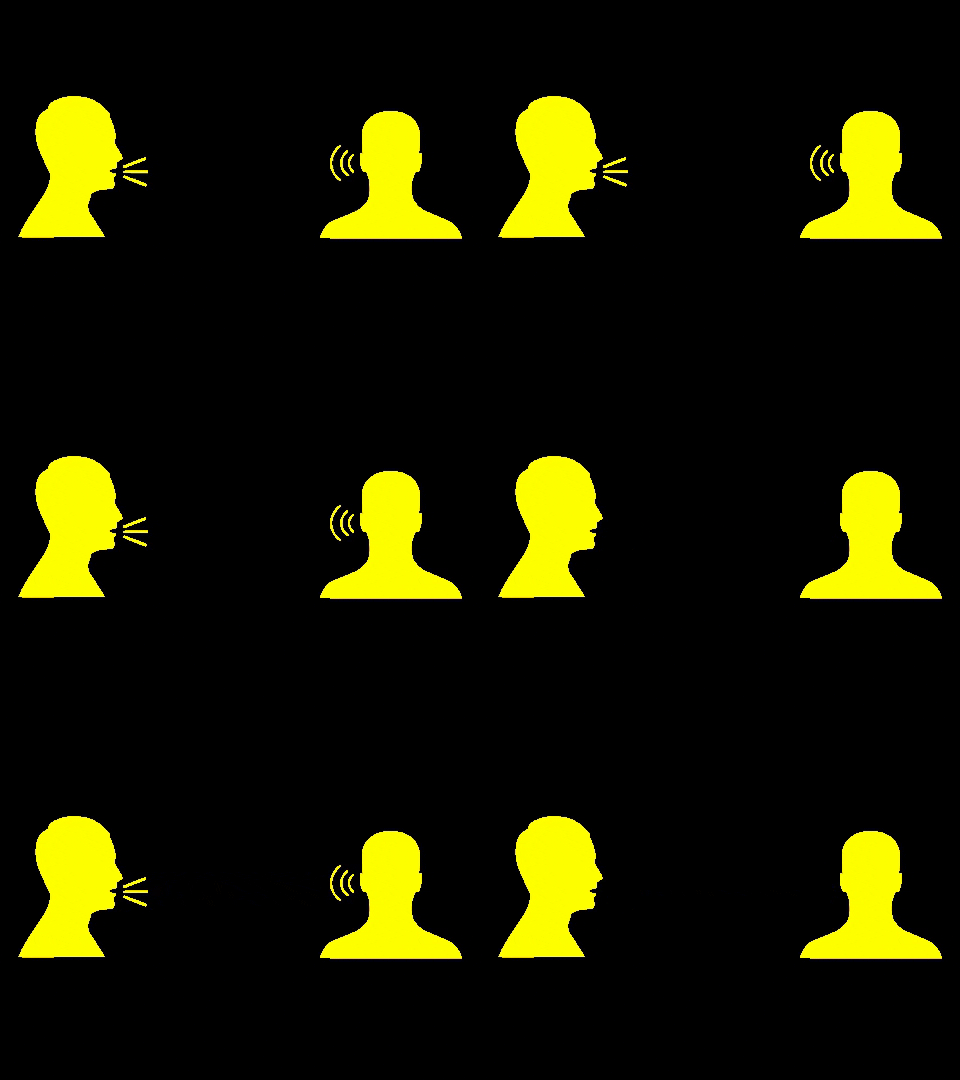
Pro tip: Listen three times.
Once for general meaning.
Once following along with the text.
Once with your eyes closed, focusing purely on pronunciation and rhythm.
ANSWER KEY ✅
Full Spanish phrase: A quien madruga, Dios le ayuda.
English translation: God helps those who wake up early.
Today's disappeared words: None yet—this is Day 1. Tomorrow, we start removing words to build your active recall.
🍅 You nailed it. Ready to go full Spanish?
30 days free, cancel anytime →
How was today's newsletter? Your feedback helps us create better Spanish content for you! (I read every single one!)
🎯 ¡Perfecto! My Spanish is growing →
📚 Está bien. Here's what would help →
See you tomorrow! - 🍅 The Phrase Café Team
Get the audio by subscribing below 👇
There's a better way to learn.
Phrase Café sends you a letter from Sara every morning, with the English under every line and her voice reading it. Then a coach walks you through it. 5 to 10 minutes a day.